

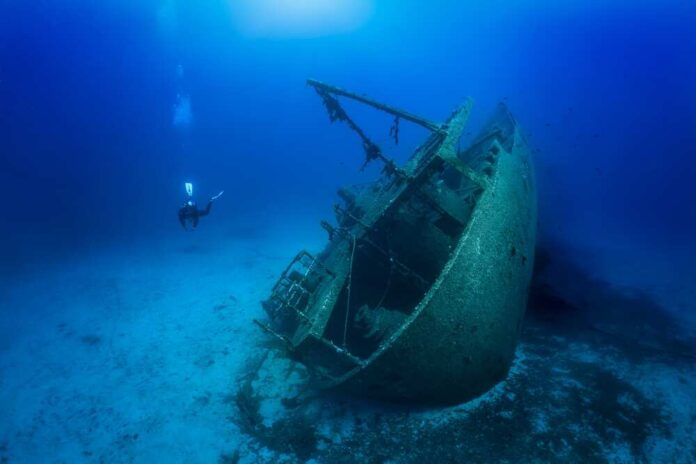
Offering a rare glimpse into the bygone trade and reshaping history, an antique shipwreck beneath coastal waters has unveiled a treasure trove of 2,000-year-old ceramics.
The remarkably preserved ceramics, still arranged exactly as ancient merchants stacked them, reveal how commerce functioned during ancient times.
The shipwreck, nicknamed the “Ceramic Wreck,” was discovered off Turkey’s Adrasan coast at depths between 120 and 150 feet.
Dating from the Late Hellenistic and Early Roman periods (2nd century B.C. to 1st century A.D.), the wreck contains a treasure trove of perfectly preserved bowls, plates, trays, and pots that have survived for two millennia underwater.
What makes this discovery extraordinary is the condition of the artifacts.
Unlike most ancient shipwrecks, where contents are damaged or scattered, these ceramics remained in pristine condition thanks to a protective coating of raw clay that ancient merchants applied before shipping.
This natural preservation technique safeguarded the items’ original designs, patterns, and even their deep red colors.
Turkey Culture and Tourism Minister Mehmet Nuri Ersoy said, “This is a highly precious discovery not just for our country, but also in terms of world cultural heritage.”
The ship is one of more than 400 wrecks identified between Patara and Mersin, confirming the extensive maritime commerce that once flowed through the eastern Mediterranean during biblical times.
Archaeologists believe the vessel was transporting everyday consumer goods, providing unprecedented insights into ancient production, packaging, and trade practices.
The ceramics remain stacked in their original shipping positions, giving researchers a rare opportunity to study how ancient merchants managed logistics and storage strategies.
“We discovered hundreds of plates, trays, and bowls, coated with raw clay and nested together to protect them during transport,” Ersoy said.
“As a result, the designs of the ceramics have reached us almost intact. This is an extremely valuable discovery not only for our country but also for the world’s cultural heritage,” he added.
Moreover, the Turkish government plans to showcase selected artifacts from this and other wrecks in the upcoming Mediterranean Underwater Archaeology Museum in the Kemer Idyros region.
Construction is scheduled to begin this summer, and portions of the Adrasan wreck site will be opened to diving tourism after excavation is complete.
This discovery is part of Turkey’s “Heritage for the Future” project, which aims to map and document the country’s rich archaeological treasures.
Unlike the radical destruction of historical artifacts seen in regions controlled by Islamic extremists, Turkey has taken an active role in preserving these essential connections to the shared cultural and religious past.
The ceramics are currently being preserved at Turkey’s Regional Restoration and Conservation Laboratories.
For Christians and history enthusiasts alike, this discovery provides a tangible connection to the ancient world described in the Bible.
The historical significance of these findings cannot be overstated, as they serve both scientific research and tourism.
As the project progresses, the world watches, grateful for the pieces of history brought back from beneath the sea.