
A federal judge just told alleged D.C. pipe bomber Brian Cole Jr. something his lawyers and many activists did not want to hear: President Trump’s giant Jan. 6 pardon does not save him.
Story Snapshot
- Cole is accused of planting pipe bombs at party headquarters in D.C. the night before Jan. 6.
- Trump’s 2025 mass pardon covers offenses “related to events at or near” the Capitol on Jan. 6.
- Defense says Cole’s case is tightly linked to the riot and should be covered.
- The Justice Department and now a judge say the pardon does not reach his alleged bombing.
How Brian Cole Jr. Ended Up At The Center Of A Pardon Showdown
Federal agents spent years chasing the person who allegedly placed two pipe bombs outside the Republican National Committee and Democratic National Committee headquarters in Washington, D.C., on January 5, 2021.
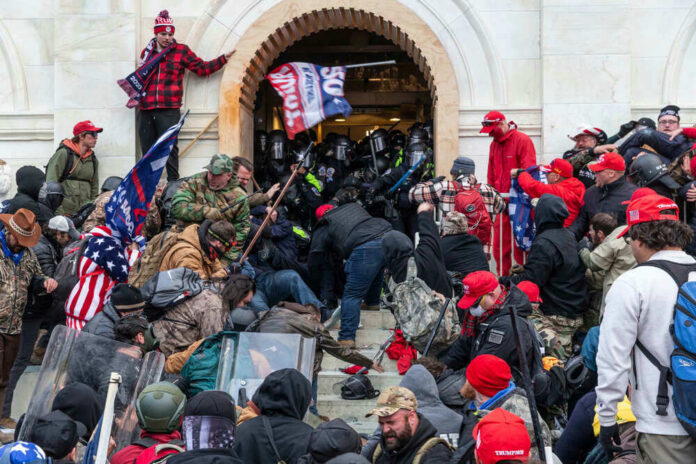
The devices were discovered on January 6, the same day crowds stormed the United States Capitol. Prosecutors say those bombs were real threats, not props, and they charged thirty-year-old Brian Cole Jr. with transporting explosives and trying to use them maliciously.
Cole was arrested in December 2025, long after most January 6 defendants had already been tried, sentenced, or pardoned. He pleaded not guilty and his attorneys deny every allegation about him planting bombs.
But instead of only fighting the facts, his legal team chose a more dramatic route. They argue that he should not be prosecuted at all, because a single sweeping presidential pardon supposedly wiped his slate clean before his case even began.
What Trump’s January 6 Pardon Really Says
On January 20, 2025, President Donald Trump signed a proclamation granting mass clemency for “offenses related to events that occurred at or near the United States Capitol on January 6, 2021.”
It commuted sentences for fourteen high-profile figures and gave a “full, complete and unconditional” pardon to every other person convicted in relation to that day. He also ordered the Attorney General to dismiss all pending indictments for conduct tied to the Capitol events.
That proclamation did not say a word about pipe bombs planted the day before, miles from the Capitol building. It focused on the riots and related crimes on January 6 itself. Still, Trump’s language about “related to events” and “at or near” the Capitol was broad enough that creative lawyers saw an opening.
Cole’s team latched onto those words, arguing that anything closely tied to the chaos, including the pipe bombs found on January 6, falls inside the pardon’s reach.
Inside The Defense Strategy To Stretch A Blanket Pardon
Cole’s attorney, Mario Williams, insists the case sits “exactly” where Trump meant his pardon to apply. In court and in interviews, he argues that the alleged bombs were part of the same story as the Capitol riot because they were discovered that day and triggered security responses. He leans on plain English.
If the offenses are “related to” events at or near the Capitol, he says, then a serious threat to the national party headquarters in Washington on the eve of the riot clearly counts.
Williams also points to another example where a January 6 defendant later received a second pardon for an unrelated gun case. That shows, in his view, that Trump did not want a narrow, technical reading. He wanted to protect people caught up in what he pitched as a political protest.
From that lens, treating Cole as some lone “Ted Kaczynski bomber,” as Williams put it, turns the pardon’s core purpose upside down.
Why The Justice Department And Judge Say ‘Not Covered’
The Justice Department pushed back hard. In its filing, it argued that Trump’s proclamation was clear and that Cole simply does not fit within it.
Prosecutors stressed that the text deals with events “at or near the United States Capitol on January 6, 2021,” not the day before. Planting bombs on January 5 at party offices, they said, is separate conduct, even if the devices were later found while the riot unfolded.
Judge says alleged D.C. pipe bomber Brian Cole Jr. isn't covered by Trump's Jan. 6 pardons. pic.twitter.com/hgSpjRgYxg
— super dlcs (@superdlcs) July 7, 2026
A White House official echoed that view in blunt language, saying the pardon “clearly” does not cover a scenario where bombs were placed on January 5. From a common-sense conservative perspective, this tracks.
A president’s pardon power is broad, but the written words still matter. If you allow defense teams to stretch “related to events” into anything loosely tied to the news cycle, you erase any limiting principle and invite chaos every time clemency is used.
The Bigger Fight Over Pardons, Politics, And Consequences
The judge’s decision to side with the Justice Department turns Cole’s case into a warning for future defendants trying to ride blanket pardons past the courthouse. It shows courts will look at the actual conduct, dates, and locations, not just vibes or political narratives.
For many Americans, especially on the right, this fits basic common sense: violent acts with explosives should stand on their own, not hide behind a pardon meant for protest-related offenses, even if those protests went too far.
At the same time, the case shines a light on real problems with mass pardons. They create gray zones where lawyers test the edges, defendants hope for loopholes, and the Justice Department may look political while sorting winners from losers.
Cole’s motion to dismiss is one more example in a long line of people trying to turn broad pardon language into get-out-of-jail-free cards. The judge’s ruling reminds everyone that words, dates, and facts still matter more than spin.
Sources:
cbsnews.com, thehill.com, en.wikipedia.org, facebook.com, nbcnews.com, youtube.com, themarshallproject.org