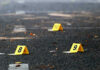


Federal prosecutors say the FBI stopped a planned mass shooting at the Mall of America, and Senator Amy Klobuchar now wants a bigger, tougher national surge against terrorism built for this era.
Story Snapshot
- An 18-year-old faces a federal terrorism charge after an alleged Mall of America plot.
- The FBI used an undercover operation to seize the suspect during a staged gun buy.
- Prosecutors say the target was a crowded cultural event with the goal to kill dozens.
- Senator Klobuchar calls for new investments to harden soft targets and speed threat interdiction.
What prosecutors say the FBI stopped in Minnesota
The U.S. Department of Justice says agents arrested Sheikhdoon Abdullahi Mohamud, 18, after a long investigation linked to support for the Islamic State. A federal complaint charges him with receiving a firearm and ammunition to commit a federal crime of terrorism. Court filings describe a planned attack on Mall of America. The timing centered on a packed Hmong arts celebration, which would raise the casualty count. Prosecutors say the goal was to kill non-Muslims and cause mass fear across Minnesota and beyond.
FBI agents staged the takedown in a public park near the mall. According to the complaint, the suspect paid $600 to an undercover FBI employee for an AK-47 style rifle and 200 rounds of ammunition. Agents moved in as he left with the weapon and ammo in a bag. The government frames this as prevention by design: build the case, remove the weapon, stop the attack. As always, a criminal complaint is an allegation until proven in court. But the interdiction details read as direct and concrete.
Klobuchar’s push: from one foiled plot to a national posture
Senator Amy Klobuchar represents Minnesota, home to the Mall of America. She is pressing for major upgrades to domestic counterterror tools. Her focus is simple: stop lone-wolf violence faster and harden crowded spaces without turning them into fortresses. Expect a call to boost Joint Terrorism Task Forces, expand open-source threat scanning with clear guardrails, and add funds for active-shooter sensors, lock-down tech, and rapid mass-casualty response training for local police and malls.
She also backs steady funding for community-based early warning. That means helping families, faith leaders, and schools flag pathways to violence before a plot forms. The case here underscores that mix. Federal agents say they tracked explicit intent, watched target scouting, and controlled the gun transfer. To a common-sense audience, that is the right sequence: watch, verify, control, stop. For conservatives who demand law and order, this model supports deterrence and swift action while protecting the public square from chaos.
The sting debate is real; the public-safety case is stronger
Academic critics have long warned that counterterror stings can blur the line between detection and inducement. They argue that informants can shape plots and create crimes that would not happen otherwise. Courts, however, have rarely accepted entrapment defenses in post-9/11 terrorism cases. The legal pattern shows predisposition wins these fights almost every time. That history matters here. Prosecutors say the suspect chose the target, voiced extremist aims, and sought a rifle fit for mass murder. The operation removed the risk while locking in evidentiary proof.
Feds foil ISIS plot for mass shooting at Mall of America @WashTimes @tonykatz https://t.co/lw4Z6xRG2w
— Karl Showbiz (@KarlShowbiz) October 8, 2026
Policy should learn from both sides of this ledger. Keep rigorous thresholds before going undercover. Preserve strong oversight. But do not tie the hands of agents who must act when a crowded venue sits in the crosshairs. Klobuchar’s package is likely to stress measurable standards for stings, clear audit trails, and mandatory after-action reviews. That approach matches American conservative values: empower front-line agents, enforce accountability, and focus resources on the small fraction of actors who pose a lethal threat to civil life.
What “major investments” should actually buy
Three buckets deserve attention. First, detection: expand data-driven tips and human intelligence, with strict privacy guardrails, to surface intent early. Second, disruption: speed up weapons interdiction, digital warrant processing, and cross-border watchlisting when suspects chase guns or guidance from overseas networks. Third, defense-in-depth: give malls and arenas modern access control, camera analytics tuned for behaviors, and mass-notify systems that reach every shopper in seconds. These are not showy projects. They are the quiet layers that turn tragedies into near-misses.
Congress should also back faster mental and behavioral threat triage tied to law enforcement referrals. Local chiefs need surge capacity when a lead turns hot at 3 p.m. on a Saturday. The Mall of America case shows how one person can target a civic hub and plan to kill 30 to 60 people, according to court filings and press statements. The answer is not fear. The answer is speed, coordination, and tools that make the next takedown faster than the last. That is the investment case Klobuchar is making—for Minnesota and for every state.
Sources:
pjmedia.com, justice.gov, cnn.com, wbaltv.com, abc7ny.com, washingtonexaminer.com, aol.co.uk