
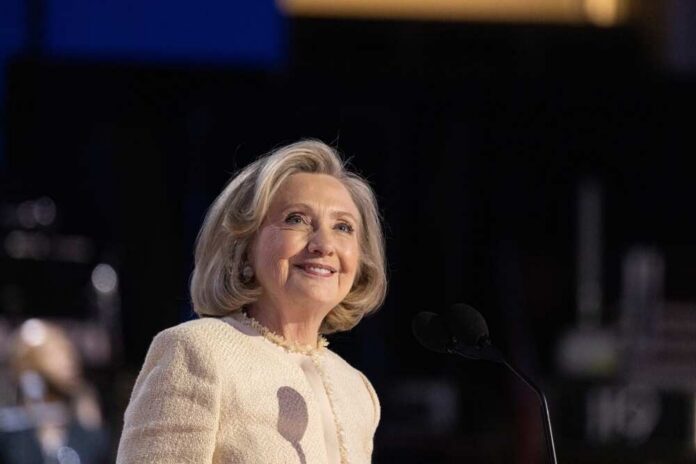
Hillary Clinton just picked her first fight of the 2026 midterms, and she picked it in Minnesota.
Quick Take
- Clinton publicly endorsed Minnesota Lieutenant Governor Peggy Flanagan for the U.S. Senate, her first House or Senate endorsement of the 2026 cycle.
- Flanagan is running against Republican Michele Tafoya, a former NFL sideline reporter, in a race that is drawing national attention.
- Clinton tied her support to Flanagan’s record at the Children’s Defense Fund and her time as lieutenant governor.
- Flanagan publicly thanked Clinton, calling her support an honor as she “takes that fight to the United States Senate.”
Clinton Breaks Her 2026 Silence For A Minnesota Democrat
Clinton announced her support for Flanagan this week, marking her first endorsement of any House or Senate candidate in the 2026 election cycle. The timing matters. Endorsements from major party figures often arrive in waves tied to primary calendars and fundraising pushes, so a “first of the cycle” label carries weight inside political circles watching for signals of where establishment Democrats plan to spend energy and money.
Clinton described Flanagan’s career in direct terms, saying she “has spent her career fighting for children and families, from the Children’s Defense Fund to the Lieutenant Governor’s office, and she’s delivered for them”. She also posted a public appeal urging Minnesota voters to seize the chance to send Flanagan to Washington, framing the race as an opportunity rather than a routine party contest.
Flanagan responded publicly, writing that Clinton “has spent five decades fighting for those families” and calling her support an honor as she takes her campaign to the Senate. The exchange gives the endorsement a clean paper trail: a specific public statement from Clinton, a direct public reply from the candidate, and matching coverage from three separate news outlets on the same news cycle.
Who Flanagan Is Actually Running Against
Flanagan, a Democrat, faces Republican Michele Tafoya, a former NFL sideline reporter and commentator, in the general election for Minnesota’s Senate seat. That matchup alone guarantees the race extra media coverage, since Tafoya brings a national media profile of her own and has been outspoken on cultural issues that resonate with conservative voters well beyond Minnesota’s borders.
Reporting on the endorsement also noted Clinton took a jab at President Trump as part of her remarks, folding the Senate race into the broader national fight over his administration. That framing is standard for high-profile Democratic endorsements this cycle, where candidates and surrogates alike are eager to nationalize local races rather than let them stand on state issues alone.
Why This Kind Of Endorsement Rarely Moves Votes Alone
Political science research on endorsements consistently finds that celebrity and elite political backing rarely changes the mind of an undecided voter by itself. What it does reliably do is energize donors, mobilize volunteers, and generate media coverage that keeps a candidate’s name in front of audiences who already lean their direction. Clinton’s nod to Flanagan fits that pattern closely.
Media framing research also shows the same endorsement can be covered as either a meaningful elite signal or as partisan theater, depending on which outlet tells the story and which cues it emphasizes. Conservative voters would be right to view this endorsement as exactly what it looks like: a coastal Democratic figure lending her name to energize a base race, not a neutral event with independent persuasive force on Minnesota’s electorate.
CLINTON ENDORSEMENT: Former Secretary of State Hillary Clinton has made her first congressional endorsement of the 2026 election cycle, backing Minnesota Lt. Gov. Peggy Flanagan for Senate. pic.twitter.com/lerzcCmDj1
— Pascalsmc (@Pascalsmc) October 8, 2026
Social media reaction moved fast once the news broke, with posts framing Clinton’s backing as both a boost and a liability depending on the audience. Some commentary pointedly asked whether an endorsement from a two-time losing presidential candidate helps or hurts Flanagan, a fair question given Clinton’s mixed standing with swing voters outside deep-blue strongholds.
What To Watch As Minnesota’s Senate Race Heats Up
The real test comes in the months ahead, as fundraising reports and polling start to show whether Clinton’s endorsement translated into measurable movement for Flanagan’s campaign. Watch for whether other national Democratic figures follow with endorsements of their own, which would suggest coordinated party strategy rather than a standalone gesture from Clinton alone.
Tafoya’s campaign is likely to use the endorsement as a rallying point of its own, portraying Flanagan as the chosen candidate of Washington insiders rather than a Minnesota-first voice. That counter-message has worked for Republican Senate candidates in other states, and Minnesota voters will ultimately decide which framing of this race they find more convincing.
Sources:
thehill.com, washingtonsun.com, huffpost.com