

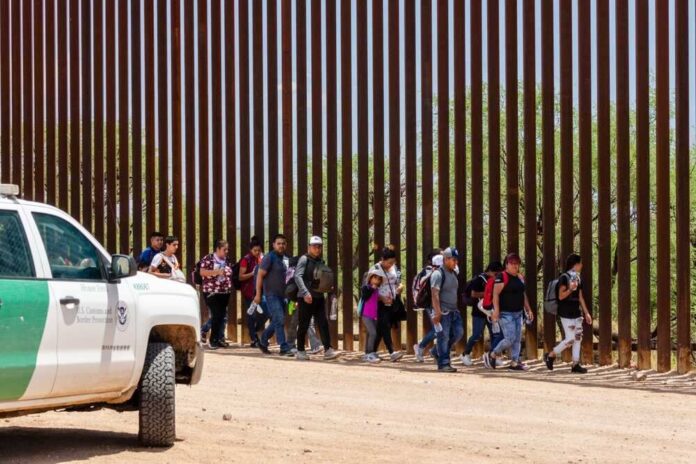
In a massive new step, the Trump administration has announced the termination of Temporary Protected Status (TPS) for over 70,000 immigrants from Honduras and Nicaragua.
See the tweet below!
This decisive move signals an end to the protections that have allowed these individuals to reside in the United States legally.
Set to take effect in September, this change has sparked debate on both sides of the political spectrum.
The Department of Homeland Security (DHS) has declared that the conditions in Honduras and Nicaragua have improved enough to justify the end of TPS.
Originally created in 1990 by Congress, TPS aimed to provide temporary refuge to those escaping countries in crisis.
Approximately 72,000 Hondurans and 4,000 Nicaraguans have relied on this provision for work permits and protection from deportation.
However, as these nations recover, their citizens are expected to return, highlighting the ‘temporary’ nature of the status.
While DHS Secretary Kristi Noem underscores progress in these countries, Democrats, including Sen. Catherine Cortez Masto, argue otherwise.
They claim these families have deeply integrated into American society, contributing economically and socially.
Critics warn that forcing these immigrants back could create undue hardship and even endanger lives.
“These families have been here since the 1990s, working hard and contributing to our state and country for decades. Sending innocent families back into danger won’t secure our border or make America safer,” said Cortez Masto.
The Biden administration had earlier chosen to expand TPS for many, including Haitians and Venezuelans.
However, the Trump administration has been firm in its effort to limit such provisions, believing the mechanism to be overused.
Though legal challenges have arisen, the Supreme Court permitted the termination of TPS for Venezuelans, setting a precedent for current and future cases.
The Trump administration’s agenda continues to focus on large-scale deportations, affecting migrants from various countries.
“Temporary Protected Status, as the name itself makes clear, is an inherently temporary status,” said Secretary Noem.
The government argues that the end of TPS aligns with common sense and the actual purpose of the policy.
Nevertheless, Democrat voices insist on the humanitarian and economic benefits of maintaining such protections.
Meanwhile, Noem points to sectors like tourism, real estate, and renewable energy in these countries as signals of recovery.
As September approaches, the country watches and waits to see how this policy shift affects immigrants and the communities they call home.
The Department of Homeland Security (DHS) announced Monday that deportation protections for thousands of Hondurans and Nicaraguans will be terminated. https://t.co/toIUZRv4Cg
— NBC Montana (@NBCMontana) July 7, 2025