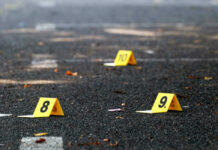

A suspected arson attack has once again turned a historic Jackson, Mississippi, synagogue into a crime scene, raising urgent questions about whether America is truly protecting its houses of worship.
Story Snapshot
- A pre-dawn fire severely damaged Beth Israel, Jackson’s only synagogue and a key civil-rights landmark, in what authorities are calling suspected arson.
- One suspect with burn injuries is in custody as the FBI and a Joint Terrorism Task Force investigate possible hate-crime or terrorism motives.
- The attack echoes a 1967 Ku Klux Klan bombing of the same synagogue, underscoring decades of vulnerability for people of faith.
- Several Torah scrolls were destroyed or damaged, though a Holocaust-survivor Torah was spared, deepening the spiritual and symbolic impact.
Historic Synagogue Targeted In Pre-Dawn Blaze
Around 3 a.m. on a Saturday in January 2026, flames tore through Beth Israel Congregation, the largest synagogue in Mississippi and the only one in the capital city of Jackson.
Fire crews found the building closed, with no congregants present, but the blaze had already gutted administrative offices and the synagogue library while coating the sanctuary in heavy soot and smoke. One individual suffered non–life-threatening burns and was taken into custody, as investigators quickly labeled the incident suspected arson.
Security footage reportedly shows a figure inside the building splashing liquid along a lobby wall and onto a couch shortly before the fire ignited, a detail investigators say aligns with deliberate ignition rather than an accidental blaze.
That evidence, combined with on-scene forensics, led Jackson’s Arson Division, local police, the FBI, and the Joint Terrorism Task Force to coordinate an intensive probe. For a community already wary of rising antisemitism, the methodical nature of the attack only heightens concern.
Echoes Of A 1967 Klan Bombing And America’s Civil-Rights Past
Beth Israel’s story reaches far beyond its damaged walls. In the 1960s, the congregation and then-rabbi Perry Nussbaum openly backed civil-rights efforts, helping form the Committee of Concern to rebuild African-American churches burned by the Ku Klux Klan. That moral stand made the synagogue a target.
In 1967, just months after moving into a new building, the Klan bombed the temple and the rabbi’s office, tying Jewish worship and civil-rights activism together in one act of domestic terror.
State leaders eventually recognized Beth Israel’s role by placing a Mississippi Freedom Trail marker at the site in 2018, honoring it as a beacon during one of the nation’s most turbulent chapters.
That designation means this latest attack is not just vandalism of a local building; it is a strike at a documented civil-rights landmark and the memory of those who stood against segregation and racial violence. For many in Jackson, seeing history repeat at the same address is a chilling reminder of how fragile hard-won freedoms can be.
The @CivilRights is closely monitoring this investigation. We have a ZERO TOLERANCE policy for attacks on houses of worship at @TheJusticeDept!
Suspect arrested in predawn fire that left parts of Mississippi's largest synagogue in charred ruins https://t.co/e1Sp1wPCzz
— AAGHarmeetDhillon (@AAGDhillon) January 11, 2026
Torah Loss, Holocaust Survival, And Spiritual Fallout
The fire’s most painful damage for worshippers centers on the Torah scrolls, the handwritten texts at the heart of Jewish religious life. Two Torahs housed in the library were destroyed, while five in the sanctuary are now undergoing assessment for smoke damage and long-term viability.
At the same time, a Torah that survived the Holocaust, safeguarded behind protective glass, emerged unharmed. That contrast – irreplaceable loss beside improbable survival – deepens the emotional blow for congregants who see these scrolls as living links to faith, family, and history.
Beyond sacred texts, the synagogue’s sanctuary now bears smoke-stained walls, ceilings, and flooring, with upholstery and carpet likely needing replacement. Investigators describe the repair process ahead as an extensive revitalization rather than a total structural loss, but the disruption remains serious.
Offices and the library, essential for daily administration and education, sustained the heaviest damage. For a small Jewish community in a majority-Black Southern city, rebuilding will demand time, resources, and continued security vigilance.
Law Enforcement Response, Hate-Crime Questions, And Rights At Stake
City officials have publicly condemned the fire in forceful terms. Jackson’s mayor pledged to treat acts of antisemitism, racism, and religious hatred as acts of terror against residents’ safety and their freedom to worship.
That framing, along with the FBI’s confirmation that it is examining a hate-crime angle, shows how seriously authorities view the potential motive. Yet, as of now, they have not released the suspect’s identity or a definitive motive, leaving many questions unanswered about ideological ties or broader networks.
For conservatives who care deeply about religious liberty, this case highlights an uncomfortable reality: even in post-2024 America, with stronger rhetoric against extremism and renewed emphasis on law and order, houses of worship remain soft targets.
Synagogues, churches, and other religious spaces often operate on trust and openness, not hardened security. Each new attack encourages more cameras, locked doors, and guards – measures necessary for safety but at odds with the free, community-centered worship Americans value.
Jewish organizations such as the Anti-Defamation League warn that the Jackson fire aligns with a broader national surge in antisemitic incidents. They describe the event as a deliberate, targeted attack on the Jewish community, linking it to an escalation in threats and violence directed at visibly Jewish institutions.
At the same time, local Black pastors and church leaders have spoken out, offering worship space for Shabbat services and stressing that attacks on any house of worship strike at the heart of shared moral life.
Resilience, Interfaith Solidarity, And The Path Forward
Beth Israel’s leaders describe themselves as devastated but determined to rebuild, vowing to maintain regular services even if that means gathering in borrowed sanctuaries. Local churches quickly volunteered their facilities, reviving the Black–Jewish solidarity that defined the synagogue’s civil-rights-era legacy.
That response underlines a truth many in the conservative movement recognize: strong families, strong faith communities, and cross-community alliances are essential bulwarks against the hatred and lawlessness that threaten America’s foundations.
Sources:
Arrest made in alleged arson fire at historic Mississippi synagogue
Fire damages historic Mississippi synagogue; suspect arrested
Suspect arrested after fire damages historic Mississippi synagogue
Security camera catches person splashing liquid in Mississippi synagogue before fire