

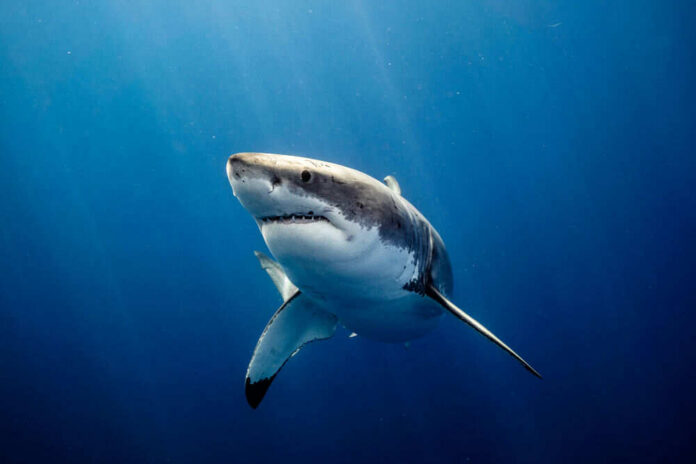
A 1,700-pound great white is cruising off North Carolina—and the real shock is how easily the public can track a top predator in near real time.
Story Snapshot
- OCEARCH’s satellite tag data shows “Contender,” a massive adult male great white, pinged about 45 miles southeast of Cape Fear near Wilmington, North Carolina.
- Contender was tagged off the Florida/Georgia coast in January 2025 at roughly 13.8 feet long and about 1,653 pounds, with reports rounding that to “nearly 1,700.”
- Other tagged sharks also pinged off North Carolina in early February 2026, signaling a seasonal migration corridor rather than a one-off sighting.
- OCEARCH explains that “confirmed” locations depend on multiple satellite transmissions, while single “Z-pings” are less precise.
Contender’s Latest Ping Highlights a Busy Cape Fear Corridor
OCEARCH tracking data placed Contender—an adult male great white—roughly 45 miles southeast of Cape Fear on a Sunday night in early February 2026.
The location matters because Cape Fear is near busy coastal activity, including fishing and shipping routes, and also serves as a migration corridor for large marine predators. The sighting wasn’t a “beach panic” moment; it was an offshore data point that still reshapes how locals think about ocean awareness.
Record-setting great white shark spotted off North Carolina coast https://t.co/w8AOkISty4 pic.twitter.com/yijg1ME34q
— New York Post (@nypost) February 12, 2026
Reports also noted other OCEARCH-tagged sharks in the region around the same period, including pings east and southeast of Cape Fear and another subadult male tracked south of the area earlier in February.
That clustering supports the broader pattern OCEARCH has documented for years: great whites don’t wander randomly. They move through predictable seasonal routes as water temperatures and prey availability shift, with the Carolinas often acting as a midpoint on the Atlantic track.
Why the Numbers Vary: “Nearly 1,700” vs. 1,653 Pounds
Contender’s size is what grabbed headlines, but the specifics are straightforward. OCEARCH measured the shark at about 13.8 feet and 1,653 pounds when it was tagged off the Florida/Georgia coast in January 2025.
News coverage often rounds that figure to “nearly 1,700 pounds,” which is consistent with typical reporting shorthand rather than a contradiction. The more important point is that Contender ranks among the largest male great whites publicly tracked in this program.
That “publicly tracked” piece is what makes this story feel different from the old days of rumor and grainy photos. OCEARCH’s website and app allow anyone to see recent pings when the shark surfaces and the tag transmits.
For coastal residents, that transparency can calm nerves by replacing hearsay with data. For families planning spring and summer trips, it’s also a reminder that the ocean is not a theme park, and personal responsibility still matters.
How the Tagging Technology Works—and Its Real Limits
OCEARCH’s system depends on satellite transmissions from a tag attached to the shark’s dorsal fin. The tag only sends location information when the fin breaks the surface, and even then, it relies on satellite pass windows.
OCEARCH data scientist John Tyminski has explained that more reliable “confirmed” pings come from multiple transmissions, while single “Z-pings” provide less certain location detail. In other words, the tracker is powerful, but it is not constant surveillance.
That limitation is important because it keeps expectations grounded. A lack of daily updates doesn’t mean the shark disappeared; it may simply not have surfaced during a satellite window.
It also means the map should be treated as a tool for situational awareness, not a guarantee of the animal’s location at every moment. For policymakers and scientists, however, these multi-year tags create a valuable record of where great whites travel and when.
Public Safety, Coastal Culture, and a Limited-Government Lens
From a practical standpoint, the best takeaway isn’t fear—it’s clarity. OCEARCH’s real-time-style tracking can help inform beachgoers, anglers, and boaters, potentially reducing risky behavior in areas where large sharks are active. The research is also used to better understand migration patterns and habitat use over time.
For Americans tired of government overreach, this is a case where open information empowers personal decision-making without heavy-handed mandates.
At the same time, the story shows how quickly modern institutions can shape public behavior simply by controlling data and its presentation. OCEARCH is a nonprofit, but it still serves as a gatekeeper for a powerful stream of attention and public understanding.
The benefit is transparency; the caution is remembering that even “real-time” dashboards have limits and context. For North Carolina’s coast, the key is staying informed and respecting reality offshore.
1,700-pound great white shark named Contender spotted off North Carolina coast. https://t.co/XIZBhzkPpt
— CBS News (@CBSNews) February 12, 2026
Sources:
OCEARCH shark Contender north Carolina Cape Fear