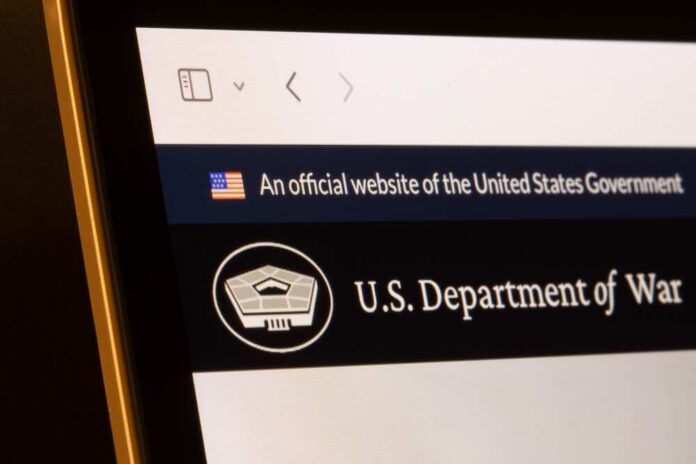
A federal judge just told the Pentagon it can’t treat press credentials like a political loyalty test—even as the nation fights Iran and Americans demand answers.
Quick Take
- A U.S. District Court judge struck down key parts of a Pentagon press-access policy as unconstitutional after a lawsuit by The New York Times.
- The Times is seeking immediate restoration of building passes for seven journalists after a credential crackdown led many reporters to surrender access in 2025.
- The dispute centers on First Amendment concerns and Fifth Amendment due-process protections, not on whether the military can protect classified information.
- The ruling lands during heightened national-security tensions, with the U.S. engaged militarily abroad, raising the stakes for transparent oversight.
Court Ruling Reins In Pentagon Control Over Press Passes
Judge Paul Friedman of the U.S. District Court in Washington, D.C., ruled that key parts of the Defense Department’s updated media-access policy were unconstitutional.
The case arose after The New York Times challenged rules governing who can physically access the Pentagon—an access point that shapes what the public learns from briefings and on-the-record interactions.
After the decision, the Times requested that the Pentagon restore credentials for seven of its journalists.
The lawsuit targeted a policy that the Times said violated First Amendment protections and denied due process under the Fifth Amendment. The facts in the record show a larger media backlash well before the final ruling: after an October 2025 update, many Pentagon reporters surrendered their credentials rather than accept terms they viewed as punitive.
The court’s decision, as described in coverage of the case, marks a judicial check on executive-branch leverage over who gets access.
How the 2025 Policy Triggered a Mass Credential Surrender
The Defense Department introduced a new accreditation policy in September 2025 and then updated it in October 2025. That update allowed denial or revocation of press passes tied to reporting “unapproved” information, according to the timeline described in reporting and press-freedom coverage.
On October 15, 2025, most Pentagon reporters reportedly surrendered credentials in protest. The Times filed suit in December 2025, which led to the March 2026 ruling.
NEWS: Judge blocks Hegseth policy limiting Pentagon newsgathering
“…especially in light of the country’s recent incursion into Venezuela and its ongoing war with Iran, it is more important than ever that the public have access to information from a variety of perspectives…”
— Julie Tsirkin (@news_jul) March 20, 2026
From a constitutional standpoint, conservatives should separate two issues that Washington often mashes together: stopping leaks of genuinely classified material versus using administrative rules to discourage aggressive reporting.
Nothing in the available reporting suggests the court told the Pentagon to open the doors to security risks or to tolerate disclosure of classified information.
The core problem, as framed by the plaintiffs and allied press-freedom groups, was a policy structure that could chill lawful reporting through vague standards and discretionary punishment.
Why This Matters More During an Iran War—and for the Public’s Right to Know
The court and press-freedom advocates emphasized the timing: the U.S. is operating in high-stakes environments abroad, including Iran, where the public relies on independent reporting to evaluate claims about progress, costs, and strategy.
In 2026, many MAGA voters are split—supporting a strong defense while rejecting another open-ended conflict that looks and feels like the old “forever war” playbook. When trust is already strained, restricting access at the Pentagon can deepen suspicion and fuel rumors.
The court’s reasoning, as summarized by sources, points to the need for “diverse” information flows during conflict. That does not mean endorsing any outlet’s politics; it means refusing to set a precedent in which the government can quietly pick favored messengers.
Press Freedom vs. Government Overreach: The Precedent at Stake
The Committee to Protect Journalists (CPJ) welcomed the decision and urged the Pentagon to abandon the contested changes, warning that pressures on the news media are increasing.
The Reporters Committee for Freedom of the Press also supported the challenge through an amicus brief, underscoring that access restrictions can encourage self-censorship. In plain terms, credentials become a switch the bureaucracy can flip—rewarding compliance and punishing persistence—unless courts enforce constitutional guardrails.
Judge sides with New York Times in challenge to policy limiting reporters’ access to Pentagon https://t.co/yWNbFE9Fxz
— WOKV News (@WOKVNews) March 22, 2026
The immediate question is compliance: The Times is seeking restoration of press passes, while public reporting available so far has not described a Pentagon response after the ruling.
That uncertainty matters because court victories can still turn into drawn-out procedural fights. For readers focused on constitutional order, the broader takeaway is straightforward: wartime urgency does not erase the Bill of Rights.
If a policy can’t survive basic First and Fifth Amendment scrutiny, it shouldn’t be governing access to one of the nation’s most consequential institutions.
Sources:
The New York Times Seeks to Have Pentagon Press Passes Restored After Court Victory
CPJ welcomes ruling on Pentagon access in favor of The New York Times