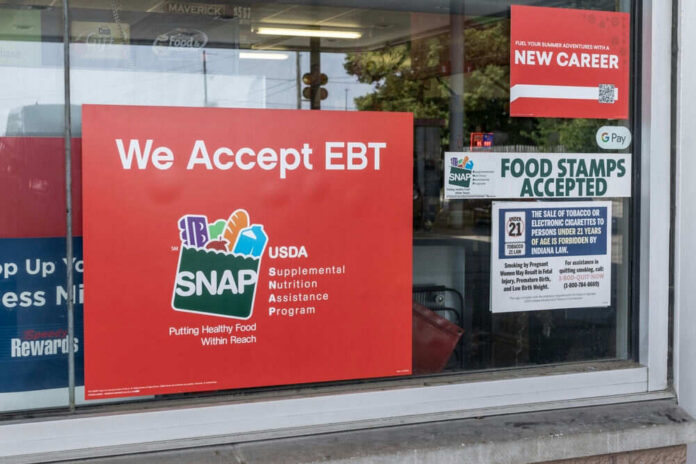
Four more states are about to decide what low-income families are “allowed” to buy with food benefits—raising a familiar conservative concern about government control dressed up as public health.
Quick Take
- Colorado, Florida, Texas, and Virginia are slated to expand SNAP/EBT purchase restrictions during April 2026, mainly targeting sugary drinks, candy, and certain desserts.
- USDA-approved waivers are enabling a major shift away from one nationwide SNAP rulebook toward state-by-state restrictions.
- Retailers are updating point-of-sale systems to block restricted items, which could slow checkout and increase compliance costs.
- Conflicting timelines appear in published guidance for Colorado and Virginia, leaving some recipients and stores unsure about exact start dates.
April’s SNAP changes mark a big shift toward state-by-state rules
Colorado, Florida, Texas, and Virginia are scheduled to add new limits on what Supplemental Nutrition Assistance Program (SNAP) recipients can purchase with EBT benefits in April 2026.
The restrictions generally aim at foods described as having “little to no nutritional value,” especially sugary beverages and candy, with some states also targeting prepared desserts. The broader significance is structural: USDA waivers are allowing states to write their own restrictions rather than follow one uniform national list.
The movement to ban SNAP recipients from buying soda, candy and energy drinks with their benefits is growing.https://t.co/RD3gz0My8q pic.twitter.com/VQhpsrB7CW
— WOWK 13 News (@WOWK13News) March 29, 2026
That decentralization is a double-edged sword for conservatives. Many voters prefer local control over one-size-fits-all federal policy, especially after years of top-down mandates in other areas of life.
At the same time, telling Americans what they can buy—especially when they already qualify under federal eligibility rules—triggers another conservative instinct: skepticism of paternalistic government. The research available focuses on rollout mechanics and state timelines, not on measurable health outcomes yet.
Which states are restricting what—and when—remains partly unclear
Texas and Florida have the clearest April start dates in the research: Texas is listed as beginning April 1, while Florida is listed as beginning April 20, with Florida described as among the most comprehensive in the April group. Colorado and Virginia are where the public timeline gets messy.
Colorado’s effective date appears in two different forms across sources, and Virginia’s start date also conflicts depending on which listing is used.
Those date discrepancies matter because SNAP is a monthly budgeting tool, not a casual benefit. Recipients plan shopping trips around deposit schedules, and retailers plan inventory and register programming around firm compliance deadlines.
When a state guidance page or retailer guide lists different effective dates than a national news write-up, it increases the chance of checkout disputes and denied transactions. Based on the research, the best-supported conclusion is that April expands restrictions, while exact start dates for Colorado and Virginia should be verified.
Retailers become the enforcement arm, with real-world friction at checkout
Implementation runs through stores. Retailers must reprogram EBT systems to flag restricted items, train staff, and handle disputes when a product scans as ineligible.
Multi-state chains face the additional complication of running different rules across different store locations—exactly the kind of “patchwork compliance” conservatives typically criticize when it comes from Washington, except here it is driven by state variation. The research notes active preparation by retailers, but does not quantify total costs.
Public health rationale collides with autonomy and dignity concerns
Supporters frame the policy as nutrition reform aimed at reducing purchases of sugary beverages and candy, which are linked to diet-related disease concerns.
Critics are likely to see something else: government using benefit rules to micromanage the choices of a politically weak population, while leaving higher-income consumers free to buy whatever they want. The provided research does not include direct expert commentary or outcome studies, so claims about effectiveness remain unproven at this stage.
What to watch next as more states consider similar waivers
The April wave follows earlier 2026 rollouts, suggesting the policy may continue spreading as more states seek USDA approval.
Conservatives should watch for two practical developments: whether states define restricted items narrowly (for example, “sweetened beverages”) or broadly (including prepared desserts), and whether federal oversight tightens as the program becomes less uniform. With conflicts already appearing in published dates, the immediate priority for recipients and retailers is clarity, not slogans.
4 more states will add restrictions on SNAP purchases in Aprilhttps://t.co/vqDqOP1zgh
— The Hill (@thehill) March 29, 2026
For voters already frustrated by inflation, high grocery prices, and years of fiscal mismanagement, these SNAP restrictions land in a sensitive place. They may appeal to a “stop paying for junk” impulse, but they also resemble the kind of bureaucratic social engineering conservatives have spent years opposing.
The research supports one clear takeaway: states are gaining new authority over SNAP purchase rules in 2026, and that power shift is happening fast—before the public has solid evidence about results.
Sources:
https://www.fns.usda.gov/snap/waivers/foodrestriction
https://nrsplus.com/blog/snap-ban-retailer-guide/
https://www.businessinsider.com/what-will-be-banned-for-snap-users-2026-by-state-2025-12