
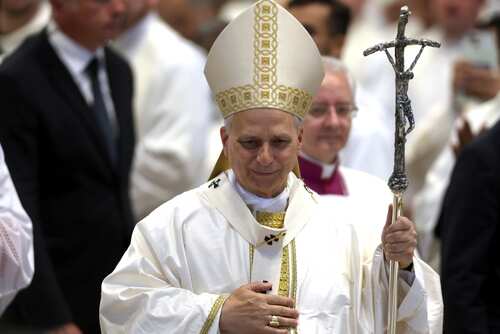
Pope Leo XIV used his first Easter Mass to condemn war and call for peace, yet tensions rise as Americans watch their first pope navigate conflicts involving U.S. forces while Israeli authorities restrict Christian worship in the Holy Land.
Story Snapshot
- Pope Leo XIV, the first U.S.-born pope, delivered his inaugural Easter homily on April 5, 2026, calling out “the violence of war that kills and destroys” amid ongoing U.S.-Israeli operations against Iran
- The pontiff criticized the “idolatry of profit” driving conflicts and urged world leaders to choose dialogue over arms, continuing his Holy Week condemnation of warmongers
- Israeli authorities restricted Christian gatherings at sacred sites, including the Holy Sepulcher, and barred the Latin Patriarch from Palm Sunday events, straining Vatican relations
- Leo’s peace message comes as the U.S.-Israeli war on Iran enters its second month, with the pope having expressed hope that hostilities would end before Easter
First American Pope Confronts Global Warfare
Pope Leo XIV marked his first Easter as pontiff with an open-air Mass in St. Peter’s Square, addressing thousands gathered amid white roses symbolizing renewal. The first American to hold the papacy did not shy from confronting the reality of U.S. involvement in Middle Eastern conflict, specifically naming the violence consuming Iran, Israel, and Ukraine in his homily.
Leo called for overturning the “stones” of sin, including war, injustice, and selfishness, presenting Christ’s resurrection as a model for respectful relationships serving the common good rather than narrow interests.
In his traditional "Urbi et Orbi" blessing, Pope Leo XIV warned against complacency in the face of relentless violence https://t.co/SigeRdadrR
— DW News (@dwnews) April 5, 2026
Vatican Critiques War Profiteering and Military Solutions
The pontiff’s Easter message extended beyond general peace appeals to target what he termed the “idolatry of profit” fueling armed conflicts. Leo emphasized that dialogue must replace weapons, a stance reflecting traditional Catholic social teaching on subsidiarity and the common good.
His criticism aligns with concerns many conservatives share about defense contractors and foreign entanglements that drain American resources. On Palm Sunday, Leo had declared God does not listen to the prayers of warmongers, and on Holy Tuesday expressed hope that wars would cease before Easter—hopes that went unfulfilled as conflicts continue.
Israeli Restrictions Limit Christian Holy Week Observances
While the Vatican celebrated Easter openly, Christians in the Holy Land faced unprecedented restrictions on worship. Israeli police limited gatherings at the Church of the Holy Sepulchre, Western Wall, and other sacred sites, citing security concerns from missile attacks.
Authorities barred Latin Patriarch Pierbattista Pizzaballa from attending Palm Sunday events, straining Catholic-Israeli relations at a critical juncture.
These limitations mirrored security measures imposed during Ramadan, Eid, and Passover, affecting multiple faith communities. The restrictions raise questions about religious freedom protections and Israel’s treatment of Christian minorities amid broader regional instability.
The Easter Vigil on April 4 featured baptisms of ten adults alongside Leo’s homily condemning barriers to peace. The traditional Urbi et Orbi blessing followed the Easter Mass, delivered from St. Peter’s Basilica loggia to offer plenary indulgence and address global concerns.
Leo’s messages built upon Pope Francis’s warnings against indifference to evil, positioning the new pontiff as a continuator of recent papal emphasis on nonviolence and social justice.
American Pope Navigates Complex Geopolitical Terrain
Leo’s condemnation of war violence places him in tension with his home country’s military operations alongside Israel against Iran. The conflict, which began approximately in February 2026, represents a significant foreign policy commitment by the Trump administration’s second term.
For American Catholics who supported Trump’s America First agenda to reduce foreign wars, the pope’s stance may resonate with frustrations about continued Middle Eastern entanglements. His criticism of war profiteering echoes conservative concerns about the military-industrial complex and endless conflicts that benefit defense contractors while American families bear the cost through taxation and lost lives.
The pope’s Easter message carries implications for both short-term diplomacy and his long-term papal identity. Vatican moral authority has historically influenced international relations, though its impact on current U.S. and Israeli military strategy remains uncertain.
Leo’s willingness to name specific conflicts and critique profit motives signals a proactive approach that may mobilize Catholic advocacy for peace initiatives. His American background gives him unique credibility to speak to Western audiences, potentially bridging divides between traditional Catholic teaching and contemporary conservative priorities around limited government and non-interventionism.
Sources:
Photos show Pope Leo’s first Easter Mass as pontiff – Crux
Pope Leo XIV calls for hope amid global conflicts on his first Easter – CBS News