
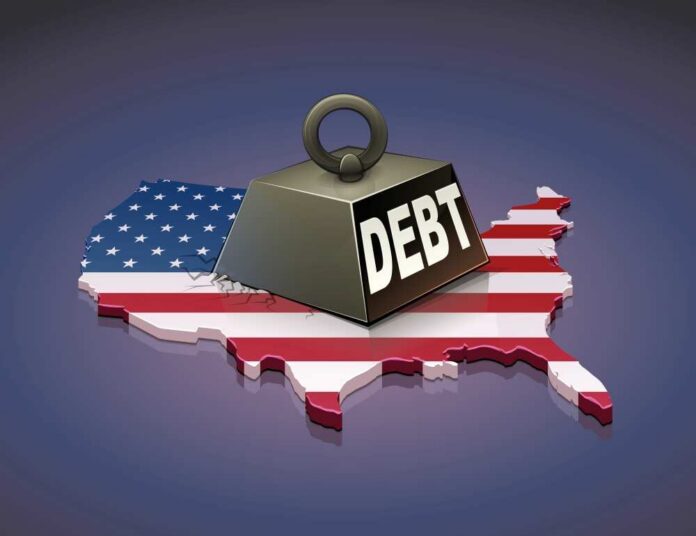
America’s $38.6 trillion debt now devours budgets through interest payments, exploding to $2.1 trillion by 2036, threatening a spiral that could bankrupt future generations unless Congress acts decisively.
Story Snapshot
- Interest costs surge from $1.0 trillion in 2026 to $2.1 trillion in 2036, driving deficits to 6.7% of GDP.
- National debt hits 120% of GDP by 2036, exceeding post-WWII peaks without reforms.
- The average interest rate has doubled to 3.35% since 2020, fueled by Fed hikes and massive borrowing.
- Interest becomes the fastest-growing expense, crowding out Social Security and Medicare priorities.
- CBO projections warn of a debt spiral if rates outpace growth post-2031.
U.S. Debt Doubles in 15 Years Amid Low Rates
U.S. national debt doubled to $38.6 trillion by early 2026, propelled by tax cuts, pandemic relief, and wars. Pre-2022, near-zero rates post-2008 crisis kept interest low at 1.6% average in 2020.
The Federal Reserve hiked rates sharply from 2022 to fight inflation, doubling the average to 3.35% by January 2026. Net interest costs doubled from 2022 and nearly tripled from 2020 levels. This reversal turned manageable debt into a fiscal time bomb.
Interest on US debt is becoming a top driver of future deficits, as the sheer size of past borrowing overwhelms the fiscal outlook https://t.co/vhDqXqtGfg
— Scott Odenbach (@ScottOdenbach) May 3, 2026
Federal Reserve Rate Hikes Ignite Interest Surge
Fed aggressively raised rates starting 2022, pushing debt costs from ultra-low during 2020-2021 COVID surges. FY2025 interest hit $970 billion, or 3.2% of GDP. FY2026 exceeds $1.0 trillion with public debt at 101% of GDP.
Costs grow 13-14% yearly, fastest in budget. Through FY26 mid-year, payments rose 6.1% year-over-year. Debt compounds 86% from 2025-2036, rates up 16%, yielding 121% interest explosion per CRFB analysis.
CBO Projects Debt Spiral by 2036
Congressional Budget Office February 2026 baseline forecasts deficits at 5.8% GDP in 2026, climbing to 6.7% in 2036. Net interest dominates, rising from 3.3% to 4.6% of GDP. Public debt reaches 120% GDP, surpassing 1946 WWII peak by 2030 absent changes.
Primary deficits persist at 2.1-2.6% GDP. Sustained rates above growth post-2031 risks doom loop, where interest hikes rates, slows growth, and amplifies costs.
CRFB, BPC, and PGPF echo CBO: interest now second-largest expense after Social Security. Fortune spotlighted in May 2026 how past borrowing overwhelms outlook. Optimists cite $3 trillion tariff savings over 11 years, but CBO caveats retaliation risks. These facts align with calls for spending restraint and growth-focused reforms over endless borrowing.
Stakeholders Warn of Crowding Out Priorities
CBO delivers nonpartisan baselines; Treasury manages issuance, Fed balances rates. CRFB warns spiral from debt and rates; BPC tracks deficits; PGPF pushes sustainability. Congress holds spending power, markets pressure via yields.
Taxpayers bear higher burdens, investors face volatility, low-income risk program cuts like Medicare. Short-term, $16.2 trillion decade cost crowds budgets; long-term spiral endangers stability.
Sources:
The impact of US national debt on your investments – U.S. Bank
Net Interest Costs Will Double, Again, Over the Next Decade
Deficit Tracker – Bipartisan Policy Center
The Budget and Economic Outlook: 2026 to 2036
Interest Costs on the National Debt – Peterson Foundation