

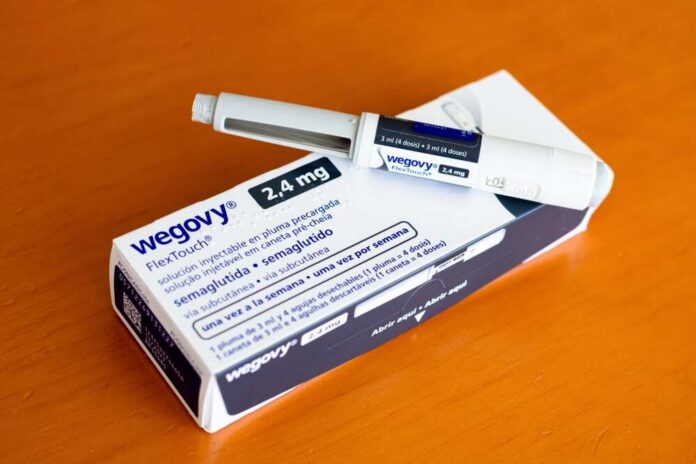
For the first time, Medicare is paying for powerful weight-loss drugs—but only through a strict, temporary “Bridge” that could reshape both senior health and federal spending.
Story Snapshot
- Medicare now covers select GLP-1 weight-loss drugs nationwide for a flat $50 per month starting July 1, 2026.
- The Medicare GLP-1 Bridge runs outside normal Part D rules, so insurers carry no risk and copays do not count toward your drug spending limits.
- Only three drugs qualify—Wegovy, Zepbound KwikPen, and Foundayo—and patients must meet tight body mass index and health criteria.
- The program ends December 31, 2027 unless Washington locks in a permanent plan, leaving long-term treatment and costs up in the air.
Medicare’s New $50 Path To GLP-1 Weight-Loss Drugs
Medicare’s GLP-1 Bridge program opens a narrow door to drugs many Americans have watched from the sidelines. Starting July 1, 2026, eligible people with Medicare drug coverage can get certain GLP-1 weight-loss medicines for a flat $50 monthly copay.
This is not your regular Part D benefit. Centers for Medicare & Medicaid Services (CMS) set it up as a separate, short-term test program to see how much these drugs help—and how much they cost—before changing Medicare for good.
This Bridge runs nationwide. It applies whether you have a stand-alone drug plan or a Medicare Advantage plan with drug coverage, as long as you are enrolled in Part D and at least 18 years old. The program’s key twist is simple but huge: insurers are not on the hook.
CMS pays pharmacies through a central processor, and drug makers refund CMS down to a negotiated net price. That structure keeps this experiment off regular Part D books and shields insurers from the bill.
Which Drugs Are Covered And How The Money Flows
The Bridge covers only three GLP-1 medicines: Foundayo tablets, Wegovy injections and tablets, and the Zepbound KwikPen. Single-dose Zepbound pens and Zepbound vials are left out. Patients pay $50 for each 28- or 30-day supply, no matter their income or normal copay tier.
For seniors used to seeing list prices over $1,000 a month, that is a dramatic break. But the fine print matters: this $50 does not count toward your Part D deductible or your yearly out-of-pocket cap.
Behind that flat copay sits a complex money trail. Pharmacies collect the $50, then bill a special set of codes to a central processor chosen by CMS. CMS pays them roughly the wholesale price of the drug minus the copay, plus a dispensing fee.
Manufacturers like Novo Nordisk and Eli Lilly agreed to refund CMS down to about $245 per monthly supply. For conservatives, this arrangement raises fair questions about how much leverage the government really has when it negotiates with the same companies it relies on for supply.
Who Qualifies And Who Is Explicitly Left Out
Eligibility is not based on vanity or a few extra pounds. To qualify, you need a high body mass index and real health risks. One category covers people with a body mass index of 35 or higher, based on weight alone.
A second category covers those with a body mass index of 30 or higher plus serious conditions like heart failure, uncontrolled high blood pressure, or chronic kidney disease. A third category starts at a body mass index of 27 but requires a history of heart attack, stroke, prediabetes, or peripheral artery disease.
WEGOVY NOW AVAILABLE TO ELIGIBLE MEDICARE PATIENTS THROUGH NEW "MEDICARE GLP-1 BRIDGE"
– Eligible Medicare beneficiaries can now access Wegovy injection AND pill for a $50/mo copay
– Program runs through end of 2027
– Available nationwide
– 15-20 million older… pic.twitter.com/JAcRPg6T70— Hims House (@himshouse) July 1, 2026
Doctors must submit a prior authorization that proves you meet one of these categories and are using the drug for long-term weight control, along with diet and lifestyle changes. Once approved, the authorization usually lasts through December 31, 2027 as long as you stay on the same drug, even if the dose changes. Yet some of the exclusions will surprise people.
Patients with type 2 diabetes, moderate to severe sleep apnea, or fatty liver disease are blocked from using the Bridge, even if they struggle with obesity. That line will look odd to many, since those conditions are closely tied to weight.
Short-Term Experiment, Long-Term Questions
The Bridge program runs from July 1, 2026 through December 31, 2027. After that, it ends unless Congress and CMS move forward with a permanent model such as the broader BALANCE program that policy experts are already debating. That means a senior who starts a GLP-1 today has no guarantee of coverage in 2028.
Long-term weight-loss treatment by nature takes years, not months. Cutting off coverage midstream would not only be medically disruptive, it would also feel like bait-and-switch to people who changed their lives based on this offer.
The temporary design is both wise and worrying. It is wise because it prevents Medicare from writing a blank check for an open-ended, high-cost benefit without data on real-world results. It is worrying because once millions of people are on these drugs, political pressure to keep paying will skyrocket, even if costs blow past early estimates.
Without a full public cost-benefit report and clear guardrails, this looks like the kind of program that quietly grows into a massive entitlement before taxpayers get a say.
Clinic Strain, Equity Concerns, And What Comes Next
Doctors and pharmacies now face a wave of demand. Every patient needs a detailed prior authorization, and every prescription moves through a new billing channel. Front-line physicians already warn that clinics and pharmacies may be strained and that patients will need patience as systems catch up.
That strain will hit busy practices hardest and could leave lower-income seniors, who often have less help navigating paperwork, waiting longer than wealthier peers with better support.
On equity, the Bridge cuts two ways. On one hand, it gives older Americans access to modern obesity treatment at a price many can finally afford. On the other hand, the flat $50 copay ignores normal low-income subsidies, and none of that money counts toward broader drug spending protections.
That design favors people who can reliably spare $50 every month and may leave the poorest seniors behind. If Congress truly wants to “treat and reduce obesity,” a permanent plan will need clearer limits, stronger price transparency from manufacturers, and honest debate about who pays—and who benefits most.
Sources:
cbsnews.com, cms.gov, ncoa.org, medicare.gov