

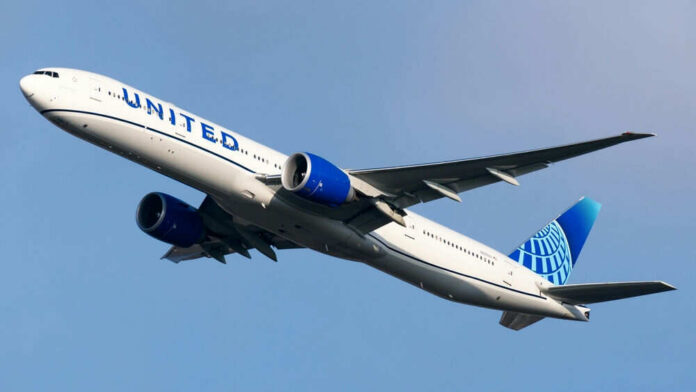
A single teenager’s prankish Bluetooth device name forced a packed United Airlines jet to turn around over the Atlantic and triggered a full-blown federal security response.
Story Snapshot
- A United flight from Newark to Spain reversed course midair after a Bluetooth device name raised a security alarm.
- Crew warnings, anxious passengers, and a ground lockdown followed as authorities treated it as a serious threat.
- Investigators later traced the “threat” to a 16-year-old’s innocently idiotically named Fitbit, not a bomb.
- The episode exposes how modern aviation is engineered to overreact—and why that may be both maddening and necessary.
How a routine transatlantic flight turned into a rolling security incident
United Airlines Flight 236 left Newark Liberty International Airport on a Saturday evening, bound for Palma de Mallorca with 190 passengers and 12 crew aboard.[2]
The Boeing 767 climbed out over the Atlantic on what should have been an overnight slog seasoned by bad movies and plastic-wrapped meals.
Somewhere midflight, that routine broke: the aircraft turned back toward New Jersey after the crew reported a potential security threat tied to an onboard Bluetooth device.[2][1]
Federal authorities are investigating an apparent prank that forced a United Airlines flight to turn around mid-air after a passenger’s Bluetooth device was reportedly named “bomb.” pic.twitter.com/9Lycpf236Q
— Breaking911 (@Breaking911) June 2, 2026
Federal Aviation Administration officials later framed the diversion as a response to a “passenger disturbance,” language that hints at confusion more than clarity.[2] Passengers reported overhead announcements from flight attendants urgently demanding everyone switch off Bluetooth.
Repeated instructions gave way to what one account described as a one-minute ultimatum when two devices remained stubbornly visible on the crew’s cabin scan. At 30,000 feet, that is not a tech support issue; it is a security problem you cannot walk away from.[2]
The Bluetooth name that set off alarms and sent a widebody home
Reports from air traffic control audio captured the heart of the scare: a device name that included a “certain four-letter word.”[2] Other reporting identifies the device as a Fitbit that a 16-year-old passenger had nicknamed “Bomb,” a joke that plays fine in a teenager’s bedroom and catastrophically in a pressurized tube governed by federal law enforcement.[1]
When that name popped up on a scan, the crew had to assume the worst, not hope for the best, because hope is not a security protocol.[2][1]
Once that word appears in an aviation context, the checklist kicks in. The tower audio described the requirement to “inspect the whole aircraft, including the cargo area.”[2]
That phrase translates into real money and real inconvenience: fuel burned to turn around, crew time blown, international connections shattered for 190 paying customers.
From this perspective, this outcome is predictable. The system is designed so that a single alarming signal means the flight aborts, and authorities investigate first and argue about overreaction later.[1]
What passengers experienced when the system slammed on the brakes
When Flight 236 landed back at Newark at 9:37 p.m., the passengers did not simply stroll to baggage claim and grumble about delays.[2] Video from the scene showed officers and crew escorting passengers off the aircraft and onto buses out on the tarmac.[2]
Port Authority police swept the aircraft, Transportation Security Administration officers re-screened passengers, and Customs and Border Protection added another layer of checks before anyone re-boarded.[2] The message was unmistakable: this was treated as a live security event, not a minor tech glitch.
United Airlines kept its public statements cautious and tight, confirming only that the flight returned due to a potential security concern and later continued to Spain with a different crew.[2][1]
That reticence is not corporate stonewalling so much as legal survival. When the Federal Bureau of Investigation (FBI) opens an inquiry, lawyers start editing adjectives.
Reports state that no charges have been filed so far against the teen whose device name sparked the chain reaction, but the federal review underscores how seriously these incidents are taken.[1]
False alarm or necessary overreaction? The security tradeoff exposed
A later investigation determined there was no actual threat to the aircraft, its passengers, or its crew; the alarm traced back solely to the Bluetooth device name rather than to any real weapon or explosive.[1]
In that sense, critics who call this an overreaction have a point: hundreds of people suffered hours of disruption because of a two-second teenage “joke.” But this criticism ignores the grim math of aviation risk. The cost of a missed real threat dwarfs the cost of an unnecessary turnaround.[1][2]
✈️ United Airlines Flight Returns to Newark After Bluetooth Device Triggers Security Alert
A United Airlines Boeing 767 operating Flight 236 from Newark to Palma de Mallorca, Spain, was forced to return to Newark Liberty International Airport after a passenger's Bluetooth device… pic.twitter.com/O0yFnOqUki— Kevin /.ink🟦 (@Icemoniey) June 1, 2026
The deeper lesson cuts both ways. Personal responsibility matters: a 16-year-old old enough to travel internationally is old enough to understand that naming a gadget “Bomb” in the age of hijackings and terror threats is not edgy, it is reckless.
At the same time, the system’s bias toward overreaction is exactly why commercial aviation remains statistically safe despite a world full of malice, error, and adolescent idiocy. Freedom to fly safely requires rules that sometimes feel absurd.
Sources:
[1] Web – United flight returns midair after Bluetooth device name reportedly …
[2] Web – United Airlines flight to Spain returns to U.S. after Bluetooth device …