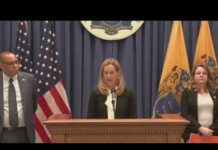


President Trump has threatened to declare a national emergency and re-federalize Washington, D.C., after Mayor Muriel Bowser announced city police will refuse to cooperate with federal immigration enforcement.
Story Highlights
- Trump threatens emergency takeover of D.C. after mayor blocks ICE cooperation.
- Federal control of the Metropolitan Police just ended in August after a 30-day intervention.
- Dispute follows mass arrest of 475 South Korean workers at Georgia plant.
- Constitutional crisis brewing over limits of presidential emergency powers.
Federal Authority Clashes with Local Defiance
The confrontation escalated rapidly after Mayor Bowser announced that the Metropolitan Police Department would cease cooperation with Immigration and Customs Enforcement except in extremely limited circumstances.
Trump responded on Truth Social, declaring he would invoke emergency powers to override local governance if the city maintains its stance. This marks the second potential federal takeover of D.C. police within two months, setting an unprecedented pattern of federal intervention in local law enforcement.
The timing appears deliberately provocative, coming just weeks after the previous federal control ended.
Trump’s August takeover lasted 30 days and required congressional approval for extension, which he secured by claiming dramatic reductions in violent crime.
However, independent analyses from civil liberties organizations dispute these claims, suggesting the intervention was based on exaggerated crime statistics rather than genuine public safety emergencies.
Immigration Enforcement Becomes Constitutional Battleground
The dispute centers on fundamental questions of federal versus local authority that go far beyond typical sanctuary city policies. Mayor Bowser cited D.C. law and community trust as justification for limiting police cooperation with ICE operations.
Her position reflects growing resistance among Democrat mayors to what they view as federal overreach in immigration enforcement. The mayor’s stance gained urgency following the September 4th mass arrest of 475 South Korean nationals at a Hyundai-LG plant in Georgia, an operation that drew international condemnation.
Trump’s response represents an escalation in tactics that bypasses traditional political negotiations. Rather than working through Congress or the courts, the president threatens direct executive action through emergency declarations.
This approach raises serious constitutional concerns about the separation of powers and the limits of presidential authority under the D.C. Home Rule Act. Legal experts warn that such federal intervention sets a dangerous precedent that could be applied to any city that opposes federal policies.
Emergency Powers Face Legal and Political Challenges
The legal framework governing D.C. presents unique complexities that complicate Trump’s threatened intervention. The D.C. Home Rule Act grants the city limited self-governance while preserving federal authority during genuine emergencies.
However, using emergency powers for immigration enforcement rather than traditional public safety threats pushes the boundaries of statutory authority. Congressional approval remains required for extended federal control, creating potential political hurdles for sustained intervention.
Civil liberties organizations have already mounted legal challenges to the previous federal takeover, arguing it violated both constitutional principles and statutory requirements.
The ACLU of D.C. characterized the intervention as government overreach designed more for political theater than genuine public safety. These legal battles will likely intensify if Trump follows through on his latest threats, potentially creating a constitutional crisis over the scope of presidential emergency powers.
Political Implications Beyond the Capital
The D.C. confrontation serves broader political purposes that extend well beyond local governance disputes. Trump’s aggressive stance appeals directly to his conservative base, which expects decisive action on immigration enforcement and crime reduction.
The president’s willingness to override local Democrat leadership demonstrates his commitment to campaign promises about restoring law and order in liberal-controlled cities. This approach energizes supporters who view federal intervention as necessary to combat what they see as irresponsible local policies.
However, the strategy carries significant risks that could backfire politically and legally. Overusing emergency powers may prompt congressional Republicans to question executive overreach, particularly if interventions appear politically motivated rather than operationally necessary. International complications from operations like the Georgia arrests create diplomatic headaches that could damage business relationships and foreign investment.