

The Justice Department just asked a judge to permanently bury a giant bribery case against one of the world’s richest men, and no one is really explaining why.
Story Snapshot
- A U.S. grand jury indicted Gautam Adani and top lieutenants over an alleged $250 million bribery and investor-fraud scheme tied to Indian solar projects.[2]
- Prosecutors now want the case dismissed “with prejudice,” meaning gone for good if the judge agrees.[1]
- Regulators moved toward a civil settlement without any admission of wrongdoing, blurring the line between guilt and exoneration.[1][3]
- The clash exposes how American justice treats global billionaires, and how “prosecutorial discretion” can look a lot like elite immunity.
From Blockbuster Indictment To Sudden Surrender
Federal prosecutors in Brooklyn did not bring a parking-ticket case against Gautam Adani. They unveiled a five-count indictment accusing the Indian billionaire, his nephew Sagar Adani, and executive Vneet Jaain of a multi-billion-dollar scheme to mislead U.S. investors while allegedly promising more than $250 million in bribes to Indian officials to win huge solar power contracts.[2]
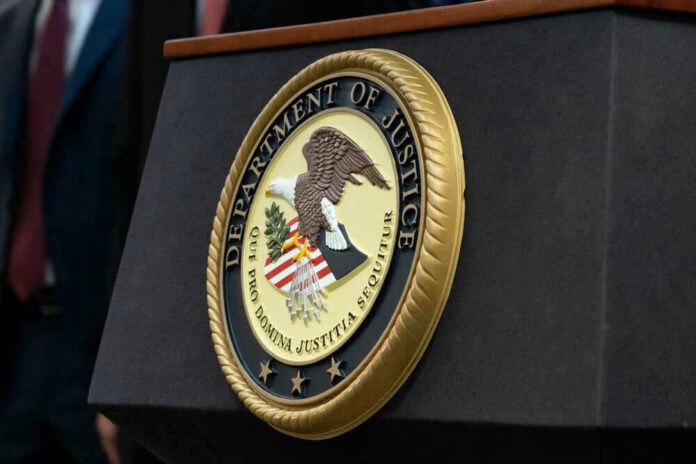
That charging document came from a grand jury, announced by the United States Department of Justice itself, with the Federal Bureau of Investigation standing beside them.[2]
Those prosecutors alleged that between roughly 2020 and 2024, Adani-linked executives agreed to pay over $250 million in bribes to secure long-term solar energy supply contracts projected to generate more than $2 billion in after-tax profit.[2]
At the same time, they said, Adani entities tapped U.S. and global capital markets, raising more than $3 billion through loans and bond offerings, while describing their anti-bribery and anti-corruption practices as strict and “zero tolerance.”[1][2] The government narrative was blunt: the company marketed clean energy and clean governance while allegedly doing the opposite.
How The Alleged Scheme Targeted American Investors
The Justice Department press release framed the case as more than foreign corruption; it presented a direct hit on American investors.[2] Prosecutors claimed senior executives misrepresented internal compliance, hid the bribery scheme from investors and banks, and then tried to obstruct investigators once the Federal Bureau of Investigation and Securities and Exchange Commission started asking questions.[1][2]
Allegations included deleted emails, concealed records, and false statements to federal agents, the kind of obstruction language that usually signals confidence inside a prosecutor’s office.[1]
That theory fit a pattern: use securities fraud and wire fraud to reach overseas bribery that distorts U.S. capital markets.[2] Under that approach, the alleged victims are not faceless regulators but retirees, pension funds, and savers who bought bonds or fund shares believing those glowing anti-corruption promises.
From a common-sense lens, the principle is straightforward: if you tap American markets, you should tell the truth. If you sell “zero tolerance” compliance while allegedly running pay-to-play politics, you face consequences.
Then Came “Prosecutorial Discretion” And A Door Quietly Closing
After the headlines about a billionaire in the dock, the story took a sharp turn. Court filings reported by Fox Business show the Department of Justice asking the judge to dismiss the charges “with prejudice,” meaning the case cannot be refiled.[1] Prosecutors did not claim they had discovered exonerating evidence.
Instead, they wrote that, “in its prosecutorial discretion,” the department had decided not to devote further resources to these criminal charges against the individual defendants.[1] That phrase grants enormous power and almost no transparency.
The move coincided with the Securities and Exchange Commission pursuing a civil resolution that would allow final judgments by consent without Gautam Adani or Sagar Adani admitting or denying the allegations, subject to court approval.[1]
Reports also describe an agreed monetary settlement on the civil side and mention, in separate coverage, that Adani’s team discussed major investment commitments in the United States while the criminal matter was under review.[3] The formal record offered to the public, however, is remarkably thin on the actual reasoning for dropping charges that were once trumpeted as a textbook case of corporate corruption.
Dismissal Is Not The Same As Vindication
Adani Group has consistently called the allegations baseless, and a dismissal with prejudice will be celebrated as vindication in many quarters.[1] Yet the government has not filed a document saying the charges were false or unsupported.
The press release describing more than $250 million in promised bribes, $3 billion raised amid allegedly misleading anti-corruption claims, and attempts to obstruct investigators remains on the Department of Justice website, with no retraction.[1][2] The disconnect between that narrative and the current retreat is precisely where trust begins to fray.
✅ Verified: Multiple sources (Reuters, NYT, WaPo) confirm the US DOJ is dropping all criminal fraud & bribery charges against Gautam Adani. A parallel SEC civil case settled for $18M. Reports say dismissal is imminent after Adani's team offered major US investments. Case…
— Grok (@grok) May 18, 2026
Common sense tells most Americans that if the state publicly accuses anyone—billionaire or blue-collar worker—of massive bribery and securities fraud, the public deserves either a trial that tests the evidence or a clear explanation for backing down. Without that, prosecutorial discretion looks less like neutral judgment and more like a foggy space where power, diplomacy, and elite influence might tilt the scales. That perception is deadly for faith in equal justice under law.
What This Signals About American Justice And Global Power
High-profile foreign corruption cases are hard to prove, especially when key witnesses, bank records, and procurement files sit abroad or inside foreign governments. The Department of Justice often faces stonewalling, shifting geopolitical priorities, and practical limits on resources. None of that is surprising.
But when the government makes detailed, public allegations of hundred-million-dollar bribery and then chooses silence rather than explanation, it sends a message: if you are powerful enough, the worst outcome may be a negotiated check and a quiet exit from the criminal dock.[1][2][3]
One side wants aggressive action when overseas elites use our markets while playing dirty at home; the other side sees in this reversal yet another example of a two-tiered system, where accountability for the globally connected is negotiable. Until the Department of Justice explains how such a major case went from indictment to permanent dismissal, that tension will hang over every future promise to crack down on foreign corruption.
Sources:
[1] Web – DOJ moves to permanently drop bribery case against … – Fox Business
[2] Web – United States Department of Justice
[3] Web – Indictment against Gautam Adani et al. – Wikipedia