

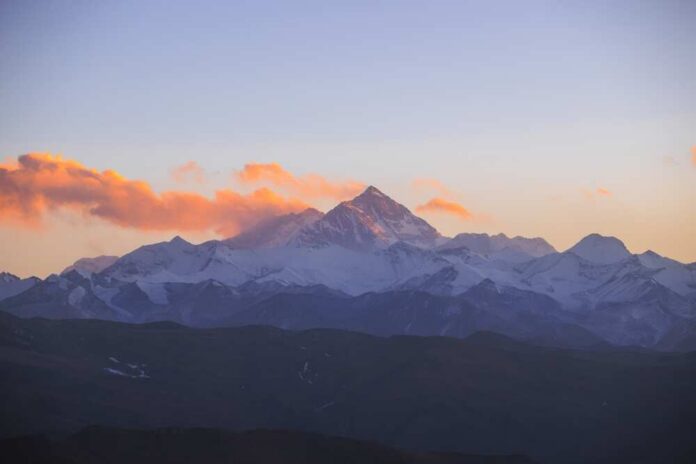
Jim Whittaker didn’t just stand on the roof of the world—he proved America could still do hard things the old-fashioned way: grit, teamwork, and a willingness to suffer for something bigger than yourself.
Quick Take
- Seattle-born Whittaker became the first American to summit Mount Everest on May 1, 1963.
- He reached the top alongside Sherpa Nawang Gombu during an expedition led by Norman Dyhrenfurth.
- Reports say he ran out of oxygen but kept going, a detail that still defines his legend.
- President John F. Kennedy awarded him the Hubbard Medal, signaling the climb mattered beyond sport.
- Whittaker spent decades building American climbing culture through The Mountaineers and broader outdoor leadership.
A Quiet Death That Reopens a Loud American Moment
Jim Whittaker died April 7, 2026, at 97, at home in Port Townsend, Washington, surrounded by family. The news lands softly, then hits hard: a living bridge to the early era of American mountaineering is gone.
His twin brother Lou died about two years earlier, tightening the sense that a whole chapter has closed. The detail that matters most is what remains open—why that 1963 summit still tugs at the American nerve.
Whittaker’s fame came from one date—May 1, 1963—but his influence came from what he did afterward. He didn’t treat Everest like a personal brand launch; he treated it like a responsibility.
That posture reads almost foreign now, when achievements get packaged into content before the boots dry. His story works because it keeps asking a question modern life avoids: what does commitment look like when nobody can “like” it in real time?
May 1, 1963: The Summit, the Sherpa Partnership, and the Oxygen Problem
Whittaker reached Everest’s summit as part of the American Mount Everest Expedition led by Norman Dyhrenfurth. He summited with Sherpa Nawang Gombu, tied to the mountain’s history as a nephew of Tenzing Norgay.
Accounts say Whittaker ran out of oxygen yet still made the top, a fact that doesn’t glorify recklessness so much as clarify the stakes. Everest punishes fantasy; it rewards preparation, judgment, and stubbornness in that order.
That summit mattered because it didn’t happen in a vacuum. The United States in the early 1960s obsessed over frontiers—space, technology, national confidence—and Everest still served as a measuring stick for human limits.
Whittaker wasn’t the first to climb it, but being the first American carried symbolic weight, like planting a flag in the mind rather than the snow. The mountain didn’t care about passports; the public did, and the timing amplified it.
Jim Whittaker, first American to reach peak of Mount Everest, dead at 97 https://t.co/5QAr0KHt4O pic.twitter.com/ig3ui1d5iy
— New York Post (@nypost) April 8, 2026
Kennedy’s Hubbard Medal and Why National Recognition Fit the Moment
President John F. Kennedy awarding Whittaker the Hubbard Medal was more than a photo-op; it framed a climb as national character on display. Hard feats once held a central place in American civic pride because they blended personal excellence with public inspiration.
Whittaker’s recognition said, plainly, that exploration and endurance weren’t fringe hobbies. Conservative common sense understands this instinct: nations stay strong when they honor real achievement, not just rhetoric, and when young people can see what earned respect looks like.
Whittaker also represented something refreshingly non-ideological: competence. He built a reputation in an arena where nature keeps the score and excuses don’t count. That’s why his name lasted beyond the headlines. People may argue about policy forever, but nobody debates whether thin air kills.
The discipline that mountaineering demands—planning, training, taking responsibility for your rope team—mirrors the virtues communities depend on when life stops being theoretical.
The Long Game: Building Northwest Outdoor Culture Instead of Chasing Glory
Whittaker kept showing up for the climbing community through decades of leadership with The Mountaineers, one of the Pacific Northwest’s defining outdoor institutions. That kind of service rarely makes national news, yet it shapes who gets trained, who gets mentored, and who comes home safe.
In practical terms, this is how a legendary summit turns into a lasting culture: not by repeating the feat, but by teaching others how to respect the mountains and each other.
His life also intersected with the growth of the outdoor recreation world tied to the Northwest, a region where gear companies, guide services, and volunteer clubs form a real civic ecosystem.
That connection matters because it reveals a quieter legacy: Whittaker helped make the outdoors accessible without pretending it was harmless. That balance—inviting people in while insisting on responsibility—feels increasingly important as more Americans seek adventure without accepting its costs.
Earth Day 1990 and the Broader Message: Mountains as a Place for Peace and Discipline
In 1990, Whittaker led the Earth Day 20 International Peace Climb, a reminder that he saw mountains as more than personal conquest. Even readers who roll their eyes at slogans can recognize the underlying idea: shared hardship can soften borders and strengthen character.
Mountains force cooperation because they strip away pretense. Nobody cares what title you have at sea level when the weather turns. The rope demands trust, and trust demands earned credibility.
Whittaker’s death will spark tributes, but the lasting takeaway should feel more challenging than sentimental. Everest today often reads like a transactional industry, and sometimes it is.
Whittaker came from an era when the point was proving you could do the impossible with limited tech and no guarantee of rescue. His example doesn’t ask people to climb Everest; it asks them to take one difficult thing seriously—and finish it without applause.
Sources:
Seattle mountaineering legend Jim Whittaker, first American on Everest, dies at 97
Jim Whittaker, first American to climb Everest, dies at 97
Jim Whittaker Obituary: Everest Mountaineer, REI