

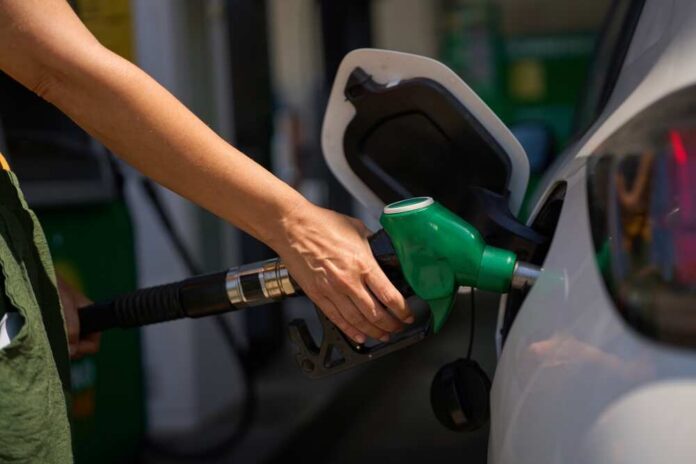
Americans are staring down another pocketbook hit as an overseas war tightens a key energy chokepoint and pushes U.S. gas prices higher at the pump.
Quick Take
- Oil markets jumped as the Iran war disrupted shipping risks around the Strait of Hormuz, a critical route for global energy.
- Brent crude rose from roughly $73 to about $83 a barrel in days, a move that can translate quickly into higher gasoline prices.
- QatarEnergy halted LNG production at major facilities after attacks, intensifying pressure on global natural gas and shipping costs.
- Analysts warned the duration of disruption matters most: a brief shock may fade, while a multi-week interruption could drive oil toward triple digits.
War risk around Hormuz is showing up in U.S. gasoline
Energy traders reacted sharply to the escalation in the Iran war as shipping risk rose around the Strait of Hormuz, the narrow passage that carries roughly one-fifth of the world’s oil and is central to liquefied natural gas flows from Qatar.
Brent crude climbed from about $73 per barrel before the weekend to around $83 by Tuesday. U.S. gasoline can respond quickly to sustained crude spikes, especially when freight and insurance costs jump alongside supply fears.
Gas prices across the U.S. jumped 11 cents overnight as the war with Iran continued to spread, pushing up the average cost nationwide to $3.11 per gallon, according to AAA. https://t.co/bvj1eWMI7l
— CBS Mornings (@CBSMornings) March 3, 2026
Reporting on the disruption described tankers idling near the UAE and Oman and major carriers adjusting routes, adding surcharges that ultimately land on consumer goods and fuel.
Even without a full closure, “wait-and-see” behavior can tighten effective supply because fewer ships are willing to transit at normal pace and cost. For drivers, the market’s message is simple: uncertainty itself can lift prices, and the pump often reflects that reality within days, not months.
LNG disruptions raise the stakes beyond oil alone
The most acute vulnerability described so far is liquefied natural gas. QatarEnergy said it ceased LNG production at key sites after military attacks, and tanker freight rates reportedly jumped about 40% as risks rose.
Because Qatar represents a major share of global LNG supply, any sustained outage tightens markets far beyond the Middle East. In Europe and Asia, that can ripple into electricity costs, industrial input prices, and broader inflation pressure—exactly the kind of second-order shock that hits families after a conflict begins.
U.S. natural gas prices also moved higher, while European natural gas futures spiked more dramatically, reflecting regional dependence and tighter alternatives.
The research also notes damage and disruption around key facilities in the region, including incidents tied to the UAE’s Fujairah area and major Saudi infrastructure. The more energy infrastructure becomes a target, the less confidence markets have in quick normalization, which is why crude, gas, and freight rates can all rise together.
Duration is the difference between a spike and a crisis
Analysts quoted in the research emphasized that markets are effectively pricing a disruption measured in weeks, not hours. Goldman Sachs’ modeling highlighted that current pricing can imply a one-month shock scenario, while warning that a longer disruption raises the risk of triple-digit oil and “demand destruction,” a term economists use when high prices force consumers and businesses to cut back sharply. That is the pathway from “painful” to “recessionary,” even if the initial trigger is overseas.
Other commentary cited suggests geopolitical oil rallies can fade when disruptions stay limited and inventories buffer the system. The research notes Gulf exporters had already moved some supply into storage outside the most vulnerable routes, which can soften the blow in the near term.
Still, the key limitation is time: storage is a bridge, not a permanent solution. If the disruption stretches beyond a few weeks, workarounds get expensive and scarce, and the price pressure can compound.
What this means for Americans watching inflation and government spending
For U.S. households, higher fuel costs act like a tax on work, commuting, and small business logistics. The research points to shipping surcharges and insurance spikes as direct channels that can lift pump prices and broader consumer costs at the same time.
After years when families were squeezed by inflation and Washington’s overspending debates, another energy-driven jump is politically and economically volatile. Limited government can’t control global chokepoints, but policy choices do shape domestic resilience.
The data in the research also carries an important caution: some claims about “10 cents in a day” are characterized as reported consumer impacts rather than a single, verified national statistic, and the underlying market move cited is a crude jump and a rise in U.S. gas benchmarks.
The core takeaway remains solid—oil moved fast, shipping risk rose, and analysts warned prices could climb “very quickly” if the disruption persists. Americans should expect volatility until the duration and scope are clearer.
Sources:
https://time.com/7382242/strait-of-hormuz-closure-threat-iran-war-trade-gas-oil-prices/
https://www.jpmorgan.com/insights/global-research/commodities/oil-prices