

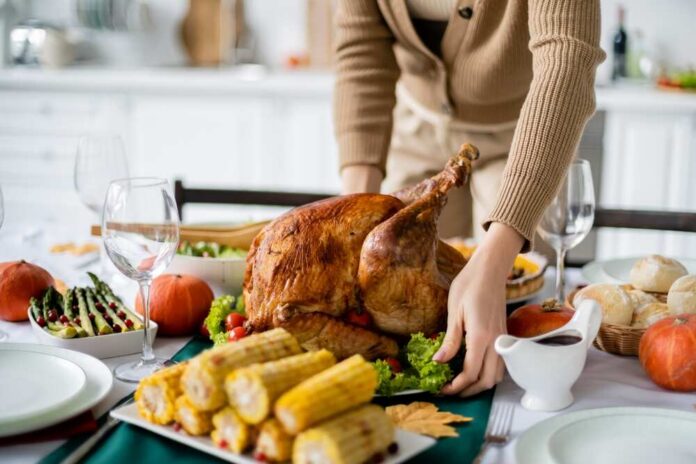
Thanksgiving costs rose again this year, and turkey led the climb while the total feast still stayed below the 2022 peak.
At a Glance
- Turkey prices jumped about 10% in key surveys, outpacing most groceries.
- The average Farm Bureau feast rose to $58.63, up more than 6% from 2025.
- Bird flu cut flocks and squeezed supply, adding pressure to turkey prices.
- Despite the jump, costs remain below the 2022 record of $64.05.
Turkey took the spotlight in a pricier holiday basket.
The American Farm Bureau Federation found the classic Thanksgiving meal for ten cost $58.63 in 2026, up more than 6% from $55.18 in 2025. That basket is a long-running yardstick that lets families compare year to year. The star item drove the change. A 16-pound frozen turkey averaged $23.68, up from $21.50. That is about a 10% increase, which rose faster than most foods on the table. Households felt it because the bird is the biggest single-ticket item.
Federal price data tracked a similar pattern. A federal store-price index showed “other uncooked poultry,” which includes turkey, up 8.4% year over year in September 2026. The same data put overall grocery prices up 1.8%. That spread tells a clear story: poultry costs climbed faster than the average grocery run. The index covers parts and whole birds, and it aligns with the Farm Bureau’s jump in whole frozen turkeys.
Avian influenza squeezed supply and lifted prices.s
Highly pathogenic avian influenza hit commercial turkey barns again. When a flock tests positive, producers must cull the whole flock. That reduces available birds and tightens supply into the holiday window. Renewed outbreaks were cited as a reason turkey prices rose, along with feed, diesel, and other costs. This tracks what farmers and buyers have seen before: when disease cuts supply near peak demand, prices move fast and far.
Wholesale markets echoed that strain. Market outlook reports pointed to historically firm prices for whole frozen hens, the standard holiday bird. Analysts highlighted forecasts near the high end of recent history, signaling tightness that retailers then had to manage on shelves. When wholesale prices run hot, stores either raise tags, shrink margins, or both. Most did some of each, which explains higher averages at the register.
Promotions softened the hit, but did not erase it.
Store flyers told a more mixed story. Government tracking of advertised prices showed some sub-dollar-per-pound turkey deals for smaller frozen birds. That price was even a touch better than the same week a year earlier at some chains. These loss-leader deals are a classic grocery tactic. Stores sell the turkey cheap and make it back on sides and desserts. Shoppers who hit a promotion could beat the average. Shoppers who missed it paid the new, higher norm.
That split explains why neighbors swapped very different checkout stories. A family that planned early and grabbed a loyalty-card bird saved real money. A last-minute buyer, or someone in a smaller market with fewer chains, saw the higher average price. Both experiences can be true at once. For policy watchers, that is a reminder: national averages guide the big picture, but local competition and timing still set many receipts.
The cost of a classic Thanksgiving dinner for 10 is rising this year for the first time since 2022, according to the American Farm Bureau Federation’s annual survey. https://t.co/XJHLwKoNhJ
— KOKH FOX 25 (@OKCFOX) November 25, 2026
What the “record” debate gets wrong and what matters now
Some headlines framed 2026 as an all-time high. The Farm Bureau survey contradicts that. The $58.63 feast is more than 6% higher than 2025, but still 8.5% below the 2022 record of $64.05. That matters for honest debate. Costs rose this year. They did not break the earlier peak. The better takeaway is simpler and more useful: turkey got meaningfully more expensive, and that lifted the whole meal total.
Here is the practical read for consumers and lawmakers who prize common sense. Disease outbreaks keep exposing weak spots in the food chain. Families benefit when production recovers faster and when stores compete hard on price. Transparent data, steady biosecurity, and lower input costs help more than slogans. For shoppers, the best move remains boring and effective: shop early, watch ads, and be flexible on bird size. For the country, aim policy at reliable supply and fair markets, not spin.
Sources:
indexbox.io, 6abc.com, kbtx.com, barrons.com, facthub.org