

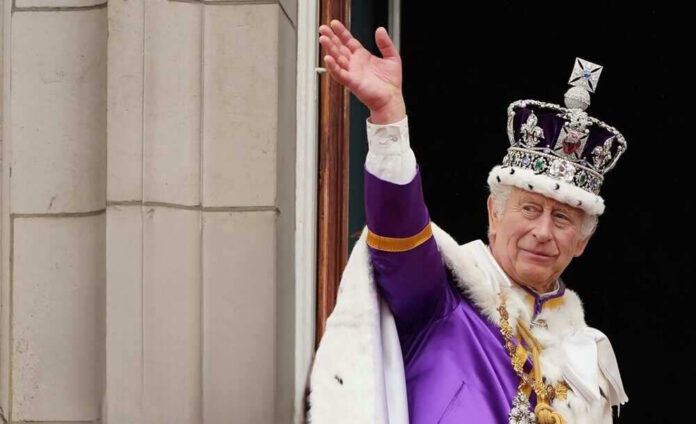
With Washington consumed by domestic battles over borders, spending, and election integrity, King Charles III is set to arrive for a high-profile state visit that could quietly reshape the U.S.-UK power balance during wartime diplomacy.
Story Snapshot
- King Charles III is expected in the U.S. in the last week of April 2026 for his first state visit as monarch.
- The trip is slated to include a White House state dinner hosted by President Donald Trump and a rare address to Congress.
- The U.S. House adjusted its schedule to accommodate the visit; the precise date has not been publicly confirmed.
- The visit comes as U.S.-UK relations face pressure tied to Middle East conflict dynamics referenced in reporting, raising the diplomatic stakes.
White House state dinner and a rare congressional address
King Charles III is scheduled to visit the United States in late April 2026, with plans that include a state dinner at the White House and an address to Congress.
The White House is expected to announce details soon, while congressional scheduling moves already point to the last week of April as the target window.
The visit would mark Charles’s first U.S. state visit since ascending the throne, and a major ceremonial moment for both governments.
King Charles will visit the U.S. in late April, Buckingham Palace said Tuesday, as Britain hopes to mend ties with President Donald Trump after the Iran war. https://t.co/WPAh3gkw3z pic.twitter.com/Z4ZWWLJPus
— NEWSMAX (@NEWSMAX) March 31, 2026
The address is being framed as historically significant because no British monarch has addressed Congress since Queen Elizabeth II did so in 1991.
That gap alone explains why congressional leadership treated the event as a priority and adjusted the House calendar.
For Americans who value tradition and stable alliances, the symbolism is clear: regardless of daily political noise, the U.S.-UK relationship remains an anchor in Western diplomacy when it is nurtured with seriousness.
Why the House changed its schedule
The House of Representatives rescheduled session days to align with the royal visit, an unusual move that signals coordination across protocol, security, and congressional logistics.
That kind of calendar shift does not happen for photo ops; it happens when leadership expects a high-attendance joint session with global visibility.
While the public is still waiting on an exact date and time, the practical preparations indicate the event is locked in at an operational level even before the formal White House rollout.
Republican priorities in 2026 also shape the backdrop inside the Capitol. Reporting has tied the timing to a Congress focused on election-security debates, including voter-ID and related reforms.
That doesn’t mean the king will weigh in on U.S. legislation—constitutional norms and royal protocol generally keep a monarch away from domestic political fights.
But it does mean the address will occur in a chamber where many lawmakers are emphasizing sovereignty, national cohesion, and public trust in institutions.
Diplomacy under pressure in Trump’s second term
The visit comes amid acknowledged diplomatic tensions over President Trump’s second-term foreign policy posture and pressure on the UK government under Prime Minister Keir Starmer.
Reporting also references the U.S.-Israel war with Iran as part of the context surrounding those tensions, but available details remain limited in the source material.
What is clear is that state visits tend to be scheduled when governments want to project steadiness, alignment, and continuity—even when hard negotiations are happening behind closed doors.
For a conservative audience that has watched global institutions weaken borders, export jobs, and reward instability, this moment will be interpreted through a different lens than the usual cable-news pageantry.
The central question is not whether the dinner looks elegant; it is whether the U.S. leverages the “special relationship” to secure concrete support for American strategic priorities.
At the same time, avoiding open-ended commitments that fuel more spending, more deployments, and more bureaucratic drift without measurable national benefit.
What makes this moment historically notable
Charles has visited the United States many times as Prince of Wales, but he has not previously delivered a congressional address as monarch.
Queen Elizabeth II’s 1991 joint address remains the modern benchmark for this type of royal appearance before Congress, and there has been no repeat by a British monarch in the decades since.
That history is why the upcoming event is being billed as rare and likely to draw broad attendance in Washington, regardless of party labels.
The long-term impact is likely to be more about optics and alliance durability than immediate policy. The short-term effect may be a brief diplomatic reset button—an opportunity for both sides to show unity in public while managing disputes in private.
Until the White House and Buckingham Palace publish the final itinerary, unanswered questions remain about timing and the specific themes of the speech.
Those details will determine whether the visit is mostly ceremonial or a marker of deeper strategic alignment.
Sources:
WH expected to announce King Charles visit
King Charles to address Congress in historic first state visit
https://www.politico.com/live-updates/2026/03/24/congress/king-charles-us-visit-congress-00841510