A naval blockade doesn’t succeed because it’s announced—it succeeds because captains believe the next mile could cost them their ship.
Story Snapshot
- U.S. Central Command said no ships breached the new blockade of Iran’s southern coast and the Strait of Hormuz in the first 24 hours.
- Six merchant vessels reportedly complied with U.S. direction by turning around, while hundreds of other ships lingered amid mining threats and uncertainty.
- Shipping activity still showed a small number of transits through the strait, creating an immediate credibility contest: “no breaches” versus “some movement.”
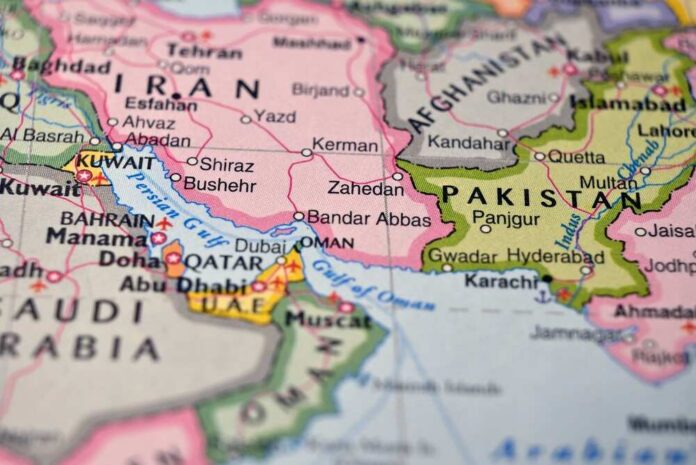
- The blockade’s purpose goes beyond interdiction; it aims to restore non-Iranian freedom of navigation after Iran’s month of restrictions and alleged pay-to-pass controls.
- China’s condemnation and ownership ties to at least one transiting vessel raise the stakes from regional pressure to potential great-power friction.
The First 24 Hours: A Blockade Measured in Turnarounds, Not Headlines
U.S. Central Command’s message after day one sounded absolute: no ship made it past the blockade. That claim matters because a blockade is theater and law enforcement at the same time; it relies on compliance more than constant force.
Reports said six merchant vessels turned around after U.S. direction, and hundreds remained stuck, chilled by Iranian sea mines and threats that make even “routine” transits feel like roulette.
US military says no ships made it past blockade in first dayhttps://t.co/nI8zidg6WP
— The Hill (@thehill) April 14, 2026
Day-one numbers also exposed the unavoidable problem: people track ships. Shipping data and news coverage pointed to a small number of vessels still transiting the Strait of Hormuz, including traffic not tied to Iranian ports.
That distinction sits at the heart of the dispute—whether the blockade targets Iranian-bound commerce only or aims to control the entire lane. In practice, the sea doesn’t care about press releases; it cares about who stops whom.
The Strait of Hormuz: One Chokepoint, Two Definitions of “Control”
The Strait of Hormuz remains the world’s most anxiety-inducing shortcut, with roughly a fifth of global oil flow tied to its narrow corridor. That explains why “freedom of navigation” isn’t a slogan to shipping executives; it’s the difference between predictable insurance costs and a crisis surcharge.
Iran’s reported month-long restrictions, with approvals or payments and reduced daily throughput, set the stage for Washington’s response: a blockade designed to reverse who gets to say “yes” at the strait.
President Trump ordered the blockade after failed talks, with a ceasefire clock still running in the background and hints of possible direct discussions in Pakistan. That’s classic pressure diplomacy: tighten economic screws while leaving a door cracked open for negotiations.
A blockade without clear rules invites miscalculation, and miscalculation in a mine-threatened chokepoint escalates faster than any speech.
What “Enforcement” Actually Looks Like: Destroyers, Notices, and Risk Calculus
Reports described a sizable U.S. posture—troops, aircraft, ships—and mentioned Arleigh Burke-class destroyers with reinforcements on the way, including a carrier group. Still, former Royal Navy commander Tom Sharpe highlighted an operational truth: early on, the U.S. may not have enough hulls on scene to physically shadow every merchant ship.
That’s why navies issue notices and lean on compliance. The real enforcement tool becomes fear of being the one vessel used to prove a point.
Iran’s asymmetric leverage—mines and threats—complicates everything. Mines don’t need to sink ships to work; they only need to be plausible. The result is “self-blockade,” where traffic stalls because owners, insurers, and crews refuse the risk.
That can make the U.S. claim of “no breaches” simultaneously easier and harder to interpret: easier because ships avoid confrontation, harder because a few transits might still occur without any dramatic interception to verify who complied and why.
China Enters the Frame: Commerce, Condemnation, and the Collision-Course Problem
One of the most telling day-one details involved a Chinese-owned vessel reportedly carrying methanol to Iraq. That kind of cargo run sounds mundane until you realize how quickly “mundane” becomes geopolitical when a blockade begins.
China’s condemnation signals it sees the operation as more than a regional policing action. Beijing’s interest is straightforward: predictable sea lanes for trade. Washington’s interest is equally direct: stopping Iran from monetizing coercion and restricting a global artery.
Does the policy defend Americans and uphold lawful commerce without inviting needless war? The answer depends on discipline. If U.S. forces focus tightly on Iran-linked maritime traffic while allowing non-Iranian passage, the blockade reads as targeted pressure.
If enforcement becomes inconsistent—claims of zero breaches alongside visible movement—Washington risks turning strength into confusion, and confusion is the one thing adversaries can exploit cheaply.
The Open Loop: What Happens When the First Ship Decides to Test the Line
Hundreds of vessels lingering near the strait create a powder keg of incentives. Every extra day stuck costs money, burns schedules, and pressures captains to gamble.
The next phase won’t hinge on day-one compliance; it will hinge on the first disputed interception, the first alleged mine incident, or the first public standoff with a ship tied to a major power. That’s when slogans about “freedom of navigation” become decisions made in minutes on a bridge at sea.
Expect the information war to grow louder as the operational picture stays murky. The U.S. can call a blockade “airtight” if Iran-bound ships turn away, while trackers can still point to transits that never aimed for Iranian ports.
Both can be technically true, and that technicality matters because credibility drives compliance. The quiet question behind all of it: when the ceasefire window narrows and reinforcements arrive, does this end with talks—or with a single confrontation that forces everyone’s hand?
Sources:
US military says 10,000 troops, planes, ships taking part in naval blockade of Iran