

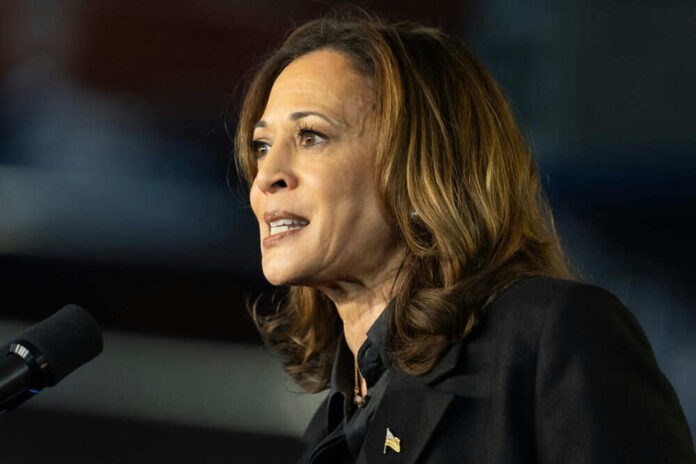
Kamala Harris’s abrupt decision to abandon any plans for a California governor run in 2026 has left Democrats scrambling and voters across the country wondering if she’s gearing up for another failed shot at the White House instead.
At a Glance
- Kamala Harris announced she will not run for California governor in 2026, ending months of speculation.
- Her decision leaves the Democratic field wide open in the nation’s most populous—and troubled—state.
- Many see this as a strategic move to keep her options open for a 2028 presidential campaign.
- Political insiders and voters alike are questioning what Harris’s next play will be after her 2024 defeat.
Kamala Harris Bows Out, California Democrats Left Leaderless
Former Vice President Kamala Harris publicly confirmed on July 30, 2025, that she will not be entering California’s chaotic 2026 gubernatorial race. For months, party operatives and left-leaning media speculated she’d return to California politics after her failed 2024 presidential bid—because, as we know, Democrats love recycling their candidates no matter how many times the voters reject them. But Harris’s big announcement has left her party in the lurch, with no clear favorite to replace outgoing Governor Gavin Newsom, who’s finally being term-limited out of office. The news is a gut punch for California’s Democratic establishment, already reeling from rising crime, taxes, and a mass exodus of businesses and families to freedom-loving states across the country.
Harris, a California native and long-time figure in the state’s political machine, has held nearly every office on the progressive career ladder—San Francisco District Attorney, California Attorney General, U.S. Senator, and of course, vice president under Joe Biden. After her 2024 loss to President Trump, many predicted she’d use the governor’s mansion as a political consolation prize or stepping stone back to national relevance. Yet, after teasing the idea all spring, Harris shut down the rumors with a carefully scripted statement: “For now, my leadership—and public service—will not be in elected office. I look forward to getting back out and listening to the American people, helping elect Democrats across the nation who will fight fearlessly, and sharing more details in the months ahead about my own plans.” Translation: keep your eyes peeled for another Harris presidential campaign in 2028.
The Fallout: Power Vacuum and Scramble for Control
With Harris out, the Democratic bench in California looks shockingly thin. The party is left to scramble for a nominee to inherit the mess Newsom leaves behind—sky-high homelessness, failing schools, and a tax base that’s evaporating faster than their credibility. Among the names already jostling for position: former Health and Human Services Secretary Xavier Becerra and ex-Congresswoman Katie Porter. Neither carries the national name recognition or fundraising firepower of Harris, but with the former vice president stepping aside, the campaign coffers and media attention are suddenly up for grabs. As the Democratic Party attempts to patch the hole, the opportunity for new candidates—and maybe even a conservative challenger—to break through has never been greater.
Harris’s decision also exposes the nervous underbelly of the Democratic Party. Party insiders privately admit that a Harris run would have frozen out rivals and sucked up donor dollars, but her persistent unpopularity and disastrous 2024 performance left many worried she’d drag the whole ticket down again. Now, with her exit, the party faces the daunting task of finding a candidate who can unite the left’s fractured coalition while addressing the real-world crises plaguing the state.
Reading the Tea Leaves—Is 2028 the Real Goal?
Political analysts and Democratic strategists are almost unanimous: Harris’s move is calculated to keep her name in the national conversation without getting bogged down by the daily disasters of California governance. Running for governor would have required a multi-year commitment, effectively closing the door on a 2028 presidential campaign. By staying out, Harris can travel, fundraise, and position herself as the “fresh face” (again) for her party in four years—despite her track record in office and at the polls.
Donna Brazile, a longtime Democratic strategist, put it bluntly: Harris has “so many roles she can play, whether it’s as a private citizen or a public official.” That’s one way to spin a political retreat. Meanwhile, observers note that the rarity of a former vice president and failed presidential nominee considering a gubernatorial run only underscores how desperate the Democratic Party is to rehabilitate her image and find a winning formula. But after years of failed policies and tone-deaf leadership, voters may not be buying what Harris or her party are selling next time around.
What This Means for California—and the Country
In the short term, Harris’s withdrawal gives other Democrats a shot at the governor’s mansion. But with no clear frontrunner and an electorate fed up with the status quo, the 2026 race is anyone’s game. California’s future—already hanging by a thread thanks to endless progressive “solutions” that never solve anything—now depends on fresh faces stepping up to tackle real problems instead of chasing headlines and higher office.
For the national stage, the move signals that Harris isn’t finished with her White House ambitions, despite her record of electoral disappointment. While some on the left see this as a savvy play, conservatives see it for what it is: more political maneuvering from a career politician who puts her own ambitions above the needs of her state and country. As the 2028 cycle approaches, voters will remember who showed up to fix America’s problems—and who just kept chasing the next rung on the ladder.