

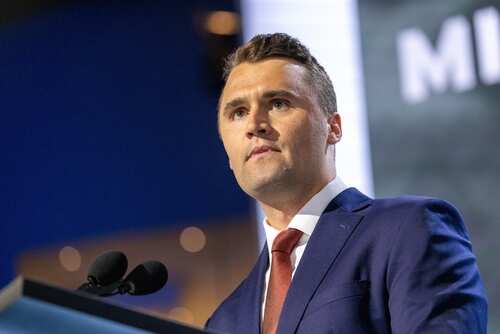
A leaked clip from Madison Square Garden captured Dave Chappelle saying he “felt better” after Charlie Kirk was murdered—and Erika Kirk says that line crossed a bright moral line.
Story Snapshot
- Chappelle’s joke about Charlie Kirk’s assassination sparked swift backlash online.
- Erika Kirk condemned the routine as “beyond disgusting” and dehumanizing.
- A second circulating line suggested Kirk was “looking up,” widening outrage.
- Sponsors and media figures distanced themselves as the clip spread.
What Chappelle Said On Stage And Why It Landed Hard
Dave Chappelle performed his Karmageddon show at Madison Square Garden on November 7, 2026. A leaked attendee video captured him pivoting from a remark about the fear of public speaking to a line about Charlie Kirk’s killing. The reported quote: “Ever since that guy Charlie Kirk got murdered — and I shouldn’t say this publicly — but I feel better.” The audience laughed, and the clip raced across social media within hours, driving headlines and condemnation.
Another circulating clip extended the bit. Reports quote Chappelle saying he was “sure Charlie Kirk is looking up at us right now, laughing so hard he can’t breathe.” That line read as a taunt tied to death and the afterlife. It hardened reactions across the political spectrum, because it moved past one stray phrase and into a theme about a slain person as a punchline.
Erika Kirk’s Response And The Human Cost
Erika Kirk, Charlie Kirk’s widow, answered fast and clear. She called the routine “beyond disgusting” and said political assassination and the destruction of human life are not entertainment. Her objection centered on dignity for the dead and empathy for the living. She argued jokes like this strip away the value of life and make cruelty feel normal, especially when delivered to a roaring crowd in a famous arena.
That stance resonates with common-sense boundaries many Americans hold. Freedom to joke does not erase basic decency. You can defend speech and still reject applause for death as a gag. Most people know grief is not a setup for laughs. When a widow has to relive a killing because a famous comedian made it material, the moral math changes. The public can sense that line even without a law textbook or a comedy seminar guiding them.
The Backlash Machine: Laughter In The Room, Blowback Everywhere
Reports describe laughter in the room, which is the currency of stand-up. But the clip left the building and met a wider audience that did not buy the bit. Conservative voices and some brands pulled away from content tied to similar jokes, signaling that social norms and sponsor risk now run in parallel tracks. The New York Sun noted sponsor exits in related contexts, showing how fast brand safety triggers when death-as-humor hits a feed.
Coverage also detailed how the phone-sealed show design could not stop a leak from surfacing, then spreading. That design means the most shocking line defines the story once it escapes. The internet strips out tone, pacing, and setup. Only the barb remains. That dynamic helps explain why the joke dominated news cycles and why condemnation outpaced any effort to frame it as satire or dark irony in context.
Comedy’s Edge, Speech’s Limits, And A Civic Norm
Political comedy often blurs meaning. It can spark attention and build in-group energy. It can also harden tribal anger and make cruelty feel acceptable. Scholars have long noted that political humor can mobilize supporters while pushing outsiders away. That dual effect is not new. The modern twist is speed: clips travel faster than intent, and platforms amplify outrage. Brands then act as referees, with their wallets setting the cost of crossing lines.
https://x.com/RT_com/status/2119417103610433708
None of this turns a cruel joke into a crime. But it does put a spotlight on a basic civic norm that conservatives, moderates, and many liberals share: Do not cheer or play-act joy about a political killing. That norm protects everyone, left or right, famous or unknown. Erika Kirk’s rebuke anchors that standard in lived grief. The crowd at a show can laugh. The rest of the country can answer with a louder no, and choose what kind of culture it pays to see.
Sources:
youtube.com, seattletimes.com, nysun.com, complex.com, nine.com.au