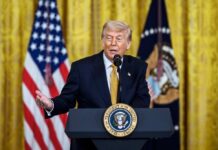


Bipartisan Senate investigation into War Secretary Pete Hegseth’s alleged “kill everybody” orders exposes serious questions about military accountability and the rule of law.
At a Glance
- GOP and Democrat senators launched a joint investigation into allegations that Defense Secretary Hegseth ordered extrajudicial killings of suspected drug traffickers in Caribbean airstrikes.
- More than a dozen strikes on alleged narco-trafficking vessels have killed over 80 people in three months, raising concerns about due process and international law compliance.
- Hegseth dismissed The Washington Post’s report as “fabricated” while defending the strikes as lawful military operations against narco-terrorists.
- International investigators and congressional members question whether the campaign constitutes extrajudicial killings, murder, or war crimes under existing legal frameworks.
Senate Committee Demands Accountability
On November 29, 2025, GOP Senator Roger Wicker, Chairman of the Senate Armed Services Committee, and Democrat Senator Jack Reed announced a bipartisan investigation into War Secretary Pete Hegseth’s conduct.
The joint statement confirmed the committee received reports regarding alleged follow-on strikes targeting suspected narcotics vessels in the Caribbean and directed formal inquiries to the Department of War.
This marks a significant moment where both parties recognize the need for vigorous oversight when military operations raise constitutional and legal concerns.
Senators vow oversight after report Pete Hegseth told troops to "kill everybody" in boat strike https://t.co/8IxG9dmcl0
— The Hill (@thehill) November 29, 2025
The September 2 Strike and Escalating Pattern
The Washington Post reported that on September 2, 2025, Hegseth allegedly ordered military personnel to “kill everybody” aboard a vessel suspected of drug trafficking.
Following an initial missile strike that left two survivors, a Special Operations commander reportedly ordered a second strike to comply with Hegseth’s directive, resulting in the deaths of both men.
This incident marked the beginning of an intensifying campaign: over a dozen similar strikes have followed, killing more than 80 people across three months, according to congressional sources and international observers.
Constitutional and Legal Concerns
The escalating aerial campaign raises fundamental questions about executive power and adherence to law. International investigators and members of Congress have questioned whether these operations constitute extrajudicial killings—executions without trial or legal process.
Some experts characterize the actions as potential war crimes, directly contradicting Hegseth’s assertion that strikes represent lawful military operations.
These allegations strike at the core conservative values of constitutional governance and the rule of law, principles that protect Americans from government overreach at home and abroad.
Hegseth’s Defense and Administration Position
On November 28, 2025, Hegseth responded to The Washington Post’s allegations, dismissing the report as “fabricated, inflammatory, and derogatory reporting” and designed to discredit the administration’s work.
He maintained that the strikes are “specifically intended to be lethal, kinetic strikes” against narco-terrorists, framing the operations as necessary military action.
However, his characterization does not address the core allegation: whether ordering “no survivors” and executing individuals without judicial process violates both domestic constitutional protections and international humanitarian law that bind all nations.
What Conservatives Should Know
This investigation matters because it tests whether any administration—regardless of party—remains accountable to constitutional limits on executive power. Conservatives rightly champion strong border security and aggressive action against drug trafficking networks that poison American communities.
However, the rule of law and constitutional governance are non-negotiable principles. If Defense Department officials ordered killings without due process, it represents government overreach that threatens the very constitutional protections conservatives defend.
The bipartisan investigation signals that some lawmakers understand this distinction and refuse to sacrifice constitutional principles, even for popular policy objectives.