

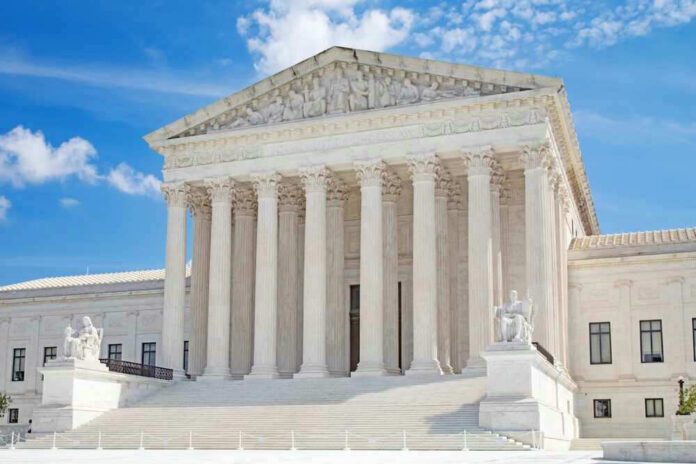
Supreme Court denies Alabama’s plea, potentially freeing a death row inmate convicted of murdering a sheriff’s deputy after 35 years, overriding a jury’s life sentence recommendation.
Story Snapshot
- U.S. Supreme Court rejected Alabama’s appeal on March 2-3, 2026, affirming a federal ruling on prosecutorial racial bias in jury selection.
- Michael Sockwell, convicted in 1990 for the 1988 murder-for-hire killing of Deputy Isaiah Harris, faces a new trial or release by March 18, 2026.
- The 11th Circuit found prosecutors intentionally struck Black jurors, violating Batson v. Kentucky protections.
- The judge overrode the jury’s 7-5 life recommendation to impose death; the practice is now banned in Alabama since 2017.
Crime and Conviction Details
Montgomery County Sheriff’s Deputy Isaiah Harris suffered a fatal gunshot to the face in 1988 while driving to work. Prosecutors charged Michael Sockwell with capital murder in a murder-for-hire plot arranged by Harris’s wife, who received a reduced life sentence.
In 1990, a jury convicted Sockwell and recommended life imprisonment by a 7-5 vote. The trial judge overrode this to sentence Sockwell to death, a practice Alabama voters banned through a 2017 constitutional amendment. Sockwell has remained on death row for over 35 years.
Supreme Court decision paves way for new trial for Alabama man on death row since 1990https://t.co/g4PkQDjlyA
— Siskolegal (@Sisko_legal) March 3, 2026
Federal Courts Uncover Jury Selection Violations
In June 2026, the 11th U.S. Circuit Court of Appeals ruled 2-1 that Assistant District Attorney Ellen Brooks repeatedly and purposefully struck qualified Black jurors from Sockwell’s trial.
Prosecutorial notes revealed Brooks targeted Black jurors she deemed sympathetic, violating the 14th Amendment under Batson v. Kentucky (1986), which prohibits race-based peremptory challenges. Judge Charles Wilson authored the majority opinion, citing trial records as damning evidence. A dissenting judge favored upholding the conviction.
Supreme Court Denial Seals Path Forward
The U.S. Supreme Court declined to review the 11th Circuit’s decision on March 2-3, 2026, clearing the way for action. In November 2026, a federal district judge ordered Montgomery County prosecutors to pursue a new trial or release Sockwell by March 18, 2026.
Sockwell’s attorney, Michael Rayfield, stated, “Michael has been denied his right to a fair trial for more than 35 years. We’ll continue to fight for his freedom.” The Montgomery County DA’s office confirmed intent to retry but provided no details.
Stakeholders and Broader Ramifications
Key players include Sockwell (63), seeking freedom; the Harris family, facing a delayed closure; and Alabama’s Attorney General’s Office, which unsuccessfully appealed to preserve the conviction.
Prosecutors retain leverage for retrial but risk release if they miss the deadline. This case highlights federal oversight of state capital punishments in Alabama, Georgia, and Florida.
It reinforces Batson enforcement, potentially increasing appeals and reducing death sentences tied to biased jury selection, while exposing past judicial override flaws now reformed.
Conservatives value swift justice for victims like Deputy Harris, yet constitutional due process demands fair trials without racial discrimination in jury selection. This ruling upholds 14th Amendment principles against prosecutorial overreach, ensuring individual liberty under law.
Retrial costs burden Montgomery County taxpayers, underscoring tensions between state sovereignty and federal intervention in death penalty cases. Limited details on retry plans leave uncertainties, but the deadline looms critically.
Sources:
Supreme Court Clears Way for New Trial for Alabama Death Row Inmate
Supreme Court decision paves way for new trial for Alabama man on death row since 1990
Alabama man on death row since 1990 to get new trial