
President Trump called out ABC News correspondent Jonathan Karl days after surviving an assassination attempt, not for his well-being, but for allegedly fabricating a story that turned a presidential security crisis into personal publicity.
Story Snapshot
- Trump publicly denied calling ABC’s Jonathan Karl after an assassination attempt, contradicting Karl’s alleged claim that Trump checked on him
- The President accused Karl of attempting self-aggrandizement during a national security crisis, stating, “this was a hit on ME, not HIM”
- This confrontation follows ABC’s $15 million defamation settlement with Trump in 2024 over false rape liability statements
- Trump claims Karl subsequently called him twice, with the second call confirming the original call never happened
- The incident reignites questions about media access and credibility during heightened White House security concerns
When Personal Attacks Follow Political Ones
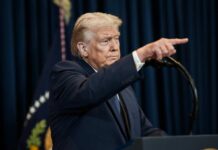
Trump took to Truth Social on Monday afternoon with a pointed message directed at Karl. The President stated flatly that he never made a phone call to check on the ABC correspondent following the assassination attempt.
According to Trump’s account, Karl not only misrepresented the facts but attempted to insert himself into the narrative of a serious threat against the commander-in-chief.
Trump wrote that Karl was “trying to make himself look important” and labeled the reporting as emanating from “ABC Fake News.” The allegation strikes at journalism’s core vulnerability: When reporters become the story, truth often becomes collateral damage.
President Trump: Jonathan Karl, of ABC Fake News, made a statement that I called him early in the morning, the day after the assassination attempt, to ask whether or not HE was OK. No, this was a hit on ME, not HIM, and I didn’t make such a call, why would I do that? He called… pic.twitter.com/F69MOFXhYT
— World Source News (@Worldsource24) May 4, 2026
The timing compounds the controversy. An assassination attempt on a sitting president represents one of democracy’s gravest security failures, yet the dispute centers not on protective measures or perpetrator motives but on whether a journalist received a courtesy call.
Trump contends that Karl actually attempted to reach him unsuccessfully and then called again to confirm the truth. This version paints Karl as either confused about basic facts or deliberately manipulating events for professional advantage during a national crisis, neither of which inspires confidence in objective reporting.
The ABC Pattern Nobody Can Ignore
This latest clash extends a documented pattern between Trump and ABC News that transcends typical media-president tensions. The 2024 settlement stands as Exhibit A: George Stephanopoulos and ABC paid Trump $15 million after the anchor falsely stated on air that Trump was found “liable for rape” in a civil case.
That expensive correction established more than legal liability; it validated Trump’s longstanding accusations of reckless reporting at the network.
The settlement demonstrated that Trump’s “fake news” label occasionally sticks because sometimes the news actually is fake, or at a minimum, legally indefensible.
Recent months added fuel to an already blazing relationship. Trump dismissed an ABC reporter in the Oval Office as representing “ABC fake news” while dodging IRS lawsuit questions.
On Air Force One, he escalated further, calling an ABC correspondent “very obnoxious” and branding the network “the most corrupt news organization on the planet” during discussions about Middle East military deployments.
These weren’t offhand remarks but calculated public rejections of ABC’s legitimacy, delivered in settings designed for maximum impact. Each incident builds on the last, creating a documented history that makes Karl’s alleged phone call claim harder to dismiss as isolated confusion.
What Really Happened on That Call
Trump’s version contains specific, checkable details. He states Karl called him unsuccessfully, then called a second time. That second conversation allegedly resulted in Karl confirming that Trump never initiated contact to check on him. If accurate, this sequence suggests Karl recognized his mistake but only after Trump went public.
The absence of ABC’s rebuttal or clarification leaves a conspicuous void where journalistic accountability should live. Networks routinely defend their correspondents against presidential attacks, yet silence here implies either agreement with Trump’s account or a strategic calculation that engagement causes more damage than deflection.
Trump Accuses ABC Reporter of False Claim https://t.co/DXE5oSJo5Q
— CallieBenson (@CallieforTrump) May 5, 2026
The specificity of Trump’s denial matters considerably. He didn’t issue vague complaints about media bias or general unfairness. He identified a reporter, described a false claim, outlined the actual sequence of phone calls, and noted Karl’s confirmation. This level of detail invites verification and creates accountability.
If Trump fabricated these particulars, ABC possesses phone records and Karl’s notes to disprove them. Their silence suggests verification would not serve their interests, which itself speaks volumes about whose account holds water under scrutiny and whose evaporates under examination.
The Bigger Stakes Beyond Bruised Egos
This dispute transcends personal grievances between a president and a reporter. It crystallizes fundamental questions about media access during security crises and whether journalistic privilege survives factual disputes.
Trump’s supporters see confirmation of media narcissism, where reporters exploit presidential vulnerability for professional advancement. ABC’s defenders might argue that Trump weaponizes every interaction to undermine press credibility.
Both perspectives miss the central issue: In a functioning democracy, citizens deserve accurate information about threats to their president, not contested narratives about who called whom. When that basic standard fails, institutional trust collapses regardless of political affiliation.
Sources:
Trump Accuses ABC Reporter of False Claim – Newsmax