
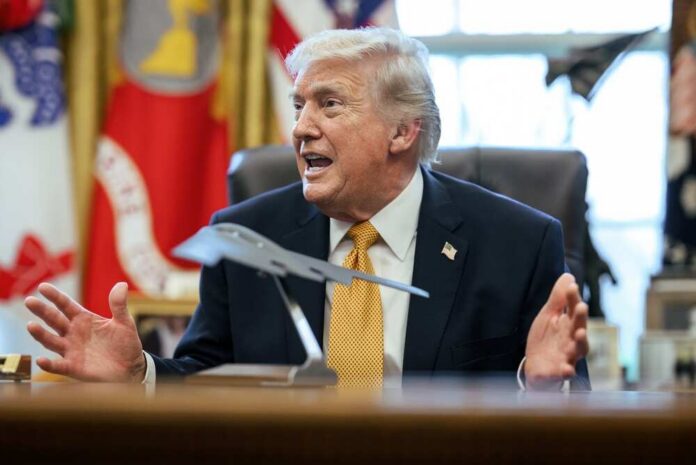
President Trump barred CNN, MS NOW, and Politico from the White House and enforced it the next day, igniting an immediate First Amendment fight.
Story Snapshot
- Trump announced an immediate ban tied to “fake news” complaints.
- Reporters from the three outlets were turned away the next day.
- The outlets and the White House Correspondents’ Association objected on constitutional grounds.
- Prior court fights over press access shape what comes next.
What Trump Announced And How Fast It Hit
Trump said on September 18, 2026, that CNN, MS NOW, and Politico would be banned from the White House “effective immediately,” blaming “constant ‘reporting’ FAKE NEWS!” and what he called a pattern of false or slanted stories.
He framed the ban as a response to “cumulative stories” rather than one report. The next day, reporters from the three outlets were denied entry to the White House grounds, showing the directive moved from words to action without delay.
The administration did not lay out a detailed mechanism. Reports did not clarify if the ban covered hard passes, briefings, pool events, or all grounds access. That gap matters because different spaces carry different legal rules.
The lack of specifics also feeds claims that the move was ad hoc. Still, operational enforcement at the gate set a clear fact pattern: the White House used physical control of entry to exclude named outlets within 24 hours.
How The Media And Press Corps Pushed Back
CNN said the ban was an illegal assault on its constitutional rights and vowed to continue reporting on the government regardless of access barriers. Politico said it would keep reporting fairly and “vigorously defend” First Amendment rights.
The White House Correspondents’ Association urged the administration to restore access, saying the Constitution protects press freedom from government interference, including viewpoint-based exclusion. These objections set up a classic press-freedom clash.
Reporters from CNN, MS NOW, and Politico documented being turned away after the announcement, which gave their legal and public statements a factual anchor. Their claims center on viewpoint discrimination.
They argue the ban punishes coverage the president dislikes, not misconduct. That argument, if proven, lands on constitutionally sensitive ground when applied to spaces the government opens to many journalists on similar terms.
🔊 CNN, MS NOW and Politico journalists say the White House confiscated their press passes after President Trump barred them from its grounds. Listen on the Reuters World News podcast https://t.co/XOJCOWGssf pic.twitter.com/YY2BCW8lCF
— Reuters (@Reuters) September 20, 2026
What The Law Likely Allows And Blocks
Federal courts have drawn a line between tightly controlled presidential spaces and facilities broadly open to the press.
The District of Columbia Circuit has said the White House cannot exclude journalists from generally opened press facilities because of viewpoint, while also holding that restricted spaces like the Oval Office are not open forums for First Amendment claims in the same way.
A district court judge likewise wrote that the government cannot open doors to some journalists and shut them to others for their views.
Those rulings suggest two tracks. The administration has more leeway in small, invite-only settings, but far less in routine press areas. If the ban blocks hard passes or daily access to already opened facilities, courts may see it as viewpoint discrimination.
If it limits only selective, space-limited events, the White House may argue it acted within discretion. The policy’s vagueness on scope weakens the defense and complicates compliance with the court line.
What Matters Next For Governance And Accountability
Americans need tough coverage and a White House that can function without press briefings turning into theater. Both can exist. The conservative case for press freedom is simple: sunlight keeps government honest, while order and fairness keep the room useful.
If the White House shows specific, documented rule violations by any outlet, targeted discipline tied to conduct, not content, can pass legal and common-sense tests. A blanket, viewpoint-based wall likely will not.
The fastest off-ramp is clarity. The administration can publish the policy’s scope, cite neutral criteria, and name any formal process for review and appeal. The outlets can continue reporting and, if needed, test the policy in court. Voters will judge results, not rhetoric.
If the goal is accuracy, set standards and enforce them evenly. If the goal is punishment, courts and the public usually push back. The facts at the gate will decide which story sticks.
Sources:
cnbc.com, reuters.com, abcnews4.com, nbcnews.com, nypost.com, usatoday.com, dw.com