
President Trump put a $5,000 check at the center of the midterms and tied it to victory.
Story Snapshot
- Trump pledged $5,000 to every U.S. adult if Republicans win both chambers of Congress.
- He called it a “Trump dividend” and said the money must be spent inside the United States.
- The Dallas midterm convention audience heard him link the idea to economic success.
- Reporters estimate a likely price tag north of $1 trillion, not from Trump’s remarks.
What Trump Promised In Dallas And On What Terms
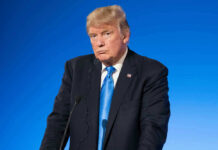
President Trump told the Republican midterm convention in Dallas that every U.S. adult would receive $5,000 if Republicans win control of both the House and the Senate.
He framed the payout as a “Trump dividend,” comparing it to how a successful company shares profits with its shareholders.
He added one rule for the cash: spend it in the United States. The remarks set clear conditions and timing tied to the election, not an immediate policy rollout.
Coverage from multiple outlets reported the same core elements: the $5,000 figure, the adult eligibility framing, and the win-both-chambers requirement. The setting was the party’s midterm convention in Dallas on September 9-10, with Trump as the main draw.
The line that the payment was justified by “tremendous strength and success economically” carried his familiar argument that growth should flow back to citizens in cash form.
NEW: President Trump makes a major promise at the Republican midterm convention in Dallas: $5,000 for every adult U.S. citizen if Republicans win both the House and Senate in the midterms.
“I will issue a dividend to every adult citizen in the United States of America for… pic.twitter.com/XqiphY7y8a
— Fox News (@FoxNews) September 10, 2026
How The “Dividend” Framing Lands With Voters
The language of a “dividend” taps two powerful ideas. First, it is simple: a number, a winner, a check. Second, it borrows the logic of ownership, where citizens feel like shareholders in the nation.
That framing has precedent in Alaska’s annual dividend funded by a state wealth fund, though that model runs on rules and investment returns, not election outcomes. The Dallas pitch kept the concept broad and tied to party control, which maximizes attention in a short window.
American voters over 40 remember pandemic checks and tax rebates. They also remember the gap between rally lines and law. The dividend pitch speaks to pocketbook stress and a desire for visible wins.
It also makes a clear ask: vote to unlock the benefit. That direct transaction is rare in national politics. It can energize a base fast because it is easy to repeat, easy to share, and easy to imagine. The complexity lives later, in Congress and the budget office.
The Cost Math And The Missing Mechanism
Reporters put a rough price tag well above $1 trillion, based on adult population counts. That estimate did not come from Trump’s speech. It reflects simple multiplication more than a scored plan. The speech did not detail a legal pathway, a funding source, or an agency playbook.
That is normal for a convention promise. The election condition makes the question sharper: what bill, what committee, what offsets, and on what timeline after a win?
🚨 🚨 🚨 NOBODY KNOWS HOW RECKLESS TRUMP'S $5,000 ELECTION-WIN DIVIDEND ACTUALLY IS RIGHT NOW.
– 🇺🇸 Trump just pledged $5,000 to EVERY adult citizen — but ONLY if Republicans win both the House and Senate
– 💵 ~245,000,000 adult citizens × $5,000 = ~$1.2 TRILLION price tag
– 🏛️…— Trinity (@0xtrinityguy) September 10, 2026
Common sense says any nationwide cash transfer requires Congress to act and a revenue plan that does not spike inflation or punish work.
A made-in-America spending rule aligns with supply-side aims, but without an enforcement mechanism, it reads as a patriotic nudge more than a binding control.
Why This Pitch Works Politically Right Now
Cash promises cut through noise because they are concrete and personal. A retiree can picture a home repair. A small shop owner can picture inventory. A parent can picture a car fix. By hinging the payout on a win, Trump turned the promise into a scoreboard.
That design keeps supporters focused on turnout and down-ballot races. It also sets up a post-election test: produce a bill fast, or risk turning a simple win message into a complex excuse.
Sources:
npr.org, reuters.com, cnbc.com