
Iran’s latest “harassment” in the world’s most important oil chokepoint forced U.S. forces to act fast—reminding Americans why deterrence matters when hostile regimes test red lines.
Story Snapshot
- A U.S. Navy F-35 shot down an Iranian Shahed-139 drone after it “aggressively” approached the USS Abraham Lincoln in the Arabian Sea.
- U.S. Central Command said the shootdown followed de-escalatory steps and caused no injuries or damage.
- Hours later, Iranian Revolutionary Guard forces harassed a U.S.-flagged oil tanker in the Strait of Hormuz and threatened to board it.
- The USS McCaul and U.S. Air Force assets responded, and the commercial ship was escorted safely.
- Iran’s move came as the logistics of nuclear talks shifted, increasing the risk that diplomacy and provocation could collide.
Carrier Defense in International Waters: What Happened and Why It Matters
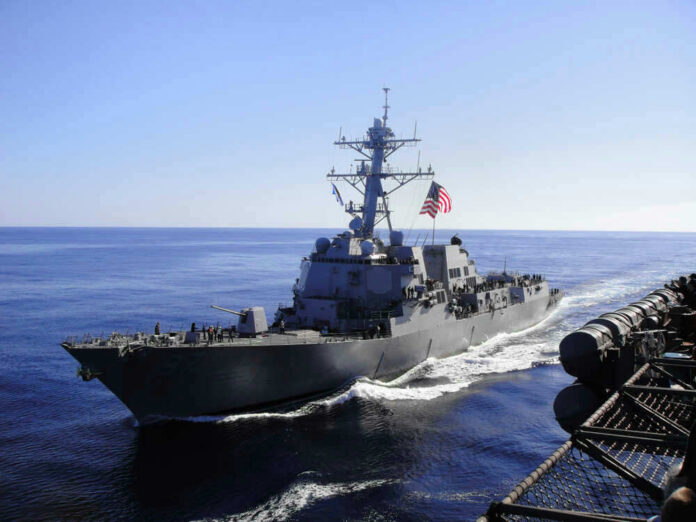
U.S. Central Command reported that an Iranian Shahed-139 drone “aggressively” maneuvered toward the USS Abraham Lincoln while the carrier transited the Arabian Sea, roughly 500 miles from Iran’s southern coast.
After U.S. forces took what CENTCOM described as de-escalatory measures, an F-35 from the carrier shot the drone down in self-defense. CENTCOM said no U.S. personnel were injured and no equipment was damaged.
U.S. military statements emphasized professionalism and safety, but the operational point is straightforward: aircraft carriers are high-value assets, and drones can be used for surveillance, targeting, or even as explosive threats depending on payload and intent.
CENTCOM also cautioned that these close approaches increase the chance of collision or miscalculation in crowded maritime airspace. Iran’s intent was not confirmed in the reporting available, and no Iranian on-record explanation was included in the provided research.
Strait of Hormuz Pressure: Tanker Harassment Raises Stakes for Global Energy
Hours after the drone shootdown, CENTCOM said Iran’s Islamic Revolutionary Guard Corps harassed the U.S.-flagged oil tanker Stena Imperative in the Strait of Hormuz.
The incident involved two boats and a drone, with Iranian forces reportedly threatening to board the vessel. The USS McCaul moved to support and escort the tanker, and the U.S.
Air Force aircraft provided additional coverage. The Strait of Hormuz remains a strategic choke point, so even brief confrontations can ripple into higher shipping risk.
From a U.S. perspective, the principle at issue is freedom of navigation—protecting commercial traffic from coercion and keeping international waterways open. The research also notes that Iran has a history of tanker seizures and vessel harassment in the region, with precedents going back years.
That pattern matters because repeated “gray zone” pressure—small boats, drones, and threats short of outright war—can normalize intimidation if it goes unanswered, especially when paired with diplomatic maneuvering elsewhere.
US shoots down Iranian drone that 'aggressively' approached an aircraft carrier, military says https://t.co/vtVwwdXLTZ via @politico
— Bo Snerdley (@BoSnerdley) February 3, 2026
Trump-Era Deterrence Meets Nuclear Talk Turbulence
The incidents unfolded as nuclear negotiations were reportedly in flux, with Iran proposing to shift upcoming talks from Turkey to Oman and seeking direct U.S. talks while excluding Arab participants.
The research also states President Trump has pressed for “no nuclear” outcomes and demanded an end to the killing of protesters, tying broader regional security to internal Iranian repression.
With U.S. forces operating at heightened readiness, Tehran’s provocations and Washington’s military posture are now colliding in real time.
Retired Maj. Gen. Randy Manner, speaking in materials summarized from FOX coverage, argued that the U.S. acted within its rights and suggested that Iran may have miscalculated.
His reasoning aligns with standard carrier-defense doctrine: foreign aircraft and drones are not permitted to close dangerously on a carrier strike group because even a small system can create catastrophic risk.
At the same time, CENTCOM’s own phrasing—warning about collision and miscalculation—signals the larger concern: escalation can start accidentally, not just deliberately.
What Americans Should Watch Next: Shipping Security and Rules of Engagement
For Americans tracking national security and the economy, the near-term indicators are practical: whether Iranian forces continue testing U.S. escorts in the Strait of Hormuz, whether insurers and shippers price in higher risk, and whether additional U.S. naval or air assets are surged to protect traffic.
The provided research indicates the U.S. response successfully protected the tanker without reported casualties, but it also highlights how quickly two separate confrontations unfolded in one day.
The constitutional and strategic takeaway for a conservative audience is limited but clear from the documented facts: maintaining credible deterrence abroad reduces the odds that Americans pay a higher price at home through energy shocks and emboldened adversaries.
The research does not include Iran’s side of the story or independent verification beyond U.S. and major-network reporting, so readers should expect greater clarity only if additional evidence—such as recovered drone data, radar tracks, or Iranian statements—emerges in the coming days.
Sources:
US shoots down Iranian drone that ‘aggressively’ approached an aircraft carrier, military says
US fighter jet shoots down Iranian drone approaching US aircraft carrier
US military shoots down Iranian drone near aircraft carrier