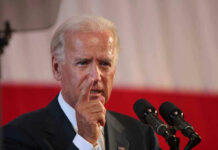

Dr. Anthony Fauci walked into a Senate hearing about COVID-19 and, instead of defending his pandemic record, invoked his Fifth Amendment rights more than 100 times.
Story Snapshot
- Fauci told senators he would not answer any questions, citing his Fifth Amendment right against self-incrimination.
- He said this decision “pains” him and blamed Senator Rand Paul’s drive to put him “behind bars.”
- Republican senators argued his prior pardon means he cannot legally claim that privilege.
- The clash turned a legal protection into a political firestorm over trust, accountability, and COVID-era decisions.
A Senate Hearing That Turned Into A Wall Of Silence
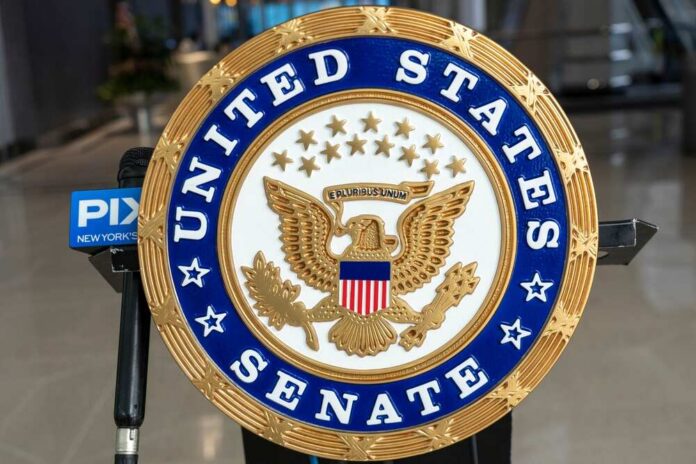
Dr. Anthony Fauci appeared before the Senate Homeland Security Committee for what was billed as a major hearing on COVID-19 origins and the government’s pandemic response. Instead of the usual long back-and-forth, he used his opening statement to announce he would invoke his right under the Fifth Amendment of the Constitution and refuse to answer any questions.
That single choice turned the session from fact-finding into a test of power between longtime critics and the doctor who once stood as the public face of the pandemic.
BREAKING: Fauci invokes Fifth Amendment and declines to testify in GOP-led COVID-19 hearing pic.twitter.com/YD5I21Zjq8
— Insider Paper (@TheInsiderPaper) July 29, 2026
Fauci told senators that “although it pains me” to do so, he would rely on his attorneys’ advice and “refrain from answering your questions.” He pointed to his decades-long history of working with Congress as proof that stonewalling was not his normal posture.
Yet, from the very first question on, he repeated a tightly scripted line: “On the advice of counsel, I respectfully decline to answer based upon my rights under the Fifth Amendment of the Constitution.” That phrase became the soundtrack of the entire hearing.
Why Fauci Says He Took The Fifth
Fauci put the blame for his silence squarely on Senator Rand Paul, the Kentucky Republican who chairs the committee and has pursued him for years. He cited what he called Paul’s “unhinged obsession” with seeing him prosecuted and pointed to public comments about getting Fauci “behind bars.”
In Fauci’s telling, the hearing was not a neutral review of COVID policy; it was a trap designed to elicit statements that could be used to accuse him of perjury or other crimes. That is the classic scenario for using the Fifth: a witness believes honest answers can be twisted into legal trouble.
Over and over, Fauci’s explanation came back to self-protection. He argued that any reasonable person watching Paul’s crusade would see the risk that his words might be weaponized against him.
Legal analysts noted that the Fifth Amendment exists to keep government from forcing someone to help build a criminal case against themselves. From that vantage point, Fauci framed his move as the act of a citizen under sustained attack, not a confession of guilt. His critics, however, saw something very different.
The Pardon Problem And Republican Outrage
Several Republican senators pushed hard on a key point: Fauci received a broad presidential pardon from Joe Biden in early 2025.
Senator Josh Hawley hammered this issue, telling Fauci, “You don’t have any rights under the Fifth Amendment because you’ve been pardoned,” and citing a Supreme Court case saying a fully pardoned witness may not stand on that privilege. To conservatives on the panel, the combination of a blanket pardon and total silence looked less like caution and more like arrogance.
Sen. Ron Johnson Announces Subpoena for Fauci Over Alleged COVID Vaccine Injury Cover-Up
Sen. Ron Johnson announced that Dr. Anthony Fauci will receive a subpoena after refusing to say whether he would voluntarily participate in a transcribed interview as part of the committee's… pic.twitter.com/vJ1KeDkdzR
— Radio Australis (@freedom4UU) July 30, 2026
Senator Paul went further, announcing that the committee had scheduled a contempt vote because Fauci “refused to answer any questions even after being directed by the chair.”
Paul argued that Fauci’s privilege claim was “unsupported because of his blanket pardon” and because he had already given some opening testimony. This is the heartburn: if a man is pardoned and still will not explain himself to the American people, what does he have left to hide?
What Questions Fauci Refused To Answer
The senators’ questions went straight to the issues that have fueled public anger for years: funding for research in Wuhan, gain-of-function experiments, and the true origins of COVID-19. They pressed him on newly released pandemic-era journals and on allegations of deleted emails or doctored records.
When Senator Hawley accused him of “getting rich” during the pandemic and using federal employees to secure cash awards, Fauci responded the same way he did to softer questions about dates, diaries, and lab oversight: he invoked the Fifth.
News outlets counted more than 100 such refusals, with one report pegging the number at 106. He declined to answer even harmless questions, such as what color tie he was wearing, sticking to the absolute line promised in his opening. That choice kept him from making any fresh statements that could be tested against old emails or memos.
It also meant that many allegations went unanswered on the record. The legal risk might have been reduced, but the political damage was real, especially among voters already skeptical of pandemic decision-makers.
What This Fight Says About Power And Accountability
The Fifth Amendment does not say “only the innocent may invoke.” It simply says no person shall be forced to be a witness against themselves in a criminal case. Legally, people use it when they believe even truthful answers could be spun into evidence for prosecution.
Oversight hearings in Congress have seen this play before. Yet, when a figure as central as Fauci does it on live television, it feels less like a technical legal move and more like a referendum on trust in expert rule.
Many Americans look at this and see a familiar pattern: powerful officials steering the biggest health decisions in modern history, backed by a friendly administration that issues pardons, then refusing to give straight answers when asked how they used that power.
Supporters will stress that invoking the Fifth does not prove guilt. Critics will respond that true public servants welcome hard questions and do not hide behind lawyers. That clash over what accountability should look like will outlast any single hearing.
Sources:
youtube.com, axios.com, cnn.com, statnews.com, abcnews.com, wsj.com, facebook.com