

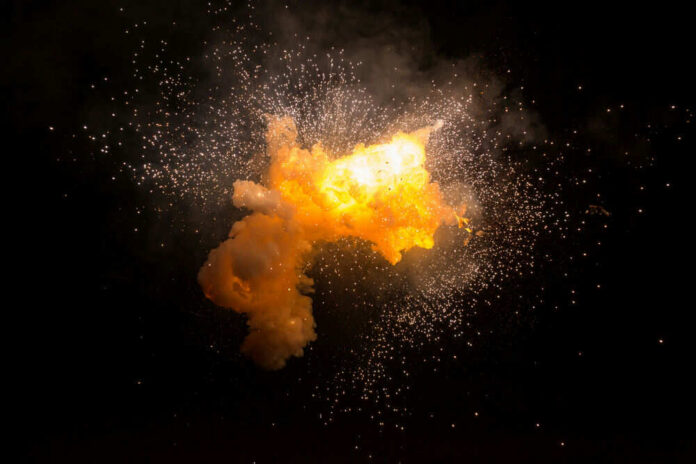
A patron saint celebration in Temascalcingo turned deadly when stored pyrotechnics ignited, collapsing a wall and killing at least 10 people while injuring 64 more.
Story Snapshot
- Fireworks exploded during a festival in Temascalcingo, State of Mexico.
- A collapsing wall killed at least 10 people and injured 64, officials said.
- The Mexico State Attorney General’s Office opened an investigation.
- Mexico has a long history of deadly fireworks incidents at markets and festivals.
Festival Blast In A Packed Town Square
Local authorities reported that pyrotechnic material exploded during a patron saint festival in Temascalcingo, a town in the State of Mexico. The blast brought down a wall near the celebration. Officials said at least 10 people were killed and 64 were injured.
The figures were described as minimums, which often happens early after a disaster as responders sort chaos from count. The Mexico State Attorney General’s Office opened an investigation into the cause, which was not yet determined.
Festival setups in Mexico often include large ground displays and racks of aerials near crowds. When something lights the wrong pile, a small spark can become a chain reaction. Brick and concrete walls can fail if a blast wave strikes them at the right angle.
✅ UPDATE: At least 10 people have been killed and 64 injured after a massive fireworks explosion during a patron saint festival in Mexico.
The blast struck Santa María Canchesdá in the State of Mexico, causing part of a structure near the local church to collapse.
Emergency… pic.twitter.com/iXsZ7ztihq
— Planet Report HQ (@PlanetReportHQ) September 6, 2026
A Pattern Mexico Knows Too Well
Deadly fireworks accidents in Mexico recur in workshops, markets, and festivals. In 2018, a chain of blasts at a depot in Tultepec killed 24 and injured more than 40, underscoring how fast stored pyrotechnics can cascade once triggered.
These tragedies repeat for familiar reasons: vibrant demand tied to faith and tradition, informal handling practices, and gaps in enforcement that let risky storage and staging inch too close to people, walls, and homes.
Culture keeps the market alive. Many families in the State of Mexico build or sell fireworks for income and pride. Festivals seek louder, brighter shows each year. Oversight can lag behind that drive.
Even with rules on the books, uneven inspection and on-site improvisation raise the odds of a bad day. When storage sits near spectators, or when operators fire too close to structures, one error can multiply into many victims before anyone can run.
What Officials Will Look For Next
Investigators will map the blast seat, debris field, and wall failure to find the trigger. They will ask where the fireworks were stored, who had custody, and what permits were issued.
They will check whether a single device misfired into a stockpile, whether friction or heat set off stored material, or whether human error during loading or lighting caused the runaway. They will gather medical logs and incident timelines to confirm the count and the order of events.
🇲🇽 Mexico: At least 13 people have died and 43 others were injured after a pyrotechnics explosion during a patron saint festival in Temascalcingo, State of Mexico, authorities said. pic.twitter.com/9Zs2Rgjwpv
— NewsZone (@NewsZonex24) September 6, 2026
Festival organizers and parish leaders will face hard questions: how far spectators stood from active racks, whether barricades or sand-filled trenches were in place, and who managed ignition. These are standard safety checks that reduce risk without killing tradition.
Distance, separation of live firing from storage, and strict inventory control save lives. Common sense supports these basics. Fire and blast physics do not care about intent; they only care about space, mass, and time.
Holding Tight To Faith And Safety
Communities will grieve, then repair. The pull of patron saint festivals is strong and will not fade. The smart path is not to ban joy but to harden it. Local leaders can demand clear perimeters, sealed storage away from crowds, and trained crews with stop rules.
Families want faith and color; they also want everyone home for dinner. Mexico has already paid for these lessons in blood, from markets to workshops. Temascalcingo does not need to pay again to learn the same truth.
Sources:
xinhuanet.com, ambon.antaranews.com