

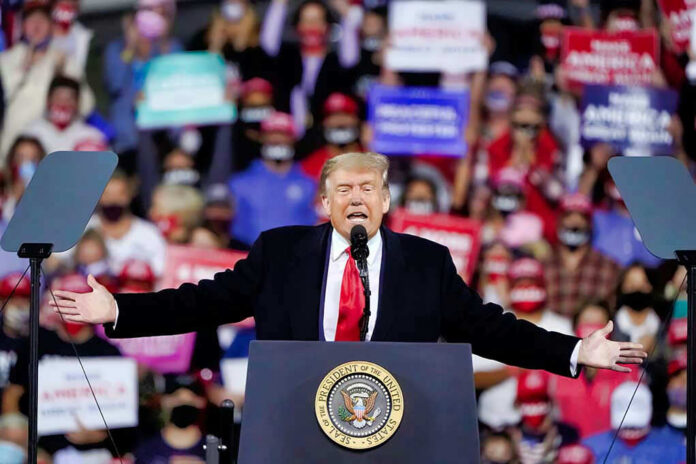
President Trump unveiled an “Economic D-Day” to choke Iran’s cash lifelines and warned countries that bankroll Tehran of “tremendous” costs if they keep helping.
Story Highlights
- Trump shifted from new strikes to maximum economic pressure, citing Iran’s financial pain.
- Treasury pledged unprecedented measures, with actions expected within days.
- Sanctions target oil, shipping, and digital-asset networks that move regime money.
- Backers of Tehran face secondary penalties as the squeeze broadens.
Trump Sets Course: Economic Squeeze Over New Strikes
President Trump said the United States is “low keying it” with Iran while letting economic pressure build, after months of conflict and sanctions.
He described Iran as strapped for cash, under steep inflation, and unable to borrow, framing the strategy as patience with teeth rather than new large-scale strikes.
The White House cast this as steady pressure that denies Tehran money for terror proxies and weapons, while keeping America out of deeper, costly war deployments.
Trump’s message landed with a clear warning to Iran’s enablers. Countries, banks, and shippers that help Tehran keep oil flowing or move funds could face “tremendous” consequences.
The Treasury Department reinforced the signal, previewing measures “never seen” before and indicating new steps could arrive within days. That approach expands the battlefield to the wallet, where the regime funds militias and missile programs that threaten United States forces and allies.
What “Economic D-Day” Targets First
Officials outlined a tool set that hits Iran’s core cash streams: oil exports, maritime logistics, insurance, and access to the dollar system. Sanctions can also reach payment nodes in digital assets, where networks have tried to slip past banks and shipping rules.
The State Department already moved on crypto-linked exchanges and facilitators that help Tehran stay connected abroad, a sign that enforcement will hunt workarounds across borders and platforms.
Past pressure campaigns often used a simple rule: if it moves Iran’s money, it is in bounds. That can include ship-to-ship transfers, “dark fleet” tankers that spoof locations, and front companies in third countries.
Secondary penalties raise the stakes by cutting off firms that choose Tehran over lawful trade with the United States. That approach forces hard choices in global energy and finance, and it can change behavior fast without firing a shot.
Why The Strategy Appeals To Many Americans
This plan hits the regime where it hurts and avoids endless wars. Economic power protects American troops, respects taxpayer dollars, and upholds strength without nation-building. Pressure that starves cash to terror proxies supports core security goals while keeping focus at home on energy, inflation, and borders.
It also defends the Constitution by using lawful sanctions tools Congress gave the executive branch through long-standing statutes and prior authorizations for Iran actions.
Americans also want accountability for outside actors who help Iran dodge rules. Secondary measures answer that. Firms cannot enjoy the American market while bankrolling a hostile regime.
The policy tells foreign capitals and corporate boards the same thing Main Street tells Washington: actions have costs. When the United States enforces its laws with clarity, bad actors get the message, and our allies can align policy around shared security and stable energy flows.
How This Fits A Long Record Of Iran Sanctions
The United States has used sanctions on Iran for decades. Federal guidance shows a layered system that targets the regime’s energy, banking, shipping, and arms sectors, with authority to add entities tied to terror and human rights abuses.
This toolbox has grown since the late 1980s and saw a sweeping re-imposition in 2018, billed as the highest-ever level of pressure at that time by the Department of the Treasury’s Office of Foreign Assets Control.
Trump announces Economic D-Day against Iran, targeting oil, trade, shipping & financial networks.
Secondary sanctions could raise global pressure.
📊 Potential impact: Oil ↑ | Gold ↑ | USD ↑ | Risk Sentiment ↓ Key risk: supply disruptions or wider escalation.#trump pic.twitter.com/LotAMZAfav
— Carlos And Company (@carlosandcompny) August 20, 2026
Research on sanctions shows they reliably inflict economic pain, yet results can vary on political change. Analysts note that effectiveness may fade over time if targets adapt, which is why today’s push adds digital networks and dark fleets to the map.
That reflects lessons from past rounds while using sharper tools. The policy bet is clear: Tehran’s leaders need money more than time, and cutting cash can change choices faster than more strikes would.
What To Watch Next
Watch for new designations on shippers, insurers, and banks connected to Iranian oil trades. Expect tighter tracking of maritime data and more seizures or fines tied to sanctioned cargo. Look for actions against crypto mixers and exchanges that move regime funds.
Energy markets may react in the short term, but if flows reroute under compliance, prices can stabilize. The test will be simple: does Tehran’s access to hard currency shrink week by week under the new squeeze?
Sources:
aljazeera.com, cnbc.com, fortune.com, finance.yahoo.com, wsj.com