Two Navy aviators punched out over the Atlantic at dusk, and four sailors on deck paid the price.
Story Snapshot
- Two aviators from Carrier Air Wing 3 ejected during a landing on USS Dwight D. Eisenhower.
- Four sailors on the carrier were injured during the same mishap off Virginia.
- Search-and-rescue teams recovered both aviators quickly and safely.
- The Navy opened its standard mishap process to document what happened and why.
What Happened On The Eisenhower’s Deck
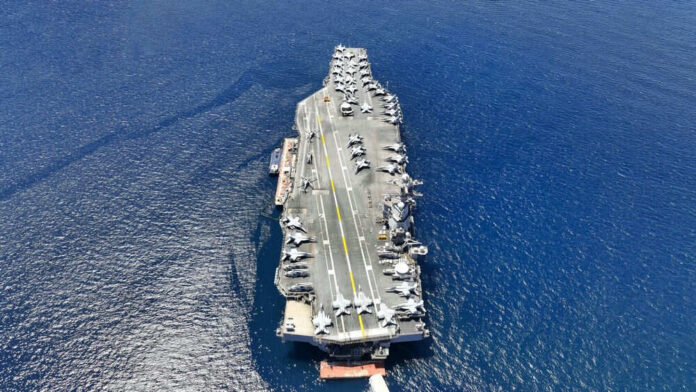
The U.S. Navy said a mishap hit aircraft recovery operations aboard USS Dwight D. Eisenhower at 6:18 p.m. Eastern time off Virginia. Two aviators assigned to Carrier Air Wing 3 ejected from their aircraft. Search-and-rescue crews recovered both aviators.
The Navy reported four sailors on the ship were injured in the event and received medical care. The statement did not identify the aircraft type or list causes, which is common at this early stage.
2 US Navy aviators eject while landing plane on carrier off Virginia, 4 sailors injured https://t.co/CxxIhkN5qH pic.twitter.com/CSEUttaBQE
— New York Post (@nypost) September 29, 2026
Associated Press reporting matched the Navy’s account and added timing and location details. The report said the ejection happened as the aircraft was landing on the carrier.
It confirmed four injured sailors and safe recovery of the aviators. Local and national outlets relayed the same core facts from the Navy’s release, which underscores a tight early information picture after deck mishaps.
Why Early Details Are Sparse
Naval aviation treats safety first and statements second. The Naval Aviation Safety Management System directs fast notification, medical care, and secured reporting. It sends investigators to collect facts before the public gets a full narrative.
The Naval Safety Command runs the reporting process and requires a Safety Investigation Report for every aircraft mishap. That report flows into official databases and guides changes to training and procedures.
Marine Corps and Navy guides explain strict timelines and roles during mishaps. Units must report to the Naval Safety Command by phone and then file detailed data in official systems.
These steps protect accuracy and prevent rumor from driving decisions on a flight deck where seconds matter. Public releases during this phase tend to be short and stick to who, when, where, injuries, and the status of crews.
How Carrier Landings Go From Routine To Risk
Carrier aviation stacks hazards: tight decks, shifting seas, variable winds, night lighting, and heavy traffic. Landing is a controlled crash that leaves little room for delay or confusion. When something breaks that rhythm, even for a few seconds, people can get hurt.
The Navy’s own recent investigations from another carrier strike group showed how small gaps in communication and training can amplify risk and lead to costly accidents at sea.
Safety reviews do not chase blame; they hunt causes. Investigators track maintenance, crew rest, weather, deck status, and system health. They study procedures and signals on the landing area.
They ask what crews saw, what alarms fired, and how decisions changed second by second. That method has one goal: reduce repeat risk on the next recovery cycle. Americans expect a strong military. A strong military expects hard truth in safety work and fixes that stick.
What To Watch Next
The Navy will release more when facts are nailed down. Expect updates on the aviators’ condition, the four injured sailors, and the aircraft status if that does not reveal sensitive details.
If history is a guide, a public summary may follow once the safety process and any command investigation close. That timeline can run weeks or months. Until then, the confirmed facts hold: two aviators out, rescued, four sailors hurt, and a carrier crew back to work.
Two U.S. Navy aviators ejected as they were landing their plane on the USS Dwight D. Eisenhower aircraft carrier off the coast of Virginia on Monday and four sailors aboard the vessel were injured in what the Navy characterized as a “mishap.”https://t.co/ZRxCbdLOwl
— ConflictLive (@conflict_live) September 29, 2026
This event also fits a larger pattern. Deck mishaps grab attention because they look dramatic, and they are. But they are also signals that the system designed to catch errors is working. Quick ejection, fast rescue, and immediate care are wins on a bad day.
The hard part now is making sure the next day is better. That comes from disciplined reporting, honest reviews, and training that moves lessons from paper to practice.
Sources:
apnews.com, yahoo.com, x.com, wavy.com, safety.marines.mil, navalsafetycommand.navy.mil, stripes.com