

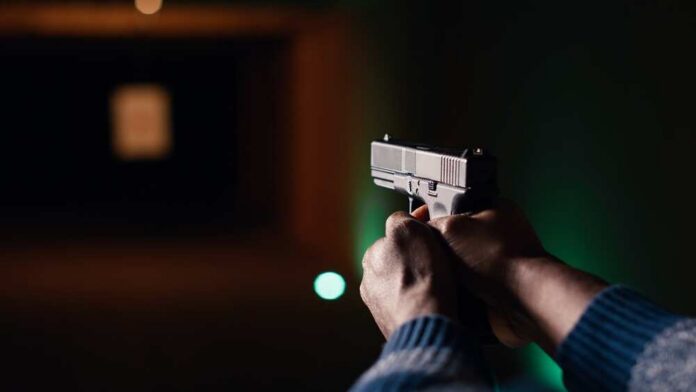
A street fight on D.C.’s Barracks Row turned into a gun battle that left a National Guard member shot and a suspect wounded, police say.
Story Snapshot
- Police say a suspect fired at National Guard members, hitting one in the leg.
- The clash began when Guard troops stepped in to stop a street fight.
- Both the injured Guard member and suspect were hospitalized with non-life-threatening wounds.
- The investigation is led by the Metropolitan Police Department’s Internal Affairs and First District detectives.
What Police Say Happened On 8th Street Southeast
Metropolitan Police Department officials say officers responded around 11:10 p.m. on October 18, 2026, to the 400 block of 8th Street Southeast. Members of the National Guard, assigned to patrol the Barracks Row corridor, saw a fight and moved to break it up. A suspect pulled a gun and fired toward the Guard members, hitting one of them in the leg. Guard personnel returned fire, and the suspect was also struck. Detectives gathered evidence on scene and secured the area.
The location matters here. Barracks Row sits near Capitol Hill and Eastern Market, with busy nightlife and steady foot traffic. Police said the confrontation unfolded in front of a District Fire and Emergency Medical Services station, a spot with cameras, lights, and people nearby. That setting helps explain the rapid response and quick medical aid after shots rang out. The Guard member and the suspect went to local hospitals with injuries not deemed life-threatening.
Who Is Leading The Investigation And Why It Matters
The Metropolitan Police Department’s Internal Affairs Bureau and the First District Detective Unit took the lead, as they do whenever an on-duty shooting involves uniformed personnel. That structure aims to lock down facts fast: who fired first, how many rounds were fired, and what commands were given. The process also preserves public trust by putting independent eyes on use-of-force questions. Officials cautioned that evidence review continues, including video and witness statements.
Police briefed media that seven to eight Guard members were on patrol in a van before they saw the fight break out. They moved to stop it, which is within their support role under city direction. The suspect then opened fire, according to police, triggering the exchange. That account matches multiple outlets that cited the department’s summary and timeline, including the 11:10 p.m. call and the 8th Street Southeast location in the Barracks Row corridor.
Why The Guard Was There, And The Rules That Shape That Mission
City leaders sometimes use the National Guard to support public order and to back up local police during high-traffic periods or specific operations. America has turned to the Guard inside the country many times since World War II for emergencies, civil unrest, and protection missions. That pattern reflects a long history of state and federal use, with different legal authorities depending on who is in charge and what task is assigned.
BREAKING: NATIONAL GUARD MEMBER SHOT IN THE LEG AFTER TRYING TO STOP A STREET FIGHT WHEN MAN PULLED A GUN IN SOUTHEAST WASHINGTON D.C.
A @NationalGuard Member & An Armed Man Were Both Shot Late Sunday Night Near Eastern Market In Washington DC After Guard Members Got Out Of… pic.twitter.com/UxPrkgshm9
— John Basham (@JohnBasham) October 19, 2026
The legal lines can get complex. The Posse Comitatus Act limits using the active-duty military for domestic law enforcement, but states can deploy their National Guard under state authority to support police and protect communities. Washington, D.C., uses distinct arrangements, yet the core idea holds: civil authorities stay in charge, and Guard troops follow strict rules of engagement. Those rules stress de-escalation, clear commands, and defense of life when faced with a deadly threat.
Public Safety, Accountability, And Common-Sense Takeaways
Police say the suspect chose to shoot at uniformed troops. That act crosses a bright line for any community that wants safe streets. When a service member steps in to stop a fight and gets shot, the basic question is not abstract policy. It is whether we let armed chaos rule the block or back the people asked to hold the line. The facts as released point to a fast, disciplined response that stopped a worse outcome and got both the Guard member and suspect to care.
Clear, steady policing must come first, with Guard support used in focused ways that communities understand. That balance honors both safety and liberty. It also reflects how most Americans want domestic security handled: by trained local police, backed when needed by state-controlled Guard units, not by active-duty troops. That view shows up across surveys and scholarship, and it fits common sense for a free society that still expects order on a Saturday night.
Sources:
foxnews.com, kswo.com, dcnewsnow.com, shorenewsnetwork.com, thehill.com, brennancenter.org, justsecurity.org