

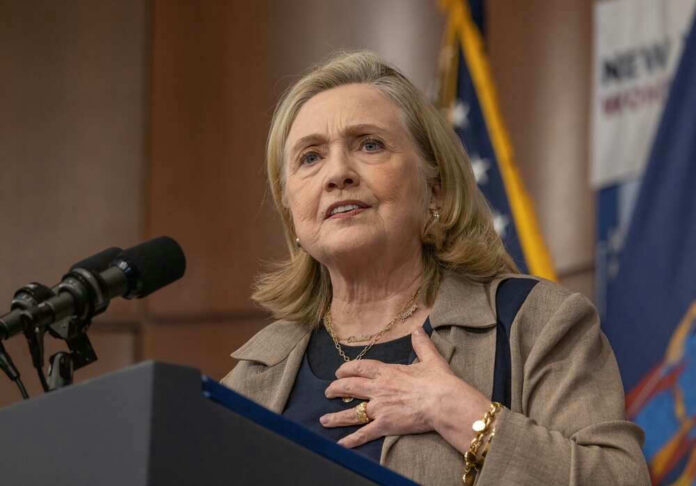
Hillary Clinton and Kara Swisher launched a limited midterms podcast, “High Stakes,” to shape the political conversation in the final sprint before Election Day.
Story Snapshot
- “High Stakes” premiered October 14, 2026, as a limited weekly series on the midterms.
- Clinton and Swisher co-host; Vox Media produces and distributes through Swisher’s existing feed.
- Episodes focus on cost of living, health care, technology, artificial intelligence, and key races.
- The run targets the weeks leading up to mid-November, when voter attention peaks.
A high-profile launch designed for the sprint to November
Hillary Clinton joined technology journalist Kara Swisher to debut “High Stakes” on October 14, 2026, as a limited weekly podcast focused on the midterm elections. The Hollywood Reporter and Variety set the start date and title, framing it as a short, intense series. Clinton previewed the stakes in a public announcement, noting every House seat and dozens of Senate and governor contests on November 3, and said the show would dig into issues that matter most before voters cast ballots.
Vox Media produces the program and places it inside the “On with Kara Swisher” feed, which gives the series instant reach among existing subscribers. That choice trades the splash of a brand-new channel for speed and scale. The Apple Podcasts listing identifies “High Stakes” as a limited series from Clinton and Swisher, signaling a defined arc through mid-November rather than an open-ended talker.
What listeners will hear, and why these topics were picked
The show promises deep dives on pocketbook pain points: gas and groceries, medical bills, and health insurance headaches. It also flags technology and artificial intelligence as ballot-box issues, alongside Gen Z concerns about opportunity and debt. That mix tilts toward everyday costs, then extends to how fast-changing tech shapes jobs, safety, and speech. The Washington Post reported a weekly Wednesday cadence, aligning with the rush of new polling and ad buys late in each week.
Clinton’s presence supplies political muscle memory from cabinet and campaign life, while Swisher brings a record of blunt interviews with chief executives and lawmakers. The pairing suggests a format where policy talk meets power scrutiny. The New York Times added a commercial note: advertising revenue would be shared by the hosts and Vox Media, a common model in news podcasting that keeps the lights on without paywalls.
Why a podcast, and why now
Campaigns and political figures now court audiences through personality-driven shows because they allow longer, less filtered conversations than short interviews or ads. Research groups and industry observers say podcasts offer room for story and tone, which can build trust faster than press releases, even if they only move votes at the margin. The format also follows the money. Political podcast ad spending has been growing fast, as brands and advocacy groups chase engaged listeners near election day.
#BREAKING: Former U.S. Secretary of State Hillary Clinton and journalist Kara Swisher are set to launch a new podcast spanning the midterm election cycle.
— The World Eye (@TheWorldEye_) October 14, 2026
Placing “High Stakes” inside a known feed also works with how platforms surface content. Subscribed listeners see new episodes first, algorithms reward regularity, and midweek drops give producers time to react to debates, data, and breaking news. That said, launch coverage focused on plans, not performance. The reports establish who, what, where, and when, but do not claim audience totals or electoral impact at this stage.
How the series fits the 2026 media battlefield
Audio is now one lane in a larger, cross-platform push where clips jump to video and social feeds. Analysts note that video versions can command higher ad rates, but audio still delivers loyal reach and lower production friction. For Clinton and Swisher, a tight, six-week window creates urgency. Voters want quick clarity on prices, care, and safety; donors want signal; campaigns want narratives cemented before ballots lock in. A weekly drumbeat can set frames that local news and candidates then echo.
Conservative readers will assess the show through a simple test: Do the facts match lived reality on inflation, health costs, border security, and crime? If episodes present hard numbers and invite pushback, they may earn broader hearing. If the series becomes a partisan pep talk, it will preach to the choir and little more. The format gives the hosts control; the audience will judge on substance and fairness, not celebrity alone.
What to watch as episodes roll out
Track which races and governors’ contests get airtime versus which do not. Note whether guests reflect diverse views or only amplify one lane. Listen for how the show handles tradeoffs on spending, regulation, and national security, especially around technology and artificial intelligence. Watch if episodes spark follow-on coverage or get clipped into viral moments that shape a week of headlines. The schedule runs through the voting window, so late episodes could hit right as decisions harden.
The bottom line is straightforward: “High Stakes” is a timed, issues-first podcast from two high-profile hosts, produced by Vox Media, and delivered in the “On with Kara Swisher” feed, aimed squarely at voters in the last mile before the midterms. The show’s success will rest on clarity, candor, and whether it meets people where they actually live—the checkout line, the clinic, and the gas pump.
Sources:
nytimes.com, hollywoodreporter.com, thehill.com, variety.com, washingtonexaminer.com, washingtonpost.com, podcasts.apple.com, badgerherald.com, reutersinstitute.politics.ox.ac.uk, thewrap.com