
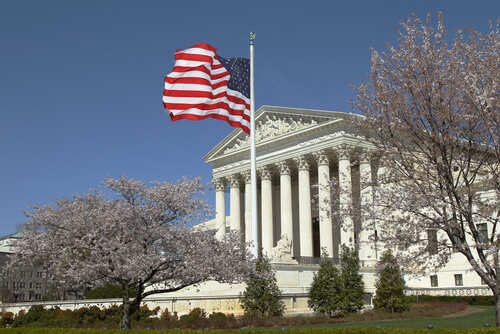
The U.S. Supreme Court told the Trump administration no, letting California count about 20,000 contested mail ballots just one day before the midterm elections.
Quick Take
- The Supreme Court rejected a Justice Department request to block California from counting the disputed ballots late on November 2, 2026.
- The Department of Homeland Security flagged roughly 20,000 voters as possible noncitizens, and the Justice Department wanted their ballots set aside.
- A federal judge already refused that request, warning it could cause chaos right before Election Day.
- California officials say a spot check of the federal list found major errors, including people with canceled registrations and U.S. birthplaces.
What The Justice Department Demanded From California
On October 15, 2026, the Justice Department sued California. It wanted a court order forcing the state to set aside mail ballots from voters flagged as “likely” noncitizens until their citizenship could be confirmed. The department leaned on a federal law that makes noncitizen voting in federal elections a misdemeanor, arguing California’s process clashed with it.
BREAKING: The Supreme Court denied the Trump administration's emergency request to force California to set aside mail-in ballots from roughly 20,000 suspected noncitizens until their citizenship could be verified, one day before the midterm elections. pic.twitter.com/hjQzYV7Ht3
— SCOTUS Wire (@scotus_wire) November 2, 2026
The case wasn’t a vague accusation. The Justice Department pointed to a specific list built from Department of Homeland Security data, naming about 20,000 voters. It gave county registrars just 48 hours to sort through the names before the election. That tight deadline became a central problem once judges started asking questions about how the list was built and how quickly it could be checked.
Why The Courts Kept Saying No
U.S. District Judge David Carter denied the emergency request first. He called it an unprecedented ask, one that would force California to abandon its own election rules days before voting ended. Carter warned the move could “wreak havoc,” confuse election workers, and scare off eligible voters trying to cast a legal ballot. The Justice Department appealed anyway, pushing the fight to the Ninth Circuit and then the Supreme Court.
Appeals judges pressed the government’s lawyers hard on timing and proof. Reporting from the hearing described skepticism about whether a screening list built from federal databases could justify freezing ballots this close to an election. The Supreme Court’s one-line denial on November 2 closed that door for good, at least for this election cycle.
California’s Count Of Its Own: Checking The Federal List
State officials didn’t just argue the timing was unfair. They went after the list itself. Attorney General Rob Bonta’s office reviewed 200 names from the roughly 20,000 flagged voters. More than half had canceled or inactive registrations. Nearly 39 percent listed a U.S. birthplace. Over 71 percent had no voting history at all. In Mendocino County, every single flagged name on the list belonged to someone who didn’t even live there.
Secretary of State Shirley Weber said the federal government never handed over the data or methods behind an earlier, far larger claim that roughly 190,000 registered voters might be noncitizens. Bonta asked the obvious follow-up question: what happened to the other 170,000 names that quietly disappeared from that estimate before the 20,000 figure surfaced? Nobody from the federal side has answered that publicly.
What History Says About Noncitizen Voting Claims
This isn’t the first time a flagged list has fallen apart under review. A similar effort in Nevada initially identified nearly 16,000 names, but after checking, officials confirmed only 185 remained questionable, and every one of those 185 turned out to be a citizen. Courts have also long followed a rule from a 2006 Supreme Court case warning judges against changing election procedures right before voters go to the polls, since the fix can cause more confusion than the problem it tries to solve.
Research on noncitizen voting backs up the skepticism. Independent reviews have found confirmed cases amount to a tiny fraction of a percent of total votes cast, and a once widely cited 2014 study claiming high rates was later walked back by its own authors after critics picked apart its sampling. Conservatives are right to want airtight voter rolls. But a screening list riddled with dead ends isn’t proof of fraud, and the courts made clear that speed shouldn’t trump accuracy on the eve of an election.
Sources:
cnbc.com, abcnews.com, newsobserver.com, sbsun.com, rmb.reuters.com, latimes.com, newsweek.com, cip.uw.edu, supremecourt.gov