

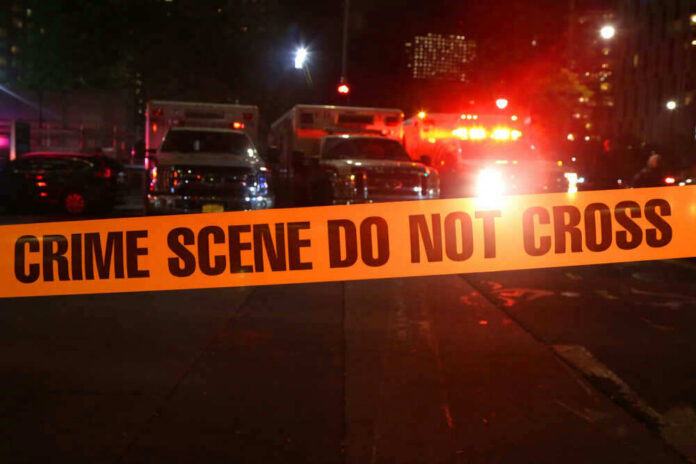
Two Co-op City public safety officers were shot during a wellness check; the gunman barricaded himself, and police later found him dead from an apparent self-inflicted wound.
Story Snapshot
- Two Co-op City Public Safety officers were shot and are expected to survive.
- The gunman holed up in an apartment and was later found dead from a self-inflicted gunshot.
- The shooting unfolded around 11:45 a.m. at 4240 Hutchinson River Parkway East.
- Co-op City’s public safety force is a private security department that works alongside police.
A Wellness Check Turns Into a Gunfight
Two members of the Co-op City Department of Public Safety arrived for a wellness check. The call came from inside one of the giant Bronx towers that anchor 50,000 residents on the Hutchinson River Parkway. Within minutes, gunfire erupted. Both officers were hit. New York City police raced to the 25th floor, locked down hallways, and pushed residents back. Medics stabilized the officers, who were reported to have non-life-threatening injuries.
Police said the suspect retreated into a nearby unit and barricaded the door. Officers set up a perimeter and cleared the floor. Tactical teams moved residents down stairwells as negotiators tried to make contact. After the standoff stretched on, officers breached the apartment. Inside, they found the suspected gunman dead from an apparent self-inflicted gunshot wound. Officials said no responding officer fired the fatal round. The timeline, the address, and the outcome track closely across several outlets.
What Co-op City’s “Private Police” Do, and What They Don’t
Co-op City is not a typical building with a doorman and a clipboard. It is a city within a city, with more than 15,300 units, its own zip code, and its own Department of Public Safety. These officers patrol common areas, respond to calls, and coordinate with the New York City Police Department. They are commonly described as peace officers, which means they have some law enforcement powers under state law, though they are not the same as city police.
That distinction matters on days like this. Calls that start as “check on a resident” can shift fast into a police matter. Private peace officers often arrive first because they are already in the building. When risk spikes, they call New York City police. That relay demands clear roles, shared radios, and tight training. The handoff worked here. New York City police took control of the scene, ran the evacuation, and handled the breach while medics got the injured officers out.
The Minute-by-Minute Picture That Matters
The first shots rang out around 11:44 a.m. at 4240 Hutchinson River Parkway East, according to New York City police accounts reported by local media. Elevators were stopped on police command. Residents described a crush of officers in vests moving door to door. The stairwells became lifelines. The officers who were shot were moved quickly to ambulances and taken to area hospitals. Reporters on scene cited officials who said both would survive, and that the suspected gunman was alone inside the apartment.
Authorities did not publish a motive. Early reporting focused on the injury status, the location, and the barricade. That is standard in the first hours after a shooting. Names typically come later, after families are notified. What the public got right away were the essentials: two Co-op City officers down, a barricaded suspect, and then a single fatality discovered after the breach, consistent with a self-inflicted gunshot, according to police.
Safety, Authority, and Common-Sense Expectations
Large private housing campuses rely on layered security. Residents expect fast help for noise, vandalism, and wellness checks. They also expect that when a gun appears, the New York City Police Department takes charge. That is what happened. The officers did their job and survived. The suspect chose a dead end. The basic conservative test applies: protect life, secure the scene, and keep the public informed without spin. The official accounts delivered the key facts quickly and clearly.
Calls like this will keep coming. America’s biggest housing complexes are aging. Mental health crises often show up first as a neighbor’s worry. Wellness checks will always be part of the front line. That means training must stress approach, cover, and communication. It means better door hardware and camera coverage in high-rises. It means joint drills between private peace officers and city police so that the baton handoff is smooth under stress. Residents deserve no less.
Sources:
foxnews.com, nbcnewyork.com, cbsnews.com