
The most unsettling part of the Ebola airport story is not the virus itself, but how much of our “protection” depends on hurried volunteers with thermometers at three U.S. gateways.
Story Snapshot
- The Centers for Disease Control and Prevention (CDC) issued an “urgent request” for staff volunteers to screen travelers for Ebola at select U.S. airports.
- Only a handful of entry points handle all travelers from the Democratic Republic of Congo, Uganda, and South Sudan.
- Screening focuses on symptoms and questionnaires, even though Ebola can incubate silently for up to 21 days.
- Officials call the risk to Americans low, but the strategy leans heavily on trust, compliance, and highly visible security theater.
CDC turns to volunteers as Ebola outbreak intensifies overseas
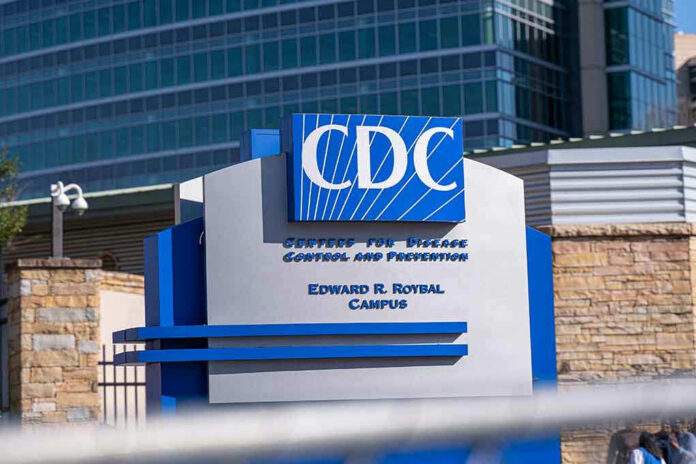
The Centers for Disease Control and Prevention asked its own workforce to volunteer for airport deployments just as the Ebola outbreak in the Democratic Republic of Congo and Uganda accelerated.[1][2]
An internal email from acting CDC director Dr. Jay Bhattacharya went out as an “urgent request” for volunteers to help staff screening posts at major U.S. airports, where returning Americans from Central Africa now face checks for fever and other symptoms.[1][2]
News coverage describes volunteers as needed to “bolster efforts at airports to check passengers for symptoms like fever.”[2]
This is not a quiet, routine adjustment; it is a surge operation in response to a fast-moving outbreak in Central Africa that health officials say is spreading faster than they can contain.[2]
When the very agency responsible for preparedness starts crowd-sourcing staff from within, that raises fair questions about whether long-term capacity ever matched the known risk profile of diseases like Ebola.
CDC asks staff to volunteer to help with Ebola screenings at airports amid outbreak https://t.co/jzGjkEyLpe
— ABC7 Eyewitness News (@ABC7) May 27, 2026
Designated airports become chokepoints for all high‑risk travelers
The federal strategy channels all U.S. citizens and nationals who have been in the Democratic Republic of Congo, Uganda, or South Sudan during the previous three weeks into a small set of designated U.S. airports.[2][4]
ABC News reports that Bush Intercontinental in Houston, Washington Dulles in Virginia, and Hartsfield–Jackson in Atlanta are among those limited entry points.[2] Non‑Americans who have recently traveled to those regions are temporarily barred from entry altogether.[2]
That funneling approach mirrors an earlier enhanced Ebola screening program at five major airports, including Washington Dulles and Chicago O’Hare, which together handled the overwhelming majority of travelers from affected regions.[3][4]
At those hubs, after passport review, travelers from outbreak countries are escorted to separate screening zones, where they are questioned by trained personnel, have their symptoms checked, and have their temperatures taken.[3]
CDC has long described these layers as a way to concentrate resources at the most likely points of entry rather than scatter thin staff across the entire aviation system.[3][4]
What airport Ebola screening really does — and what it cannot do
The actual screening protocol combines visual observation, a health and exposure questionnaire, and non‑contact temperature checks, followed by referral to a CDC quarantine station public health officer if anything looks suspicious.[3][4]
Those officers can reassess symptoms, retake the traveler’s temperature, and decide whether to move the traveler for further evaluation, monitoring, or isolation.[3]
CDC guidance also calls for collecting contact information and using automated text messages to remind travelers to monitor their health for 21 days after leaving the region.[3]
CDC itself openly acknowledges the structural limit: public health entry screening cannot identify travelers infected with Ebola who have not yet developed symptoms.[3]
That is not a minor footnote; Ebola’s incubation period can last up to three weeks, which is exactly why the government pairs airport checks with a 21‑day monitoring window.[3]
Security theater, real risk, and the politics of being seen to act
Airport screening remains politically attractive because it is highly visible. Travelers see people in vests, thermometers, separate lines, and quarantine officers, and they conclude that someone is in charge.
CDC calls this one part of a “broader, layered public health approach,” but the public often remembers the airport, not the follow‑up texts or the quiet local health department calls.[3]
That gap between genuine risk reduction and visible theater shapes how voters judge whether government “did something.”
#BREAKING New Guidelines due to Ebola Outbreak: All travelers from DRC, Uganda, or South Sudan must enter the U.S. via Washington Dulles International Airport (IAD) for CDC and CBP health screenings. pic.twitter.com/bAstNxq7BO
— Trend Wave Tide News (@SusmitaMaj26228) May 21, 2026
From this perspective, the facts cut both ways. On one hand, CDC is using lawful tools, targeted travel restrictions, and focused screening at high‑volume hubs rather than blanket shutdowns.[3][4]
On the other hand, the reliance on volunteer staff and symptom‑based checks shows the limits of federal capacity and the danger of over‑promising what airport screening can deliver.[1][2][3]
The honest position is that these measures buy time and catch some cases, but they do not eliminate risk, and officials should say that plainly instead of hiding behind reassuring slogans.
Sources:
[1] Web – CDC asks staff to volunteer to help with Ebola screenings at airports …
[2] Web – CDC Asks Workforce to Volunteer for Airport Ebola Screenings
[3] YouTube – CDC seeking volunteers to help screen travelers at US airports for …
[4] Web – What Travelers Need to Know About Returning to the United States …