

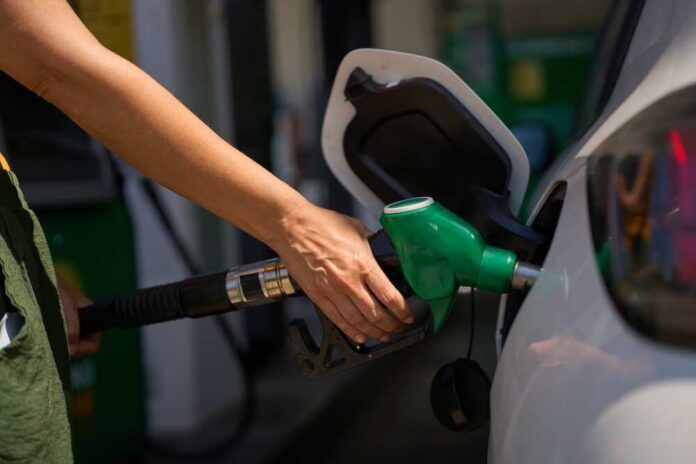
Brent crude just slipped under $76 a barrel, but the real shock is what that says about power, politics, and the price you pay at the pump.
Story Snapshot
- Brent crude is back to pre-war levels as U.S.-Iran tensions ease and tankers move again.
- Washington’s 60-day waiver for Iranian oil helped knock prices down fast, but not by magic.
- Trump is publicly leaning on oil companies to cut gasoline prices, with no direct legal hammer.
- The “rockets and feathers” effect means your gas price will likely fall slowly, if at all, without real pressure.
Oil prices slide as war fears fade and Hormuz starts to reopen
Brent crude futures have broken below $76 a barrel, their lowest level since the day before the U.S.-Iran war, as traders stop pricing in worst‑case scenarios.[2]
This retreat follows weeks of progress toward a deal to end the conflict and reopen the Strait of Hormuz, the narrow choke point that carries about a fifth of the world’s traded oil.[7] Traffic data and shipping reports now show tankers beginning to clear the backlog, easing fear of a long‑term supply shock.[1]
JUST IN: 📉 Brent crude oil falls to $75, its lowest level since February. pic.twitter.com/QQXzkoieip
— The Market Journal (@MarketJournalX) June 24, 2026
The drop did not appear out of thin air. Global benchmark prices had surged above $100 when fighting and mines in the strait threatened to choke off flows.[7] As U.S. and Iranian negotiators moved toward a ceasefire and safety assurances, that war premium started to melt.
Brent, which had hovered near $80–90 in early June, rolled over sharply once markets believed oil would keep moving and military risk was contained.[2] That is classic commodity behavior: fear lifts prices, relief knocks them down.
The 60‑day Iranian oil license and why it matters more than tweets
The United States Department of the Treasury quietly did something far more concrete than a press statement. It issued a 60‑day general license that allows global buyers, including some American refineries, to trade in Iranian‑origin crude and fuel without violating sanctions.[2]
Analysts quickly tied this waiver to the slide in Brent and West Texas Intermediate prices, because it signals fresh supply hitting a tight market right when war risk is easing.[3] More barrels chasing the same demand means lower prices, no conspiracy needed.
This move fits a long American pattern: when oil spikes, Washington hunts for extra supply rather than only lecturing companies about “gouging.”
Common sense tends to favor this approach. Increase lawful production and flows, and prices fall without complex bureaucratic schemes. The Treasury waiver does exactly that. It uses existing sanctions law to temporarily widen supply, rather than inventing new federal price controls that almost always backfire and cause shortages.[2]
Trump’s pressure campaign and the limits of presidential muscle
President Trump has seized on the crude price slide to argue that oil companies “should” cut gasoline prices now, framing himself as the consumer’s champion against big energy firms.[2]
History shows presidents of both parties do this when prices spike or fall fast, because it plays well with voters who see numbers at the pump as a weekly verdict on Washington.[16] But a president does not have a red button that sets retail gas prices; global markets, taxes, refinery capacity, and inventories do most of that work.[16]
When Trump leans on companies in public, he is using the bully pulpit, not a legal mandate. Past research on gasoline politics found that even credible threats of tougher regulation sometimes nudged refiners to restrain price hikes, but hard proof of big, lasting cuts from White House jawboning alone is rare.[19]
This is the trade‑off: we want limited government, so we cannot also expect presidents to dictate prices like central planners. What they can do is fix policy bottlenecks, cut red tape, and unlock more supply.
Why your gas price falls slower than crude — and what that says about incentives
Drivers often ask why pump prices do not drop as fast as news headlines say crude has fallen. Economists call this the “rockets and feathers” pattern. Prices shoot up like a rocket when oil rises but float down like a feather afterward.[10]
Company executives point to inventory costs, refinery schedules, and local competition. But the basic truth is simple: when prices move down, sellers have less urgency to cut. They move only when rivals do, and only as far as they must.
Analysts and consumer groups have documented many episodes where oil slid $10–$20 a barrel, yet gasoline barely budged in the short term.[10] That lag is why Trump’s demand for instant relief will likely run into resistance.
From a free‑market viewpoint, the right answer is not federal price‑fixing but more transparency and real competition. Audits of pricing data, and exposure of any collusion, would let the market punish companies that squeeze customers while costs fall. Sunlight and choice beat heavy‑handed control.
Bigger forces ahead: forecasts, inventories, and the risk of a price whiplash
The current relief at the pump may be short‑lived if deeper trends go the other way. The United States Energy Information Administration projects that, even with Middle East output rising, global inventories may fall sharply before later rebuilding, with Brent averaging much higher earlier in 2026 before easing into 2027.[8]
If refinery outages or low fuel stockpiles hit at the wrong time, wholesale gasoline prices can still climb even when crude drifts lower.[9]
Oil and gas executives have already warned the White House that shrinking inventories could push gasoline above $5 a gallon if supply does not improve, hinting at export limits and emergency actions as last‑ditch options.[17]
That warning undercuts the fantasy that one sanctions waiver and a few tough tweets can lock in cheap gas. For consumers who value both affordable energy and limited government, the lesson is hard but clear: watch real supply numbers, not political sound bites. Oil obeys barrels and tankers, not talking points.
Sources:
[1] Web – Brent falls below $76, notching its lowest level since day before …
[2] Web – Price of Brent Crude Oil Falls Below $76 Per Barrel for 1st Time …
[3] Web – 2026 Brent Crude Price Outlook: Falling Below $80, Where Is the …
[7] YouTube – Crude Oil Prices By July-August Would Be At $85/Bbl
[8] Web – Current price of oil as of June 22, 2026 – Fortune
[9] Web – Short-Term Energy Outlook – EIA
[10] Web – Oil prices to decline as global oversupply builds through 2026: US EIA
[16] Web – Will fuel prices drop with brent crude? – Facebook
[17] Web – What can a president do to significantly lower gas prices? – Reddit
[19] Web – Trump suggests high oil prices are a positive after bragging … – PBS