
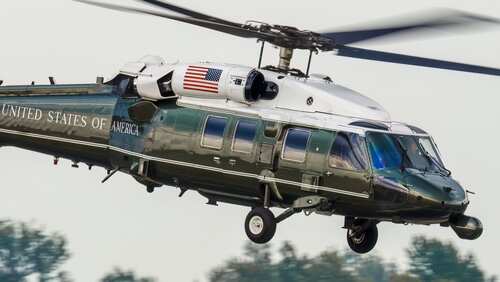
Federal officials are investigating a Marine One safety incident that put President Trump’s helicopter in the middle of a procedure meant to keep it clear of commercial traffic.
Story Snapshot
- The FAA and the National Transportation Safety Board are reviewing the event.
- The White House says Trump was never in danger.
- Officials say commercial flights were not halted when they should have been.
- The FAA says the aircraft briefly lost required separation, then moved apart.
What Happened Over Washington
The incident happened as Marine One lifted off from near the White House and headed toward Joint Base Andrews. According to officials, commercial traffic at Ronald Reagan Washington National Airport was still moving when it should have been paused.
That is the heart of the case: a presidential helicopter departure overlapped with airport traffic during a window when controllers were supposed to stop other flights first.
The FAA said its first review found a “momentary loss of separation” between Marine One and an American Airlines regional flight. The agency also said the controller stayed in contact with both pilots during the event.
The FAA added that the aircraft then moved away from one another, which is why officials have framed the matter as a serious procedure lapse rather than a proven collision threat.
Why the Timing Matters
The timing matters because the safety protocol was written to keep other aircraft out of the way before Marine One departs. Reporting says controllers were supposed to halt commercial flights three minutes before takeoff.
Reuters reported that flights had not been stopped as required, and the Wall Street Journal said sources familiar with the matter described the same breakdown. That means the main question is not whether a rule was triggered, but why it was missed.
Tuesday 'safety incident' with Marine One flight carrying Trump under investigation
Air traffic at nearby Reagan National Airport wasn’t stopped despite chopper take-off
'At NO point was the President in harm’s way' — White House pic.twitter.com/HZRd4j9GcL
— RT Intl (@RT_on_X) August 5, 2026
The public record so far points to a narrow but important gap between a protocol violation and an actual emergency. Reuters quoted an FAA spokeswoman saying the helicopter and the commercial jet did not appear to get dangerously close and were not converging.
NBC News also reported that the FAA did not describe the event as a dangerous close call. Those statements matter because they place the episode in the realm of procedural failure, not proven catastrophe.
How Officials Are Framing the Risk
The White House said there was no danger to the president, and the FAA echoed that message in its initial readout. The FAA’s own language is careful. It uses separation rules, not dramatic labels.
Near Reagan National, aircraft are supposed to stay at least 1.5 miles apart horizontally and 500 feet apart vertically from a helicopter passing nearby. That technical standard is the yardstick investigators will use to decide what happened and whether the system failed.
The public reaction has been louder than the official record. Some coverage has used “close call” language, which naturally grabs attention. But the available reporting still leaves a clear distinction: a procedural lapse can be real without proving a near crash.
That distinction matters in aviation because safety systems are built to prevent danger before it becomes visible to passengers or the public. In this case, investigators are still checking whether that buffer was lost for a moment or something more serious occurred.
The FAA has launched an investigation into the failure to halt commercial flights at Washington Reagan National Airport during the takeoff of Marine One carrying President Donald Trump.https://t.co/zcU204nCoB pic.twitter.com/8KDQMzy2wn
— Ally Daily (@allydailycom) August 6, 2026
The next stage will be technical, not theatrical. Investigators are expected to look at radar data, controller audio, and the timeline of the departure against the airport’s shutdown procedure.
If the aircraft separation numbers hold up, the case may end as a warning about broken coordination. If they do not, it will become a sharper lesson about how fast a routine takeoff can become a national-security story when the president is on board.
Sources:
cbsnews.com, wsj.com, nbcnews.com, reuters.com, youtube.com, foxnews.com