
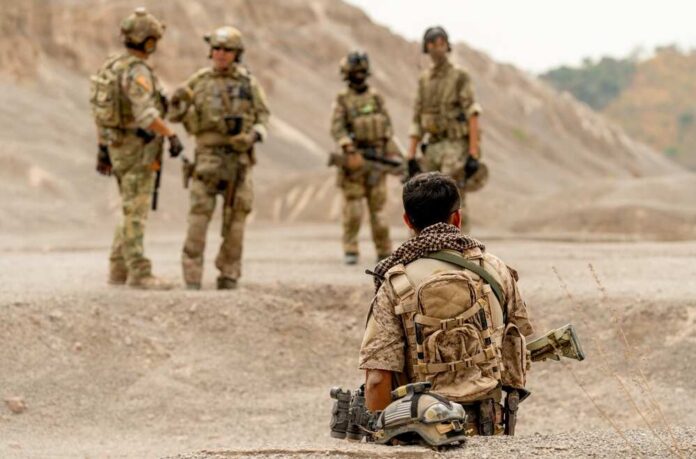
The United States military says its mission in Iraq is over, and the last troops have left Erbil Air Base on Wednesday under a planned deal with Baghdad.
Story Snapshot
- Pentagon announced a final, orderly departure that ends the 12-year anti-ISIS mission.
- Exit followed a U.S.-Iraq agreement set in motion in 2024, not a surprise pullout.
- Erbil Air Base served as the last departure point for U.S. forces in Iraq.
- Iraqi forces now lead the ongoing effort against ISIS remnants, with U.S. support ending.
What Ended, Where It Ended, and Why It Matters
The Pentagon said U.S. troops and equipment completed an orderly departure from Iraq, closing the military chapter of Operation Inherent Resolve in-country on Wednesday.
Officials linked the exit to a joint plan with Iraq, first outlined in 2024, that shifted the mission from advising to departure.
The last known U.S. troops left Erbil Air Base in the Kurdish region. Pentagon language framed this as a success against the Islamic State group’s organized threat in Iraq, not a rushed retreat.
Major outlets aligned on the same core facts. Wire reports and defense press said the Pentagon confirmed completion on Wednesday and tied it to the Baghdad-Washington plan.
The coverage identified Erbil as the departure node and described the exit as the final move in a phased drawdown. That drawdown had reduced U.S. forces from several thousand at the height of the anti-ISIS fight to a small advisory footprint before the last lift. The message was consistent: mission complete, troops out, plan honored.
US troops WITHDRAW from Iraq as 23-year military presence NEARS END
Withdrawal set to be completed by SEPTEMBER 30 pic.twitter.com/W33Np2IDRj
— RT (@RT_com) September 29, 2026
How the Plan Unfolded From 2024 to Today
Reporting traces a clear transition arc. After helping Iraqi forces crush ISIS’s territorial hold, the United States shifted to advising and enabling. The 2024 joint approach with Baghdad set milestones to wind down coalition sites and hand lead roles to Iraqi units.
By this year, U.S. numbers had dwindled to a small contingent, and logistics focused on closing accounts, moving gear, and transferring tasks. The Pentagon credited Iraqi security forces as ready to carry the fight against ISIS remnants.
That sequencing matters for two reasons. First, a phased drawdown lets commanders protect people and equipment while keeping pressure on stragglers. Second, a public handoff signals respect for Iraqi sovereignty.
The Stakes After the Last Flight Wheels Up
Iraq’s security forces now own the daily grind of raids, checkpoints, and intel work that keep ISIS from re-forming cells into an army. That is the sober part of victory: the mop-up rarely makes headlines, yet it decides whether gains stick.
The Department of Defense stance says the organized ISIS threat in Iraq was defeated; the task ahead is to suppress leftovers, and Iraqi units lead that task from here.
Regional watchers warn that power vacuums invite bad actors. Some coverage flagged Iranian-backed militias seeking advantage and noted Kurdish concerns about protection as U.S. forces depart.
Those claims underscore a known pattern after drawdowns: friends ask what fills the gap, rivals test the edges. The right metric now is not whether Americans return, but whether Baghdad keeps order and shields its borders and minorities while hunting ISIS holdouts. That is the test the plan set up.
Why This Exit Is Different From 2011
This endgame looks less like a door slam and more like a scheduled handoff built over two years. The United States left under a bilateral deal, from one final base, with Iraqi forces already running point.
That aligns with lessons learned: do not linger without a clear job, and do not leave before local forces can stand the line. The Pentagon called it a milestone that ends the U.S. military role against ISIS in Iraq, while keeping the fight to suppress remnants in Iraqi hands.
Sources:
reuters.com, twincities.com, bostonglobe.com, stripes.com