
China’s massive “Justice Mission 2025” war games encircle Taiwan with record scale, directly challenging U.S. arms support and President Trump’s commitment to countering Beijing’s aggression.
Story Snapshot
- China deploys troops, warships, jets, and artillery in largest-ever drills across seven zones to blockade Taiwan’s ports and simulate invasion.
- Exercises respond to $11.1 billion U.S. arms sales to Taiwan, signaling Beijing’s warning against external interference in its territorial claims.
- Taiwan places forces on high alert with rapid response drills, showcasing U.S.-made HIMARS systems capable of striking mainland China.
- Propaganda posters threaten to “smash separatist scoundrels” and destroy foreign interference, blurring lines between training and potential attack.
China Launches Record-Scale Encircling Drills
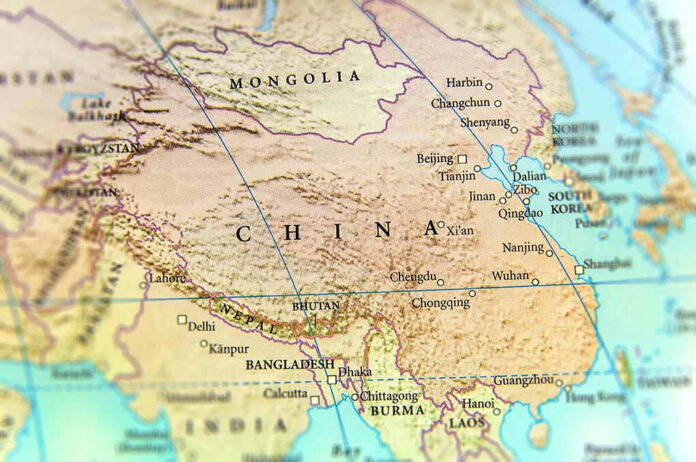
China’s Eastern Theatre Command initiated “Justice Mission 2025” on December 29, 2025, deploying troops, warships, fighter jets, and artillery to encircle Taiwan. These exercises aim to demonstrate Beijing’s capacity to cut off the island from external support during conflict. Live-fire operations target land and sea, with simulated strikes and port blockades focusing on key facilities like Keelung and Kaohsiung. Drills expanded to seven zones, surpassing prior efforts in scope and proximity to Taiwan’s shores. This marks China’s sixth major round since 2022.
China 'all-dimensional' largest live-fire drills to 'blockade & shield Taiwan from US' after massive Trump arms deal
Army navy air & rockets move in tomorrow in biggest show of force since Taiwan Strait Crisis pic.twitter.com/vvpobgPbXN
— RT (@RT_com) December 29, 2025
U.S. Arms Sales Provoke Beijing’s Response
The war games commenced 11 days after the U.S. approved its largest-ever $11.1 billion arms package to Taiwan, prompting protests from China’s defense ministry. Beijing vowed “forceful measures” against growing U.S.-Taiwan military interoperability. Researcher Chieh Chung from Taiwan’s Institute for National Defence and Security Research stated China sends a “strong message on external interference,” noting severed air and sea links to Japan in northern zones. Analysts observe these drills increasingly mimic attack preparations, offering minimal warning to U.S. allies. President Trump’s firm stance against Chinese expansionism underscores the need for unwavering American resolve to deter aggression.
Taiwan’s defense ministry reported 89 Chinese aircraft, 14 military vessels, and 14 coast guard boats operating around the island on Monday, with four more warships in the Western Pacific. Stand-offs occurred near Taiwan’s 24-nautical-mile contiguous zone. Taiwan’s forces remain on high alert, ready for rapid response exercises to reposition troops if drills escalate. The coast guard deployed ships to counter Chinese vessels, minimizing disruptions to maritime routes and fishing. Aviation authorities reroute flights due to a 10-hour “danger zone” in Taipei airspace for Tuesday’s live-fire drills.
Taiwan Bolsters Defenses with American Weapons
Taiwan rejects China’s sovereignty claims, insisting only its people decide the island’s future. Deputy Chief of Staff Hsieh Jih-sheng emphasized preparing for worst-case scenarios, warning live-fire drills pressure Taiwan and complicate regional stability. Taiwan’s defense ministry released footage of U.S.-made HIMARS rocket systems, with 300 km range to target China’s Fujian province across the strait. Government condemned the exercises as military intimidation. Stock markets closed up 0.9%, showing public resilience amid a Taipei teacher’s view that prior drills aimed to intimidate.
Propaganda and Futuristic Threats Escalate Tensions
China’s military unveiled propaganda posters declaring “Any foreign interference shall perish!” and vowing to destroy “separatist scoundrels.” Graphics lock targets on four Taiwan locations, while a video showcases novel humanoid robots, microdrones, and weaponized robotic dogs assaulting the island. State media highlighted port blockades for deterrence against outside intervention, a new public framing. Researcher Fu Zhengyuan justified drills citing U.S.-Taiwan system integration risks. These moves test President Trump’s strategy to check Beijing’s global ambitions and protect free nations from communist overreach.