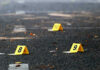


British counterterrorism officers made a seventh arrest tied to the RAF Fairford probe, signaling the case is active, expanding, and far from over.
Story Snapshot
- Police arrested a 22-year-old British man in Westminster on suspicion of preparing terrorist acts.
- This is the seventh arrest linked to the RAF Fairford investigation, after six prior arrests.
- Counter Terrorism Policing said the arrest connects to the Fairford incident and that officers searched nearby premises.
- Earlier suspects were released on bail but remain under investigation, with strict conditions.
Seventh Arrest Signals a Live, Expanding Investigation
Counterterrorism officers detained a 22-year-old British national in Westminster, London, on suspicion of preparing terrorist acts. Police said this arrest connects to the investigation into the incident near Royal Air Force Fairford in Gloucestershire. Officers searched a property near the arrest as part of ongoing inquiries. This marks the seventh arrest tied to the case, which centers on events that triggered evacuations, vehicle checks, and a large security response near the base used by the United States Air Force.
Officials have not disclosed charges for the new suspect at this stage. Media reports from the British Broadcasting Corporation, United Press International, and other outlets confirm the arrest was made under suspicion of preparing terrorist acts, a serious offense under the United Kingdom’s counterterrorism framework. Police emphasized the case remains active and is being led by specialist counterterrorism officers following multiple lines of inquiry.
What Police Said About the First Six Suspects
Police previously arrested five men near RAF Fairford and later a sixth person, then released the initial five on bail while keeping the investigation open. Assistant Commissioner Laurence Taylor said those men were arrested on suspicion of explosives offenses and planning a terrorist act. He also said no improvised explosive devices were found, but officers recovered a quantity of petrol from vehicles near the scene. That detail fits a case focused on intent, capability, and potential ignition sources rather than completed devices.
Officials stated the earlier releases did not end the inquiry. They said the suspects remained under investigation with strict bail conditions. That approach fits the United Kingdom’s model, where arrests can occur on reasonable suspicion to disrupt risk while evidence is developed to meet charging standards. From a common-sense, conservative view, this is the state doing first things first: stop the danger, then build the case.
Why a Seventh Arrest Now
Police have not explained publicly what linked the Westminster suspect to the Fairford incident. They did confirm the arrest connects to the same investigation and that searches took place. That implies investigators are following fresh leads, devices, or communications that grew after the initial detentions and scene work. The timeline also tracks with complex cases that move in waves, with bail used to manage risk while digital forensics, interviews, and analysis pull in new names.
Authorities also managed community safety around Fairford. Reports described evacuated homes and bomb disposal checks after the first arrests. The later statement that no explosive devices were found, paired with the reported petrol recovery, narrows the focus to what police believe the suspects planned and whether they could act on it. That is where counterterrorism cases often rise or fall—on intent and capability, not only on items found.
How United Kingdom Counterterrorism Law Works in Practice
United Kingdom law allows arrest on reasonable suspicion of terrorism to disrupt risk and gather evidence. Charging requires a higher threshold, turning intelligence and inquiries into courtroom-ready proof. Government reporting shows a significant share of terrorism arrests later lead to bail or non-terror charges, while some do progress to terrorism counts. The most recent official snapshots note that only around a third of terrorism-related arrests in some periods resulted in charges.
U.K. police arrest 7th man over RAF Fairford incident on suspicion of terrorism pic.twitter.com/MQWqXA4OBp
— B.C. Begley (@BC_News1) October 7, 2026
That legal structure creates a pattern the public now sees at Fairford: quick arrests on suspicion to remove risk, cautious statements while evidence is processed, and deliberate charging decisions later. Taylor’s comments about stringent bail and the ongoing probe mirror that playbook. The seventh arrest shows investigators are still adding pieces, not closing the file. A single line ties the narrative together: the case is live, and officers are building it step by step.
What to Watch Next
Further police updates will matter more than rhetoric. Key markers include whether police charge any suspect under the Terrorism Act with preparation of terrorist acts, whether they use non-terror charges where the evidence points, and whether searches produce items or digital records that define roles. The seventh arrest spotlights Westminster as a point of interest, at least for searches and custody. Until charging decisions arrive, the safest read is that police are still moving through their sequence.
Sources:
cbsnews.com, bbc.com, reuters.com, itv.com, gov.uk