

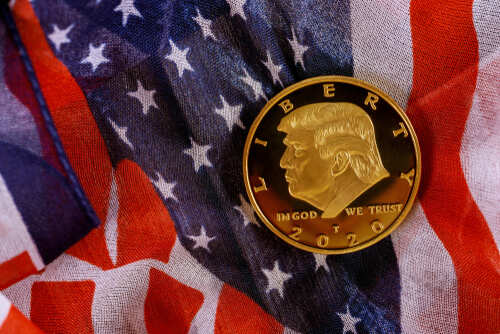
The U.S. Treasury used its official social media to urge Americans to spend new Trump dollar coins at “liberal coffee shops.”
Story Snapshot
- The U.S. Treasurer promoted spending new Trump $1 coins at coffee shops.
- The coins mark the nation’s 250th anniversary and are legal tender.
- The U.S. Mint offered premium-priced rolls and bags for collectors.
- Federal guidance tells agencies to keep official accounts politically neutral.
Treasury’s On-Camera Challenge Put $1 Coins Into Culture War Crosshairs
U.S. Treasurer Brandon Beach appeared in a video on Treasury’s official account and told viewers to buy a roll of Trump dollar coins, then take them to a “favorite liberal coffee shop” to purchase a cup of coffee. He said banks would have coins the following month and highlighted the program as part of America’s 250th anniversary observance. The phrase “liberal coffee shop” set the tone. It turned a currency rollout into a test of identity, not only a test of cash registers.
Fox Business captured and aired the clip, quoting Beach’s call to action and replaying his framing. Newsweek also reported the message, describing the encouragement to use the coins at “liberal businesses”. The core facts align across outlets: an official Treasury video, a clear challenge to spend the coins in a politically coded setting, and a tie to the Semiquincentennial. That mix ensured the story spread far beyond coin collector circles.
Collector Pricing Meets Everyday Spending, and Friction Follows
The U.S. Mint sold a 25-coin roll for $61 and a 100-coin bag for $154.50, well above face value. That pricing matches the Mint’s long-standing approach for numismatic products, which covers handling, packaging, and program costs. The message to spend the coins at face value clashed with the premium, though. Consumers heard “buy at a premium” and “spend at par” in the same breath. That is not illegal or new, but it confuses ordinary buyers.
Beach said banks would have coins the next month, but Treasury did not name which banks or specify a distribution schedule in the cited reporting. That gap matters if the goal is routine use. Banks drive circulation, not commemorative web pages. Without clear bank partners, many people will only see the coins through Mint sales channels. That keeps coins in display cases, not coffee shop cash drawers, no matter the political theater.
The U.S. Treasury is telling Americans to go to spend the new Trump $1 coins at liberal coffee shops.
Legendary trolling 🤣 pic.twitter.com/xRzDeW8nnj
— Benny Johnson (@bennyjohnson) October 15, 2026
Official Accounts Carry Extra Rules, Even In Short Videos
Federal guidance says official agency social media must stick to government business and stay politically neutral. The Hatch Act does not bar all policy advocacy; agencies can explain programs. But it does restrict partisan activity while on duty or using government resources. A government account that leans into factional labels risks blurring that line, even if the message sells a legal-tender product tied to a national milestone. The rule is simple: inform the public, do not campaign.
Supporters will argue the video was playful outreach to spark use of real money. Critics will point to the language that targets “liberal” venues as needless provocation from an official channel. On the merits, the facts fit a broader trend: government messaging now competes on platforms where provocation wins attention. That style can juice engagement but can also drag neutral institutions into identity fights that distract from operations and value for taxpayers.
What This Means For Dollars, Banks, And Coffee Counters
The coin itself is straightforward: it is legal tender and honors the nation’s 250th year. The hard part is the path from novelty to circulation. Banks must stock it. Merchants must accept it. Customers must carry it. That chain works when logistics are dull and predictable. It breaks when the pitch becomes a cultural dare. Americans can still use the coins anywhere that accepts United States currency. The question is whether they will, at scale, without clear bank routes.
The practical next steps are not political. They are operational. Publish bank participation. Clarify whether consumers can get the coins at face value at branches. Share shipment dates and quantities. Keep official messaging focused on the coin’s history, design, and how to use it in daily life. That approach respects the law, calms the noise, and gives citizens what they need: reliable money, clear facts, and the choice to spend or save without a culture war at the counter.
Sources:
foxbusiness.com, x.com, newsweek.com