

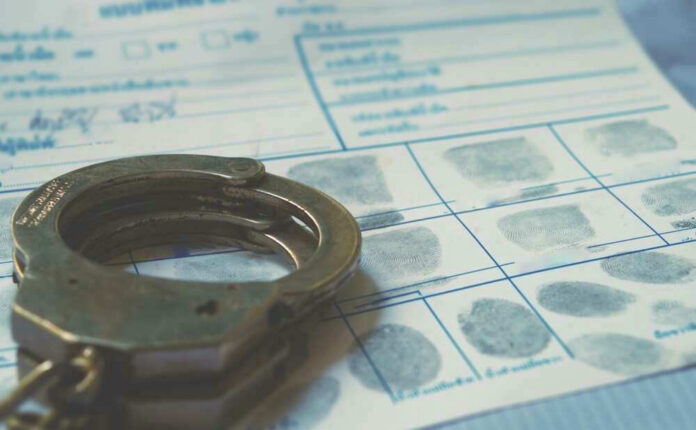
Chicago police say a preserved fingerprint and modern DNA both point to one of their own as the killer of 8-year-old Gloria Kowalewicz in 1960.
Story Snapshot
- Police identified former Chicago detective Thomas McInerney Jr. as Gloria’s killer through a fingerprint and DNA.
- A print on Gloria’s purse strap reportedly matched McInerney’s 1959 police job application file.
- Investigative genetic genealogy linked DNA from Gloria’s clothing to McInerney’s family line.
- The finding came 65 years after the murder, aided by the Federal Bureau of Investigation (FBI) and Illinois State Police.
Police say two tracks of forensics closed a 1960 child murder
The Chicago Police Department (CPD) announced that a fingerprint from Gloria’s purse strap and DNA recovered from preserved evidence identified former CPD detective Thomas McInerney Jr. as the killer. CPD told reporters the identification rested on both forms of evidence, not a single tip or witness recollection. The Associated Press reported that modern lab work, with support from the FBI and Illinois State Police, tied the DNA to McInerney decades after the crime.
NBC News reported that investigators compared DNA from Gloria’s clothing with genetic information connected to family-tree research, which led them to McInerney. Reporters also noted the unusual link on the fingerprint: detectives pulled McInerney’s 1959 job application and found that the fingerprint on that file matched the print lifted from Gloria’s purse strap. CPD said the fingerprint had been carefully preserved for years, allowing a modern comparison that was not possible in 1960.
The suspect wore a badge and lived near the victim’s family
McInerney joined the CPD in 1959, was 24 at the time of Gloria’s killing, and later became a homicide detective. The Chicago Tribune reported that his parents lived only a few blocks from Gloria’s family at the time, placing him near the neighborhood where the child vanished. That detail may not prove motive, but it situates him in place and time. CPD emphasized that the case turned on physical evidence rather than a witness memory from decades ago.
Gloria’s murder shocked the city. An 8-year-old was taken and killed. Police collected her purse and other items and preserved them. Those steps—routine to evidence custodians, easy to overlook by the public—set the stage for this late break. The DNA methods used here did not exist for most of the last century. The same goes for searchable personnel files built for internal use but now useful in cold-case checks.
How investigative genetic genealogy enters a cold case
Investigative genetic genealogy searches for relatives of an unknown DNA profile in consumer-style family databases and builds a family tree outward and downward to a likely suspect. NBC News reported that investigators used that process on DNA from Gloria’s clothing to identify McInerney. The Associated Press said the FBI and Illinois State Police worked with CPD to support the DNA findings and the preserved fingerprint. That two-track path—fingerprint plus DNA—sets this case apart from many cold-case claims that rely on one test alone.
🚨 COLD CASE SHOCKER: DNA & a job file fingerprint have linked former Chicago detective Thomas McInerney Jr.—who died in Las Vegas in 2006—to the 1960 murder of 8-year-old Gloria Kowalewicz. Solved after 65 yrs. 🧬https://t.co/v0zkARPvnn
— 702times (@702times) October 14, 2026
This outcome matches a broader pattern: cold-case success often depends on preserved evidence and access to modern databases. A review of cold-case work shows agencies with better access to forensic tools and dedicated funding clear more cases, while many departments struggle when those supports are thin. Here, careful storage in 1960 met modern tools in 2026, and the long arc finally bent toward a name.
Accountability when the suspect once carried a shield
People magazine and other outlets underscored the hard fact: the identified suspect served as a CPD officer and later worked as a federal investigator in Las Vegas. That is a bitter pill for any city. The best answer is sunlight and strong controls. Chicago’s statement credited outside partners, which is the right instinct. When police name one of their own, extra transparency builds trust without weakening the case facts.
The case will not go to trial because the suspect is deceased. That is common in cold cases and does not erase the significance for the family or the city. The public should care that this identification stands on two independent forms of physical evidence reported by official sources and major outlets. The combination—DNA and a fingerprint tied to a known job file—carries persuasive weight under common-sense standards prized by most Americans.
What this means for other unsolved crimes
Chicago police said they would check for links to other victims, a prudent next step. CODIS, the national DNA database, and related searches can flag case-to-case matches, but each link must stand on its own facts. Departments that invest in evidence preservation, database access, and steady cold-case funding see more wins. RAND’s survey found that exact mix drives higher clearance rates over time. Families deserve that discipline: save, test, verify, and tell the truth.
Sources:
foxnews.com, nbcnews.com, apnews.com, people.com, local12.com