
Waymo filed two federal safety recalls within days of California calling its freeway robotaxis an “imminent hazard.”
At a Glance
- Waymo issued two recalls to fix driving in closed freeway lanes and at police-directed intersections.
- Federal records say the freeway defect could send cars into active construction zones at speed.
- California banned driverless Waymo rides on state freeways after recurring construction-zone incursions.
- Waymo paused freeway rides and restricted operations while developing a software remedy.
Two Recalls, One Message: Fix Work Zones and Follow the Cop
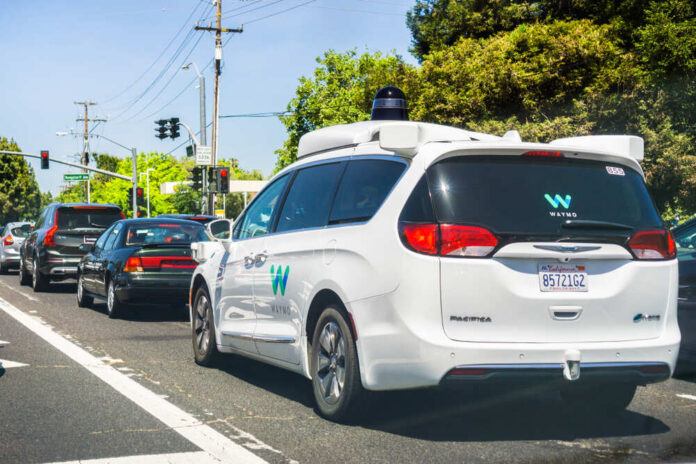
Waymo told federal regulators it will strengthen how its automated driver handles two risky situations: closed freeway lanes and intersections where police or emergency crews direct traffic. The company filed recalls with the National Highway Traffic Safety Administration (NHTSA) and said updated software will address both issues. The timing matters. California had just blocked Waymo’s driverless cars from state freeways, citing an imminent safety hazard after repeated construction-zone incursions.
NHTSA’s acknowledgment letter for the closed-lane recall states the defect could let a fifth-generation Waymo system enter a closed freeway construction zone and keep moving at speed, raising crash risk. The filing lists 3,871 affected units. Waymo plans to update the automated driving software at no charge and, while the fix is in development, has limited freeway operations as an interim control. This describes a targeted software failure mode, not a vague worry.
California’s Ban Set the Stage
The California Department of Motor Vehicles banned Waymo’s driverless vehicles from state freeways effective November 11. The agency said freeway operations posed an “imminent hazard to public safety,” pointing to recurring entries into active work zones on U.S. 101 near Burlingame. That order framed the risk as not isolated, but repeating, and set a high bar for restoration: prove the corrections work in the real world.
Waymo then paused freeway rides more broadly after the state action. The company’s step extended beyond California and aligned with the recall’s interim restrictions. The pause signals recognition that construction zones and human-directed traffic are high-risk edge cases that demand clear performance, not hope. It also shows that software-led fixes remain the lever companies reach for first when behavior falls short.
Manual Traffic Control: When Machines Meet Human Signals
The second recall targets behavior at intersections managed by police or emergency workers. Reporting links it to an incident where a Waymo vehicle followed an officer’s direction, then the officer became briefly obstructed, and a collision followed. The company says the software update will improve the system’s response to manual commands from law enforcement and emergency personnel. The details remain limited, but the defined failure mode is concrete and testable in controlled settings.
$GOOGL’s Waymo issues two Robotaxi recalls over closed freeway lanes and manual traffic control.
Vehicles entered closed lanes (no injuries reported) + issues responding to police/emergency hand signals. Freeway ops paused after California ban.#Waymo #Robotaxi #GOOGL #Alphabet…
— Vikram Singh Indolia (@VikramIndolia) November 21, 2026
These scenarios are messy by design. Human officers use hand waves, eye contact, and vehicle placement to signal intent. Construction crews shift lanes with cones and trucks that look different city to city. A robotaxi needs to read these cues fast and without guesswork. The recalls state a plan to do that with better detection, interpretation, and decision logic. The practical standard should be simple: when a human takes control of the road, the machine yields, holds, and confirms.
Why Recalls Are Now Part of the Playbook
Automated driving has moved from sleepy pilots to real commutes. That shift exposes software to rare, confusing scenes that were under-sampled in testing. Federal data show a surge in automated-driving-related recalls across the industry in recent years, reflecting this reality. Recalls are not a scandal by default; they are a tool to tighten performance at scale. But in public traffic, fixes must show results on pavement, not only in simulation.
California’s stance underscores a core American value: freedom to innovate paired with duty to protect the public. Filing a recall shows responsibility. Proving the remedy works earns trust and access. On freeways at construction speed, there is no cushion for almost. Regulators asked for proof because work zones change by the hour and because officers directing traffic must be obeyed with zero drift. That is common sense, not red tape.
What to Watch Next
Watch for NHTSA postings that show the remedy complete and deployed at scale, along with any follow-up incident reports tied to closed lanes or manual control. Look for California to review on-road performance data before easing the freeway ban. Expect controlled tests that stress cones, lane shifts, officer hand signals, blocked lines of sight, and detours. The yardstick is clear: fewer incursions, clean stops on command, and safe handoffs when humans run the intersection.
Waymo’s recalls confront two of the hardest problems in driving: fluid human signaling and unpredictable work zones. If the fixes hold, the company regains ground on the highway. If they do not, the road narrows. The outcome will shape how fast robotaxis earn trust where speeds are high and the stakes are higher.
Sources:
foxbusiness.com, theverge.com, charlotteobserver.com, newsweek.com, engadget.com, newsobserver.com, static.nhtsa.gov, wired.com, bvwd.ca.gov