

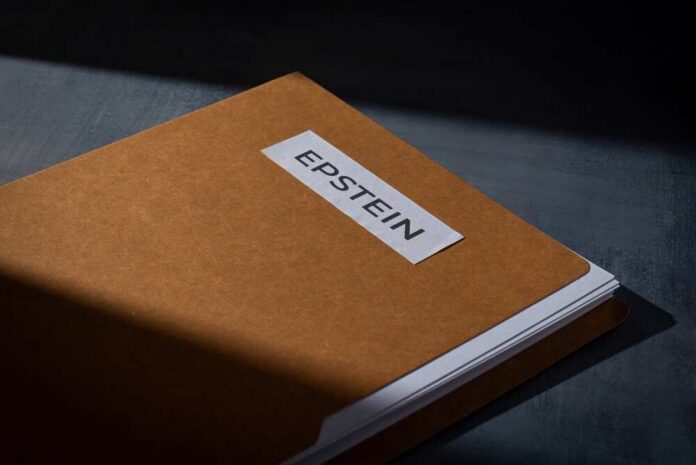
House members hit the 218-signature mark to force a floor vote on a bill that could pry open long-sealed Epstein records.
Story Snapshot
- Rep. Thomas Massie’s discharge petition reached the required 218 signatures to force action on H.R. 9694.
- The Epstein Files Transparency Act II would add teeth to disclosure by letting victims, state attorneys general, and lawmakers sue the Department of Justice.
- Supporters say the bill fixes gaps left by earlier efforts and compels full, fast release of government-held Epstein records.
- Discharge petitions rarely succeed, which underscores the demand for a vote now that the threshold is met.
What the petition just triggered, and why it matters
Rep. Thomas Massie secured the 218 signatures needed on a House discharge petition to force a vote on the Epstein Files Transparency Act II, H.R. 9694. A discharge petition is the blunt tool rank-and-file members use to bypass leadership and bring a stalled bill to the floor. Once the petition crosses 218, the House must recognize the motion on a set timeline and list the names in the Congressional Record. Clearing that bar is rare and signals real momentum.
🚨This morning we reached the required 218 signatures on my discharge petition for Epstein Files Transparency Act II !
I’m working closely with @RepJayapal, @RepTeresaLF and @RepRoKhanna to get this to the floor for a vote soon.
— Thomas Massie (@RepThomasMassie) November 11, 2026
The underlying bill aims to speed disclosure of Epstein-related records. It goes beyond past measures by giving people a way to enforce it in court. The bill grants standing to state attorneys general, victims of Jeffrey Epstein, victims of his co-conspirators, and members of Congress to sue if the Department of Justice delays, conceals, or withholds covered records without clear legal cause. That design tries to end slow-walk tactics and shift leverage to requesters instead of agencies.
What EFTA II actually does
The text posted by Massie’s office shows the bill amends prior law to add enforcement options and deadlines for disclosure, with limited redactions for live investigations and privacy as allowed by law. A key feature is a private right of action against the Attorney General for noncompliance, which would let courts order production. That structure mirrors how the Freedom of Information Act lets requesters seek court orders when agencies resist release, but narrows the fight to a defined set of Epstein records.
Backers argue that a specific law is needed because general-request routes often stall. Lawsuits over records can take years, and agencies can cite many exemptions. Federal courts put the burden on agencies to justify each withholding under a valid exemption. But the process still grinds along slowly, which is why supporters want bright lines and court-checked deadlines for these particular records. The bill tries to do that while keeping legal room for narrow, lawful redactions.
Why the 218-signature route is a big deal
House history shows discharge petitions are long shots. Since the modern rule began in 1931, hundreds of petitions have been filed, but only a small fraction ever got 218 signatures, and fewer moved a bill to law. Members know that number is a mountain. Hitting it raises pressure on leadership to allow a vote rather than block the floor. It also signals that rank-and-file Republicans and Democrats found common ground on a simple premise: sunlight serves the public interest here.
Reaching 218 does not guarantee passage, but it forces debate. Leadership can respond by scheduling a controlled vote or by letting the discharge motion ripen. Either way, the petition achieved its job: it broke the bottleneck and ensured the bill will face the House. That is why discharge petitions are called a “Hail Mary.” When they work, they work because the public case is strong enough to bind a majority to act.
How this aligns with transparency and accountability
Americans expect evenhanded law enforcement and open government. This bill pushes in that direction by making records release the default and secrecy the exception, checked by a judge. That standard matches conservative values of equal treatment under the law and limited, accountable government. If the Department of Justice has legal reasons to withhold parts, it can argue them in court. If not, the records should come out. That is basic fairness and common sense.
Massie’s office says the earlier Epstein Files effort cleared the House with overwhelming support, which implies broad appetite for transparency on this topic. EFTA II tries to close the enforcement gap exposed after that vote by giving clear standing and remedies. The next steps are simple: a scheduled vote, a recorded tally, and then, if it passes, a straight test of the Department of Justice’s compliance in court when required. The process will be on the record, where it belongs.
Sources:
cbsnews.com, massie.house.gov, justice.gov, congressionalinstitute.org, congress.gov