

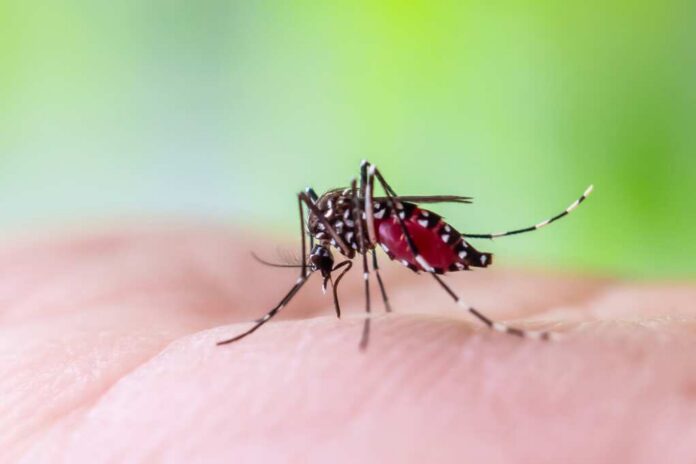
Florida just logged 485 locally acquired dengue infections, the state’s highest count in decades, and the pace is still hot.
At a Glance
- Florida confirmed 485 locally acquired dengue cases as of October 24, 2026.
- Sixty new local cases appeared in one week, showing sustained spread.
- Tampa Bay counties drove most of the recent surge, with fresh counties joining in.
- Officials say counts guide response, but not every infection gets detected.
Florida’s Case Count Jumps To A Modern-Era High
Florida health officials reported 60 new locally acquired dengue cases in a single week, lifting the 2026 total to 485 as of October 24. That is the largest tally the state has seen in decades and far above last year’s total of 62. The Florida Department of Health updates show active transmission across multiple counties and repeated weekly growth. The rise matters because it signals more infected mosquitoes and more human-mosquito contact, especially in dense neighborhoods and travel hubs.
County data point to a clear driver: the Tampa Bay region. Hillsborough and Pinellas counties added 55 local cases in the latest week alone, while Seminole recorded its first two local cases of the year. This pattern suggests clusters that expand along daily life lines: commutes, school runs, and weekend gatherings. Officials track these clusters to time spraying, door-to-door outreach, and testing. The method is simple common sense: fight mosquitoes where people actually live and get bitten.
What “Locally Acquired” Actually Means
Public health defines “locally acquired” as an infection caused by a bite from a local mosquito, not from a trip abroad. Investigators look at travel in the two weeks before symptoms and link cases to neighborhoods and exposure sites. This standard keeps the count honest and comparable across states. It also tells communities a hard truth: the virus is not only being imported; it is cycling here in our own backyards.
State and federal guidance also stresses that surveillance counts serve response, not perfection. Many infections are mild or silent, so some people never test. Health departments aim to catch enough cases to confirm local spread, map risk, and trigger action. That is how they decide where to send inspectors, where to dump standing water, and when to advise clinics to test more patients with fever.
Florida battles largest dengue fever outbreak in decades with hundreds infected https://t.co/L2nFez31h9 pic.twitter.com/3YTqFmy1Bv
— New York Post (@nypost) November 3, 2026
Why Florida, Why Now
Florida has the mosquitoes and the travel patterns that dengue likes. The state sits close to regions with heavy dengue activity, and millions of travelers move through its airports and cruise ports each year. A traveler can bring the virus home without knowing it. One infected person plus a backyard of standing water can launch a chain. Florida has seen this before, from the Key West clusters in 2009–2010 to scattered outbreaks in later years.
This year’s spike stands out against recent norms. From 2009 through 2021, Florida usually reported only a handful of local cases a year. Those numbers swung with weather, travel trends, and mosquito control. The current 485 case count signals broader and longer transmission. That scale strains mosquito teams and clinics, especially when storms leave behind water and debris that turn into breeding grounds.
What Stops Dengue: Simple Steps, Big Payoff
Communities cut dengue risk fastest by cutting mosquito breeding. Dump standing water every few days in buckets, plant saucers, gutters, and tarps. Cover rain barrels with tight screens. Run air conditioning or use screens on windows and doors. Wear long sleeves and use repellents with Deet, picaridin, or oil of lemon eucalyptus. These steps may seem small, but they break the mosquito life cycle; mosquitoes prefer to live close to people and bite during the day.
Clinics should test anyone with fever, headache, eye pain, body aches, or rash who lacks recent travel. Early diagnosis helps doctors avoid medicines that raise bleeding risk and guides patients to rest and fluids. Health departments need quick reports to find hot spots. That pipeline—patient to clinic to lab to county—is the backbone of a nimble response. It respects taxpayer dollars by aiming resources where facts, not fear, say they matter most.
What To Watch Next
The next few weeks will show whether local actions outpace mosquito growth. Watch the weekly state updates for shifts in county clusters and the speed of new cases. A drop in fresh local cases would hint that source reduction and spraying are biting into the cycle. A steady climb would call for more targeted control, more testing, and sharper public messages. Either way, Florida has the playbook. Execution, not panic, decides the outcome.
Sources:
tallahassee.com, floridatoday.com, wusf.org, cdc.gov, cidrap.umn.edu, heraldtribune.com, nbcmiami.com, baynews9.com, mezha.net