
The same legacy newsroom that spent years lecturing America about “accountability” is now watching its own leadership exit just days after hundreds of employees were shown the door.
Story Snapshot
- Washington Post publisher and CEO Will Lewis resigned on Feb. 7, 2026, three days after major layoffs.
- The Feb. 4 cuts eliminated about one-third of the paper’s staff, including hundreds of journalists, with foreign affairs hit hard.
- Chief financial officer Jeff D’Onofrio was immediately named acting publisher and CEO.
- Owner Jeff Bezos made his first public statement since the layoffs, backing a “data-driven” strategy for the paper’s next chapter.
Resignation Lands After the Largest Recent Layoff Wave
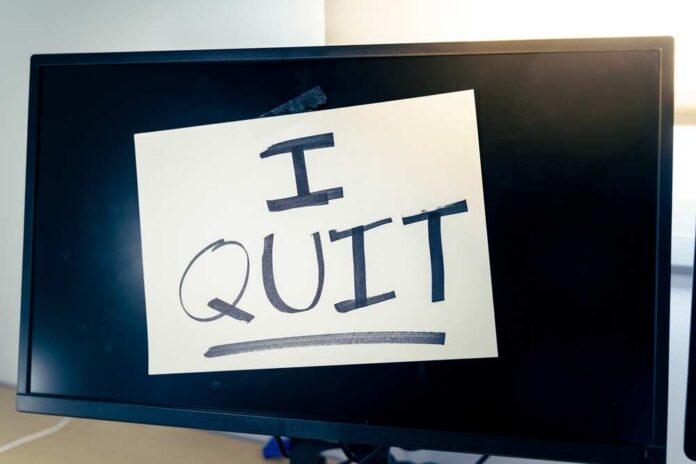
Will Lewis told Washington Post staff by email on Saturday, Feb. 7, 2026, that he was stepping down as publisher and CEO after roughly two years leading the organization.
The timing was impossible to miss: the resignation came three days after the Post carried out sweeping layoffs on Feb. 4 that cut about one-third of its workforce. Reports said the job losses included hundreds of journalists, with significant reductions to foreign affairs coverage.
The Post’s leadership transition was immediate. Jeff D’Onofrio, who joined as chief financial officer in June 2025, was appointed acting publisher and CEO. While Lewis framed the move as the right moment to “step aside” after a period of “transformation,” the resignation arriving right after the layoffs underscores how quickly corporate pressure can force change when financial realities collide with an expensive legacy operation.
Jeff Bezos Steps In Publicly, Emphasizing “Reader Data”
Jeff Bezos, who bought the nearly 150-year-old paper in 2013, issued his first public statement since the layoffs at the same moment leadership changed. Bezos endorsed D’Onofrio and other top leaders, describing an “exciting” path forward centered on using reader data as a “roadmap to success.”
That language signals a practical priority: focusing resources on what paying readers actually consume, rather than keeping broad coverage simply because it fits an old prestige model.
For readers who have watched mainstream outlets chase ideological narratives and insider approval, “data-driven” can sound refreshingly grounded—or unsettling, depending on what it ultimately means for civic coverage.
The limited information available right now comes mostly from internal memos and company statements, not from outside media, economists, or independent experts. That matters because it keeps the public debate narrowly focused on what management wants emphasized, rather than what hard numbers show about losses or revenue.
A Finance-First Leadership Choice Signals More Restructuring Risk
D’Onofrio’s resume points to operational and tech-oriented media experience rather than traditional newsroom leadership. Reporting describes him as a business executive with prior roles spanning companies such as Raptive and Tumblr, plus earlier work tied to major tech and media brands.
In plain terms, Bezos is placing a finance-and-operations figure at the top during a painful contraction. That choice usually means the next phase is about stabilizing the business, not expanding staffing or restoring prior coverage levels.
The short-term effect is clear: journalists and editors who remain will likely be expected to produce more with fewer resources while leadership rethinks what beats are “worth it.” The longer-term effect is less certain.
A pivot toward digital efficiency can keep a legacy brand alive, but it can also hollow out coverage that doesn’t immediately spike traffic—especially expensive foreign reporting. With fewer reporters overseas, American readers may get less first-hand information and more recycled wire summaries.
Washington Post publisher Will Lewis says he’s stepping down, days after big layoffs at the paper https://t.co/JOCN3ipL59
— POLITICO (@politico) February 8, 2026
What the Cuts Mean for Public Information and Political Accountability
The layoffs and rapid leadership shuffle arrive at a time when trust in corporate media is already strained. No outlet is guaranteed survival, and the private sector has every right to cut costs when revenue declines.
Still, reduced foreign affairs reporting has a real downstream impact: fewer original investigations, fewer on-the-ground sources, and fewer competing perspectives. That vacuum can make it easier for government officials, international actors, or well-funded advocacy networks to shape narratives with less scrutiny.
Politically, the Post remains influential in Washington, even as its business model tightens. When a newsroom shrinks, the public often sees less detailed coverage of bureaucracy, spending, and policy failures—areas where sustained reporting matters.
The available reporting also notes that both Lewis and Bezos were not present for the main layoff meeting, a detail that has fueled frustration among staff. What isn’t yet available is independent confirmation of the Post’s internal financials, which limits how precisely the public can judge management’s claims of necessity.
What to Watch Next as the Post Rebuilds Under Acting Leadership
As of Feb. 7–8, 2026, the Post has not announced additional layoffs or a permanent replacement beyond D’Onofrio’s acting title.
The key near-term questions are straightforward: whether the company restores any coverage capacity, how aggressively it leans into audience analytics, and whether it changes editorial priorities to match what subscribers demonstrably want. The memos stress mission and sustainability, but the layoffs show sustainability is being pursued through scale reduction.
Washington Post Publisher and CEO Will Lewis is leaving the newspaper, the newspaper announced on Saturday, after carrying out widespread layoffs this week.https://t.co/rnPyl7sIMU
— KSL.com – Utah Breaking News (@KSLcom) February 8, 2026
For a conservative audience that’s tired of being preached to by elite institutions, this episode is a reminder that glossy branding doesn’t override basic economics. When readership and ad markets shift, even the most powerful media names have to answer to reality.
The facts available so far show a legacy outlet contracting quickly and placing a finance executive at the helm, with Bezos explicitly pointing to data as the guiding tool. Whether that produces a better product—or simply a smaller one—remains to be seen.
Sources:
Washington Post publisher Will Lewis says he’s stepping down days after big layoffs at the paper