
An Air Force colonel broke his back, an arm and a shoulder in a violent ejection over Iran, then spent nearly 50 hours evading enemy forces before American troops pulled him out alive.
Quick Take
- An F-15E Strike Eagle went down over Iran in early April 2026, and both crew members were eventually recovered.
- The weapons system officer, an Air Force colonel using the callsign “Dude 44 Bravo,” suffered severe injuries during the shootdown.
- President Trump called the recovery “one of the most daring Search and Rescue Operations in U.S. History.”
- Iran disputed parts of the mission’s story, claiming its forces destroyed additional American aircraft during the operation.
A Fighter Jet Falls And Two Airmen Vanish
The trouble started Friday when Iranian air defenses shot down a two-seat F-15E Strike Eagle over a remote stretch of southern Iran. The pilot escaped the aircraft and was found and rescued within roughly a day.
His backseater, the weapons system officer, was not so lucky. He went missing for hours as American forces scrambled search planes and ground teams to find him before Iranian troops could.
Iranian officials said their own air defense system brought down the jet, a detail confirmed in outside reporting on the incident. A regional Iranian governor reportedly offered a bounty for the missing airman, raising the stakes on how fast American recovery forces needed to move to reach him first.
Newly declassified footage shows the events leading up to the rescue of Bravo, the U.S. Air Force officer who was shot down and survived behind enemy lines in Iran for two days. https://t.co/YUIzeTBpKt pic.twitter.com/0x2zDndgmC
— 60 Minutes (@60Minutes) September 14, 2026
Fifty Hours Alone With A Broken Body
The missing officer, a colonel, later described his ordeal in an interview with CBS News’ 60 Minutes. He said the impact of the crash broke his back, his arm and his shoulder.
Despite those injuries, he survived close to 50 hours behind enemy lines, hiding and moving through hostile terrain while badly hurt and waiting for a chance at rescue.
His account offers a rare firsthand look at what isolated personnel recovery actually demands from the individual on the ground. Doctrine calls it evasion.
In practice, it meant a badly injured man staying alive and out of sight in enemy territory, trusting that help was coming even as hours stretched into days with no guarantee of when, or if, it would arrive.
Twenty-One Aircraft And A Disputed Iranian Response
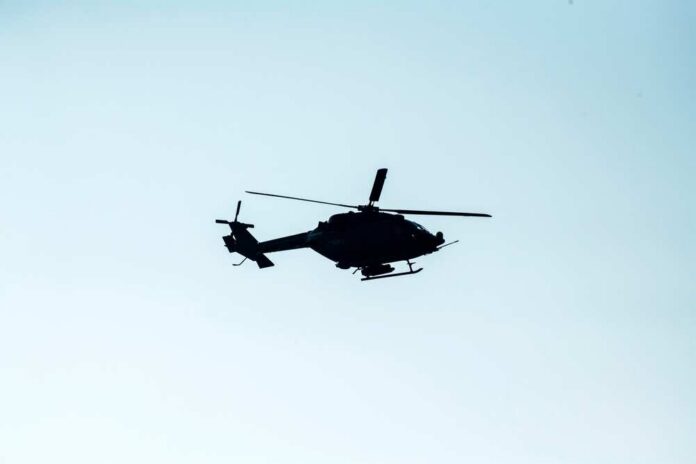
Behind the scenes, the recovery effort was massive. Air Force officials said 21 military aircraft flew into hostile airspace within hours of the crash to locate and extract the downed crew.
President Trump monitored the operation from the White House through Saturday and announced the outcome early Sunday, writing “WE GOT HIM!” on social media and praising the effort as historic.
Iran offered a different account of what happened during the mission. A spokesperson for Iran’s armed forces claimed its troops destroyed a military transport aircraft and two Hawk helicopters belonging to the United States during the rescue.
Iranian officials also floated a claim that the operation was really a cover for stealing enriched uranium, and compared it to the failed 1980 Operation Eagle Claw hostage rescue attempt, a comparison U.S. officials rejected outright.
⌚🇺🇸 THE WATCH OF THE NAMELESS COLONEL
Something caught my attention during the 60 Minutes interview with “Dude 44 Bravo.”
60 minute’s camera deliberately moves into a tight close-up of his watch.
And that watch can be identified.
It is a Wasson Automatic Field Watch with… pic.twitter.com/LPCrHagaD0
— Jesus Romero (@CommanderRomero) September 14, 2026
Trump described the rescued colonel as having “sustained injuries, but he will be just fine,” a line that matched later reporting on his recovery.
Coverage from Al Jazeera called the second pilot’s rescue “miraculous,” reflecting how unusual it is for an isolated airman to survive two full days behind enemy lines with a fractured spine before extraction.
Whatever Iran’s competing claims about the downed aircraft, the core outcome- an injured American officer brought home alive- stands as the defining fact of the mission.
Sources:
cnn.com, aljazeera.com, kurdistan24.net, reuters.com, airandspaceforces.com