

A middle-aged security guard walked out of a Venezuelan basement alive after eight days under a dead building, and the real shock is how much of that “miracle” was hard math, steel nerves, and human grit.
Story Snapshot
- Guard trapped beneath a collapsed mall basement survives eight days under concrete and steel.
- International crews from several nations spend about 100 hours drilling toward a single living voice.
- A tiny security booth becomes a life-saving air pocket, backed by food, water, and oxygen tubes.
- Media calls it a miracle, but science and common sense say skill and structure made survival possible.
A man alone under a country in crisis
On June 24, twin earthquakes measuring over magnitude seven slammed Venezuela’s coastal region, shredding concrete, roads, and the fragile systems that keep people alive.
In the basement of the Galerias Playa Grande shopping center, security guard Hernan Alberto Gil Flores was doing a routine job in an ordinary booth when the building folded into itself. Above him, floors pancaked. Around him, steel twisted. Yet his small cabin stayed just stable enough to form a tight bubble of space.
Shoppers, coworkers, and families vanished into chaos while the country’s weak infrastructure buckled under the weight of a real disaster. Fuel shortages kept heavy machines silent and parked. Communication lines snapped.
Social media filled that gap with anger at slow official help and praise for foreign teams who showed up with gear, training, and discipline. In that storm of anger and grief, one trapped guard became a quiet test of how far skill could push against time.
Eight days underground and still answering
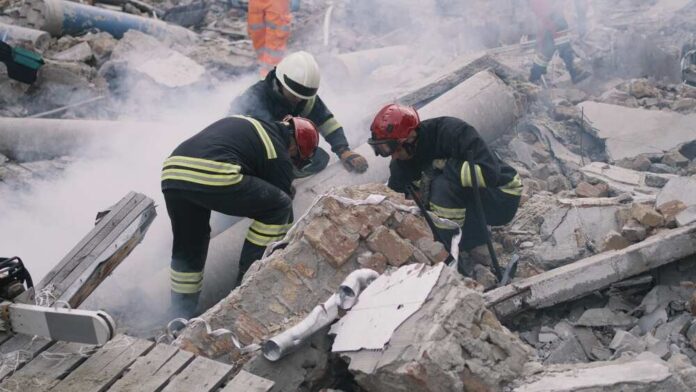
Rescuers did not find Hernan by luck. Urban search teams from Chile led a methodical sweep of the collapsed mall, using sound, pattern, and cameras to hunt for signs of life. A telescopic camera pushed through the rubble finally caught him, conscious and responsive, able to move his arm and follow instructions.
That contact flipped the mission from “search” to “save.” Crews fed water through a hose and piped oxygen through a narrow tube to hold his body over while they fought the ruins above.
The work was slow and brutal. Crews drilled, cut, and cleared concrete for more than 70 to 100 hours, depending on which team’s clock you read. They had to avoid shifting debris that could crush the pocket that kept Hernan breathing.
Seven countries sent specialists: Chile, the United States, Portugal, Mexico, Costa Rica, El Salvador, and Venezuela’s own teams. That mix mattered. In a world where many leaders talk a big game, this was old-school cooperation: people with tools and skills, not hashtags.
The science behind a so-called miracle
Medical research on earthquake entrapment shows that some people do survive under rubble for more than a week, even stretching to 13 or 14 days in rare cases.
Survival odds jump when a person lands in a “survivable void space,” a small pocket under something sturdy that blocks major blunt trauma and keeps an airway open. Hernan’s basement booth did exactly that. It gave him a shield from the worst collapse and carved out a narrow but stable pocket for air.
A Venezuelan security guard has been rescued alive after spending eight days trapped under the rubble of a collapsed shopping mall following twin earthquakes. Rescue teams managed to pull him out from the basement in La Guaira, where he was found conscious and taken to… pic.twitter.com/ic9uqpbOHr
— FOLIN TV NEWS (@FOLINTV) July 2, 2026
Long entrapment also changes the body’s needs. A trapped person who barely moves burns fewer calories and needs far less water than someone walking around in heat.
Experts say if injuries are limited and the weather is not extreme, a victim can survive a week or more with access to air and at least a trickle of water.
In Hernan’s case, that trickle turned into an active lifeline once the team reached him, explaining how he endured the final days of the eight-day ordeal.
Numbers that wobble, facts that hold
Media reports do not line up perfectly on details. Some call the structure seven stories, others nine. Some say Hernan is 43, others 44. Location tags bounce between La Guaira and the nearby area of Catia La Mar. That confusion is common in major disasters, especially in countries where record-keeping and press controls are weak.
Across reports from CNN, NDTV, Deutsche Welle, and others, the shared backbone is solid: a middle-aged security guard, named and identified, working in the basement of Galerias Playa Grande in coastal Venezuela, trapped when the mall collapsed, kept alive by air, water, and oxygen supplied through narrow channels, and pulled out alive eight days after the quakes.
No outlet, official or otherwise, claims he died or that the rescue never happened. Side B skeptics do not present any competing timeline, medical record, or rescue log.
Miracle language versus hard-earned success
Major outlets and social posts lean on words like “miracle,” “miraculous,” and “against all odds.” That kind of language grabs clicks and shares. It speaks to a deep human desire to see the hand of fate or faith amid chaos.
But it can also hide the real heroes: the planners who mapped safe lines into the rubble, the teams who chose to keep drilling while fuel ran short, and the nations that quietly sent their best people without making it a political stunt.
From a view that values responsibility and competence, the better story is not magic. It is that, in a country hollowed out by the withdrawal of humanitarian funding and years of mismanagement, ordinary professionals from several nations still showed up and did their jobs at a world-class level.
They followed proven science on survivable voids, treated time as the enemy, and trusted that one living man was worth days of hard labor. Eight days later, Hernan walked out. That is not fantasy. That is what happens when, even in a broken system, some people still take duty seriously.
Sources:
apnews.com, ndtv.com, timesofindia.indiatimes.com, instagram.com, dw.com, x.com, reuters.com, aljazeera.com, news.un.org, youtube.com